
Unleavened Turkish Flatbread
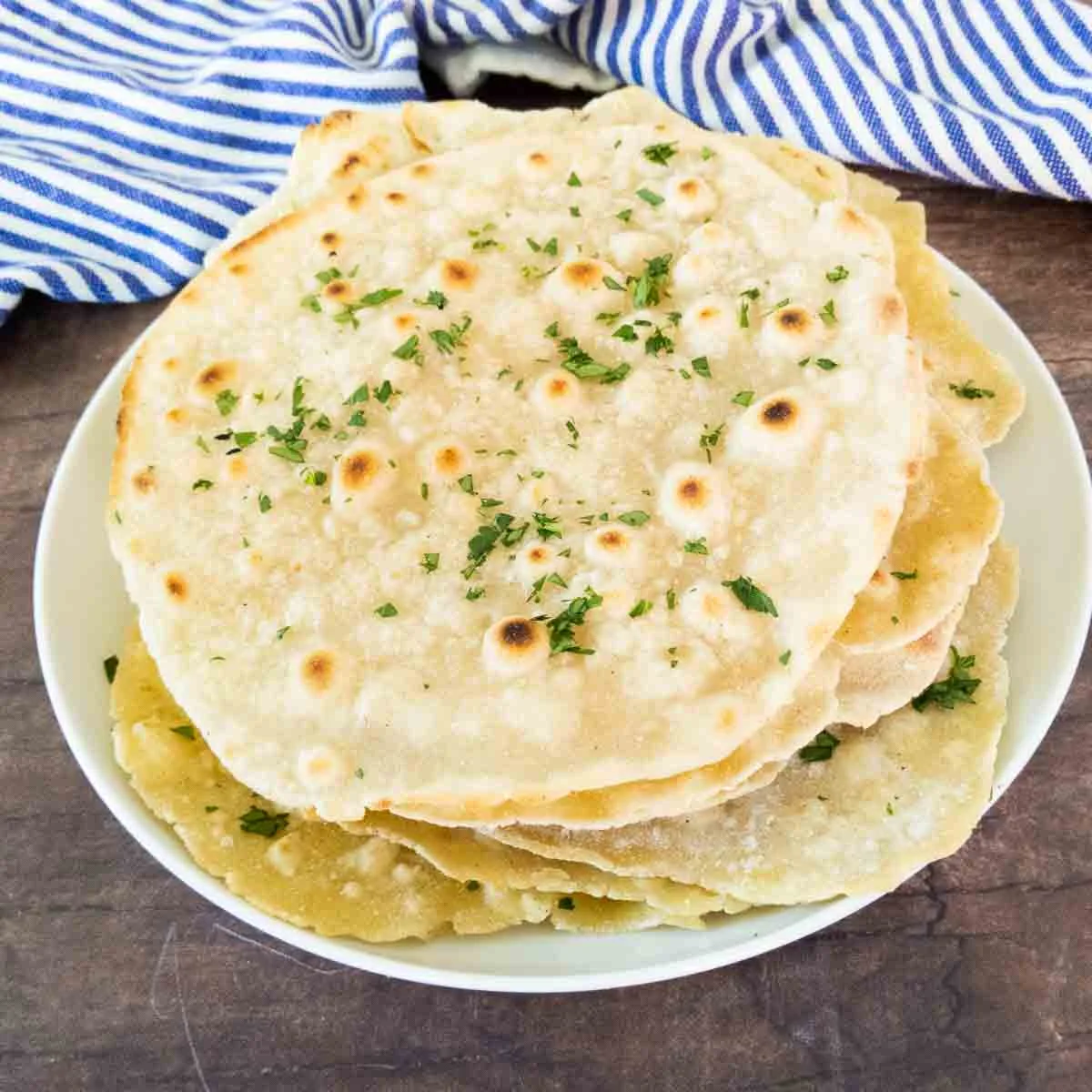
Yufka is a thin, unleavened Turkish-style flatbread, cooked in a hot pan rather than baked. This gluten-free version rests for several hours, then rolls out into flexible flatbreads for wraps or sweet fillings.
Ingredients
- 227 g (8 oz; about 1½ cups)gluten-free flour blend, plus ¼ tsp xanthan gum if the blend does not contain it
- 1 tspkosher salt
- 160 ml (⅔ cup)warm water
- 30 ml (2 tbsp), plus more for the panolive oil
Instructions
- 1
Mix dry ingredients
Put the gluten-free flour blend and salt in a mixing bowl and stir them together.
- 2
Add the water
Gradually pour in the warm water, mixing until a dough forms. Use a stand mixer with a paddle attachment or mix by hand.
- 3
Knead the dough
Add the olive oil and knead until the dough is very soft and smooth. Use a dough hook if mixing with a stand mixer, or knead by hand.
- 4
Rest in fridge
Cover the dough tightly with plastic wrap and refrigerate for at least 5 hours and up to 24 hours.
- 5
Divide the dough
Divide the rested dough into 10 equal pieces. Cover them with a towel and leave them on the counter for about 15 minutes.
- 6
Roll the pieces
Lightly dust the counter and each dough ball with gluten-free flour. Roll each one as thinly as possible without tearing it, adding more flour to the counter between rollings.
- 7
Cook the flatbreads
Lightly brush a skillet or cast-iron pan with oil. Over medium-high heat, cook each rolled flatbread for about 2 minutes per side, until golden brown on both sides. Add more oil as needed.
- 8
Keep them warm
Take the flatbreads off the heat and wrap them in a kitchen towel until ready to serve.
What is yufka?
Yufka is a traditional Turkish flatbread, rolled thin and cooked on a hot surface without yeast. It is commonly used as a wrap or folded around fillings.
This version uses gluten-free flour and olive oil, with a long rest to give the dough time to become easier to handle. The pan cooking keeps the method straightforward and avoids the need for an oven.
Nutrition and macros by portion
The nutrition label shows one serving as written: 183 calories, 4g protein, 29g carbs, 7g fat.
| Portion | Adjustment | kcal | Protein | Carbs | Fat |
|---|---|---|---|---|---|
| Lighter | Use less pan oil | 128 kcal | 3g | 20g | 5g |
| This serving | As written | 183 kcal | 4g | 29g | 7g |
| Hungry | Serve two flatbreads | 275 kcal | 6g | 44g | 11g |
The flour blend supplies most of the carbohydrates, while olive oil contributes most of the fat; the recipe provides a modest amount of protein. Pair a flatbread with a protein-rich filling and vegetables for a more balanced plate.
Choosing the flour blend
Flour blend: Use a gluten-free blend intended for baking, and check whether it already contains xanthan gum. Add the stated ¼ teaspoon only if it does not.
Salt: Kosher salt seasons the dough throughout. If using a finer-grained salt, measure carefully, as the same spoonful can contain a different amount.
Why the dough needs a long rest
Chilling: The covered dough rests in the fridge for at least 5 hours and up to 24 hours. This pause is part of the recipe, so allow for it when planning your cooking time.
Before rolling: After dividing the dough into 10 pieces, let them sit covered on the counter for about 15 minutes. This gives the portions a brief rest before shaping.
Rolling without tearing
Thin rounds: Roll each piece as thinly as possible while keeping it intact. Gluten-free dough can be delicate, so work gently and lift or turn it carefully.
Dusting: Use a light dusting of gluten-free flour on the counter and dough. Add more between rollings if the dough starts to stick.
Getting the pan temperature right
Heat: Cook the flatbreads over medium-high heat in a lightly oiled skillet or cast-iron pan. The recipe gives about 2 minutes per side; look for golden-brown patches on both sides.
Oil: Brush the pan lightly rather than leaving a pool of oil. Add more as needed between flatbreads.
Serving and keeping them soft
Warmth: Wrap each cooked flatbread in a kitchen towel while you finish the batch. This helps keep them warm and pliable until serving.
Pairings: Use them as wraps for savoury fillings, or serve them with sweet fillings as a crepe-style option.
Recipe notes & tips
- Check the flour blend label before adding xanthan gum.
- Keep the dough covered during its rests so the surface does not dry out.
- Dust the work surface lightly to help prevent sticking without adding too much extra flour.
- Roll each portion gently and stop if the dough begins to tear.
- Wrap cooked flatbreads in a towel as you go to keep them warm.
Variations
- Savoury wraps: Fill with cooked vegetables and your preferred protein.
- Sweet filling: Serve with a sweet filling for a crepe-style meal.
- Herb flavour: Mix dried herbs into the dry ingredients.
- Garlic oil: Brush the cooked flatbreads lightly with garlic-infused oil.
- Smaller rounds: Divide the dough into more portions for smaller flatbreads.
Common mistakes to avoid
- Skipping the long rest: Refrigerate the covered dough for at least 5 hours as directed.
- Adding xanthan twice: Check the flour blend first and add it only if it is not already included.
- Rolling too roughly: Use gentle pressure and stop before the dough tears.
- Using too much dusting flour: Add only enough to prevent sticking, including between rollings.
- Overheating the pan: Cook over medium-high heat and watch for golden-brown patches on both sides.
How to store
Keep leftover flatbreads wrapped or in an airtight container in the fridge for up to 3 days. Reheat briefly in a dry or lightly oiled skillet until warm and pliable.
Frequently asked questions
How long does the dough need to rest?
Refrigerate it for at least 5 hours and up to 24 hours. After dividing it into 10 pieces, let the covered portions rest on the counter for about 15 minutes.
Can I make the dough without a stand mixer?
Yes. Mix and knead it by hand, following the same sequence of adding water first and olive oil before kneading.
How thin should I roll the flatbreads?
Roll them as thin as possible without tearing the dough. Dust the counter lightly if the dough sticks.
How do I know when a flatbread is cooked?
Cook it for about 2 minutes per side over medium-high heat, looking for golden-brown patches on both sides.
Why is xanthan gum mentioned as optional?
Some gluten-free flour blends already include it. Add the stated ¼ teaspoon only if yours does not.
How many flatbreads does this make?
The dough is divided into 10 equal pieces. The recipe is listed as 5 servings.
Cook it from the original
This recipe comes from peelwithzeal.com. Their page has the author’s own photos, notes and tips — the best place to cook it from.
Open the recipe on peelwithzeal.com