
Makloubeh (maqluba) with Chicken and Rice
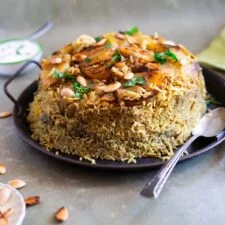
Whether you call it makloubeh or maqluba depending on which part of Palestine you're from, one thing is certain—this is a deeply traditional Palestinian dish. It’s made primarily with spiced rice, meat, and vegetables, all layered together in a pot. The name ma’loubeh literally means “upside down” or “flipped,” because once it’s cooked, the pot is turned over onto a round large serving dish, revealing a beautiful layered masterpiece.
Ingredients
- 1 medium cauliflower, cut into florets
- 1-2 tablespoons olive oil
- Salt and 1/2 teaspoon cumin powder (for grilling the cauliflower)
- 1–2 tomatoes, sliced
- 1 sweet onion, sliced
- 2–3 garlic cloves, peeled and sliced
- 4 pieces of chicken (legs, breasts, or a combination) or one whole chicken cut into 4-6 pieces.
- 1-2 tablespoons olive oil
- A pinch each of (1/8 teaspoon): Cinnamon powder, Nutmeg powder, Allspice, and Salt (for seasoning the chicken)
- 2 cups basmati or Calrose rice (if using Calrose soak in water before cooking for 10-15 minutes)
- 4 cups of tap water (for cooking the chicken and making broth)
- 2 bay leaves
- 2-3 cardamom pods
- 1-2 cinnamon sticks
- 1/4 teaspoon cinnamon powder
- 1/4 teaspoon cardamom powder
- 1/4 teaspoon nutmeg powder
- 1/2 teaspoon turmeric
- 1 teaspoon allspice
- Salt and pepper, to taste
- Roasted almonds, for garnishing (optional
Instructions
- 1
Cut the cauliflower into small florets. Toss with olive oil, salt, and cumin until evenly coated. Spread on a baking sheet
- 2
Bake cauliflower florets at 350°F (175°C) for 45-60 minutes, flipping halfway, until golden.
- 3
Peel and slice potatoes. Toss with olive oil and salt, until evenly coated. Spread on a baking sheet.
- 4
Bake potatoes at 350°F (175°C) for 20-30 minutes, flipping halfway, until golden.
- 5
Remove skin from chicken and rub the chicken with spices (nutmeg, cinnamon, allspice). In a large pot and over medium-high heat, heat olive oil.
- 6
Place chicken, and brown on both sides, about 1-2 minutes on each side
- 7
Cover the chicken with water until fully submerged.
- 8
Add bay leaves, cardamom pods and cinnamon sticks to the water.
- 9
Once the water starts boiling, reduce the heat to medium, cover, and let it cook for about 30 minutes, or until the chicken is tender.
- 10
As the water comes to a boil, skim off any foam that rises to the top using a spoon—this helps keep the broth clear and clean.
- 11
When done, drain the chicken and reserve the broth to use later for cooking the rice.
- 12
--- Prepare the Rice: ---
- 13
Rinse the rice thoroughly, then mix it with the spices.
- 14
--- Layer the Dish ---
- 15
In the same pot used for the chicken, sauté chopped onions and garlic in oil until golden.
- 16
Turn off the heat and begin layering:
- 17
Add a layer of sliced tomatoes over the onions and garlic.
- 18
Next, add the roasted cauliflower.
- 19
Then the roasted potatoes
- 20
Then, layer the cooked chicken.
- 21
Finally, add the spiced rice on top.
- 22
Place a small heatproof plate in the center to help hold while pouring the broth.
- 23
Pour the reserved chicken broth over the mixture until it reaches about ½–¾ inch above the rice.
- 24
Cover the pot and simmer on low heat for 30–40 minutes, or until the rice is fully cooked.
- 25
Remove from heat and let rest for 10-15 minutes to help the layers hold together.
- 26
Place a large round serving tray over the pot, then carefully and confidently flip the pot over.
- 27
Gently tap the bottom to help release the makloubeh.
- 28
Check notes for extra tips.
Cook it from the original
This recipe comes from palestineinadish.com. Their page has the author’s own photos, notes and tips — the best place to cook it from.
Open the recipe on palestineinadish.com