
Date Ring Cookies (Kaak Asawer)
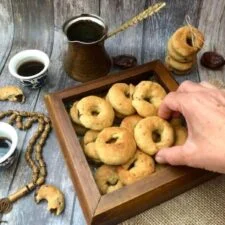
Ka'ak Asawer are Palestinian date-filled ring cookies scented with anise. Their crisp, gently sweet dough and soft date centre make them a lovely treat for festive gatherings or alongside a cup of tea.
Ingredients
- 500 gplain flour
- 240 ml (or 120 ml neutral oil and 120 ml extra-virgin olive oil)extra-virgin olive oil (or a mixture of neutral oil and extra-virgin olive oil)
- 2 teaspoonsanise seeds
- 2 teaspoonsground anise
- 2 teaspoonsbaking powder
- 100 ggranulated sugar
- 180–240 mllukewarm water
- 227–283 gajweh (date paste)
Instructions
- 1
Shape the dates
Rub a little olive oil on your hands. Break off small portions of date paste, roll them into little logs and set them aside.
- 2
Mix dry ingredients
Combine the flour, anise seeds, ground anise, baking powder and sugar in a large bowl.
- 3
Coat with oil
Pour in the olive oil and mix until the dry ingredients are evenly coated.
- 4
Make the dough
Add the lukewarm water a little at a time, kneading until the dough is soft and pliable but not too sticky.
- 5
Roll the dough
Take a handful of dough and roll it into a thin log about as thick as your little finger.
- 6
Flatten the dough
Press the log gently to flatten it and make room for the filling.
- 7
Add the filling
Lay a date-paste log on the flattened dough and wrap the dough around it, sealing the filling inside.
- 8
Form the cookies
Roll each filled piece gently to smooth the seam, then shape it into a ring. Leave it as a log if you prefer.
- 9
Bake until golden
Bake for 25–30 minutes, until the bottoms are golden brown.
What are Ka'ak Asawer?
Ka'ak Asawer, or bracelet cookies, are Palestinian biscuits shaped into rings and filled with date paste. They are also known as Ka'ak bi Ajweh, a name that refers to their date filling.
Made in Palestinian homes for celebrations including Eid al-Fitr and Christmas, they carry family traditions as well as a sweet centre. This version gets its distinctive aroma from both anise seeds and ground anise.
Nutrition and macros by portion
The nutrition label shows one serving as written: 121 calories, 2g protein, 17g carbs, 6g fat.
| Portion | Adjustment | kcal | Protein | Carbs | Fat |
|---|---|---|---|---|---|
| Lighter | Smaller cookies, less oil | 85 kcal | 1g | 12g | 4g |
| This serving | As written | 121 kcal | 2g | 17g | 6g |
| Hungry | Larger cookie portion | 182 kcal | 3g | 25g | 9g |
The flour supplies most of the carbohydrates, while the olive oil contributes most of the fat; the dates add sweetness and some carbohydrates, with smaller amounts of protein coming mainly from the flour and dates. Pair a cookie or two with unsweetened tea and fruit for a simple, balanced snack.
Anise in two forms
Whole seeds add little bursts of flavour, while ground anise spreads its warm, liquorice-like note through the dough. Measure both carefully so neither overwhelms the dates.
Getting the dough right
Oil the flour mixture before adding water; this helps coat the dry ingredients and gives the cookies their tender, crisp texture.
Water amount: Start with 180 ml and add more gradually as needed, up to 240 ml. Stop when the dough holds together and feels pliable rather than sticky.
Filling and sealing
Date paste: Roll it into small, even logs so each cookie is easy to fill. If it sticks to your hands, the method suggests rubbing a little olive oil on them.
Seam: Wrap the dough fully around the filling and smooth the join gently. A sealed seam helps keep the date paste inside as the cookies bake.
Shaping the rings
Keep the dough logs thin, around the thickness of your little finger, and flatten them just enough to hold the filling. Join the ends to make the bracelet shape, or leave them as logs if that is easier.
Checking for doneness
The recipe gives a baking time of 25–30 minutes and uses golden-brown bottoms as its doneness cue. Since no oven temperature is specified, use the temperature you normally use for similar cookies and check the bases as they approach the lower end of the time range.
Serving the cookies
These lightly sweet cookies work well with tea or coffee, particularly as part of a festive spread. Their ring shape also makes them easy to arrange on a sharing plate.
Recipe notes & tips
- Keep some of the water back and add it only if the dough needs it.
- Roll the date paste into logs before shaping the dough so filling each cookie is straightforward.
- Use lightly oiled hands when handling sticky date paste.
- Seal the dough around the filling before smoothing the seam.
- Check the bottoms for golden colour as the 25-minute mark approaches.
Variations
- Use mixed oils: Replace half the olive oil with neutral oil, as suggested in the ingredient list.
- Make short logs: Leave the filled dough as logs instead of joining the ends into rings.
- Vary the size: Shape smaller cookies for a bite-sized serving, allowing for a shorter bake if needed.
- Adjust the anise: Use a little less of either form for a gentler anise flavour.
- Serve with tea: Pair the cookies with unsweetened tea for a simple serving.
Common mistakes to avoid
- Adding all the water at once: The dough may turn sticky; add it gradually and stop when the dough is pliable.
- Making the dough too thick: The cookies may be harder to shape; roll the dough logs to about little-finger thickness.
- Leaving the date paste exposed: It can escape during baking; wrap the dough around it and seal the seam.
- Skipping the seam check: A loose join can open; smooth it gently before forming the ring.
- Relying on time alone: Ovens vary; use golden-brown bottoms as the recipe's doneness cue.
How to store
Once completely cool, store the cookies in an airtight container at room temperature; they should keep for several days. If you prefer them warm, reheat briefly in a low oven and check that they do not over-brown.
Frequently asked questions
What does Ka'ak Asawer mean?
It means bracelet cookies, referring to their ring shape. They are also called Ka'ak bi Ajweh, meaning cookies stuffed with dates.
Can I use neutral oil instead of olive oil?
Yes. The ingredient list allows either all extra-virgin olive oil or half neutral oil and half olive oil.
How much water should I add?
Begin with 180 ml and add more gradually, up to 240 ml, until the dough is soft and pliable without becoming too sticky.
Can I leave the cookies as logs?
Yes. The method allows you to leave them as filled logs rather than joining the ends into rings.
What oven temperature should I use?
The supplied method does not specify an oven temperature. Follow the temperature you normally use for similar cookies, and check for golden-brown bottoms after 25 minutes.
How do I know when they are done?
Bake for 25–30 minutes and look for golden-brown bottoms, as directed in the recipe.
Cook it from the original
This recipe comes from palestineinadish.com. Their page has the author’s own photos, notes and tips — the best place to cook it from.
Open the recipe on palestineinadish.com