
Anise Cookies Recipe (Vegan)
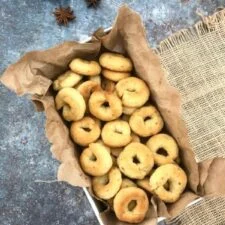
These Palestinian vegan anise cookies are crisp, lightly sweet and fragrant with anise seeds and ground anise. They make an easy accompaniment to morning coffee or afternoon tea.
Ingredients
- 480 g (4 cups)plain flour
- 240 ml (1 cup)olive oil, or 120 ml neutral oil and 120 ml extra-virgin olive oil
- 2 teaspoonsanise seeds
- 2 teaspoonsground anise
- 2 teaspoonsbaking powder
- 200 g (1 cup), or 150 g (¾ cup)sugar
- 180–240 ml (¾–1 cup), added graduallylukewarm water
Instructions
- 1
Heat the oven
Preheat the oven to 175°C (350°F).
- 2
Mix dry ingredients
In a mixing bowl, combine the flour, anise seeds, ground anise, baking powder and sugar, mixing them well.
- 3
Add the oil
Pour in the oil and mix until it is fully incorporated into the dry ingredients.
- 4
Knead the dough
Add the lukewarm water gradually as you knead, stopping when a smooth dough forms.
- 5
Shape the cookies
Roll the dough into a log about 30 cm (12 inches) long. Cut it into pieces about 7.5 cm (3 inches) each, then shape each piece into a circle.
- 6
Arrange on tray
Place the cookies on a baking sheet with a little space between them.
- 7
Bake until golden
Bake for 20–25 minutes, until the bottoms are golden brown.
- 8
Brown the tops
Switch on the grill for 1–2 minutes to colour the tops, watching closely so the cookies do not burn.
What are Palestinian anise cookies?
These are simple, crisp, ring-shaped biscuits flavoured with anise, a sweet spice with a liquorice-like aroma. Anise is popular in Palestinian and wider Middle Eastern cooking, and these cookies are made for an everyday coffee or tea break.
This version uses both whole seeds and ground anise, so the flavour comes through in each bite as well as throughout the dough. Oil and water keep the recipe plant-based, with no butter or eggs.
Nutrition and macros by portion
The nutrition label shows one serving as written: 179 calories, 2g protein, 23g carbs, 9g fat.
| Portion | Adjustment | kcal | Protein | Carbs | Fat |
|---|---|---|---|---|---|
| Lighter | Use ¾ cup sugar | 125 kcal | 1g | 16g | 6g |
| This serving | As written | 179 kcal | 2g | 23g | 9g |
| Hungry | Serve a larger portion | 269 kcal | 3g | 35g | 14g |
Flour and sugar provide most of the carbohydrates, while the olive oil accounts for most of the fat; the flour contributes a little protein. Pair a couple of cookies with fruit or yoghurt for a more balanced snack.
The anise and the dough
Anise flavour: Whole seeds add little aromatic pops, while ground anise spreads its warm, sweet flavour evenly. Use both as listed for the intended balance.
Oil choice: Olive oil gives the cookies a distinct fruity note; a half-and-half blend with neutral oil makes that flavour gentler. Whichever you choose, mix it thoroughly into the dry ingredients.
Getting the dough right
Add water gradually: The recipe gives a range because the dough may take up different amounts. Knead as you pour, and stop once the dough is smooth rather than adding all the water automatically.
Shape evenly: Cut the log into pieces of similar length so the cookies bake at about the same rate. Join each piece into a circle without making the ring too thick.
Baking and browning
Check the bottoms: Bake at 175°C until they turn golden brown; the recipe gives a 20–25 minute window. Start checking towards the shorter end of that range.
Use the grill briefly: The final 1–2 minutes brown the tops, but they can darken quickly. Stay by the oven and remove the tray as soon as they have the colour you want.
Serving with drinks
These cookies suit coffee or tea, as their crisp texture and sweet anise flavour make them easy to nibble alongside a drink. Serve them once cooled so their texture has time to settle.
For a more substantial snack, pair one or two with fresh fruit or a small serving of yoghurt. Keep the cookies as the sweet element rather than adding another sugary side.
Recipe notes & tips
- Measure the water into a jug and add it in small amounts while kneading.
- If the dough feels smooth before all the water is used, stop adding liquid.
- Keep the shaped rings similar in size for more even baking.
- Leave a little space between cookies on the baking sheet.
- Watch the cookies continuously during the brief grilling stage.
Variations
- Milder oil flavour: Use half neutral oil and half extra-virgin olive oil as stated in the ingredients.
- Less sweetness: Use 150 g sugar for the ¾-cup option.
- More anise aroma: Lightly crush some of the anise seeds before mixing them in.
- Different shapes: Shape the dough pieces into small twists instead of rings, keeping them a similar thickness.
- Smaller biscuits: Cut the log into shorter pieces and check them early, as their baking time may vary.
Common mistakes to avoid
- Adding water all at once: The dough may become too wet; add it gradually and stop when smooth.
- Overworking the dough: Kneading longer than needed can make shaping harder; stop once the dough comes together smoothly.
- Uneven pieces: Different sizes bake at different rates; cut the log into similar lengths.
- Crowding the tray: Cookies need a little space between them; use another baking sheet if necessary.
- Leaving them under the grill: The tops can burn quickly; watch closely and take them out as soon as they brown.
How to store
Cool the cookies completely, then store them in an airtight container at room temperature for up to a week. If they soften, warm them briefly in a low oven to bring back some crispness.
Frequently asked questions
Can I use only olive oil?
Yes. The recipe allows 240 ml olive oil; the neutral-oil blend is an alternative if you prefer a milder olive flavour.
Do I need to use all the water?
No. Add 180–240 ml gradually while kneading, and stop when the dough is smooth.
Can I use less sugar?
Yes. The recipe gives 150 g (¾ cup) as a lower-sugar option instead of 200 g (1 cup).
How do I know the cookies are baked?
The recipe uses golden-brown bottoms as the main cue, after 20–25 minutes in the oven. The tops are coloured briefly under the grill afterwards.
Can I skip the grill?
Yes, if you prefer not to brown the tops further. The cookies will still bake through when their bottoms are golden, though they may look paler on top.
Are these cookies vegan?
The listed ingredients are plant-based, with oil and water in place of butter and eggs. Check the packaging of your flour, sugar and baking powder if you need to confirm ingredients.
Cook it from the original
This recipe comes from palestineinadish.com. Their page has the author’s own photos, notes and tips — the best place to cook it from.
Open the recipe on palestineinadish.com