
Galayet Bandora (Pan Fried Tomatoes)
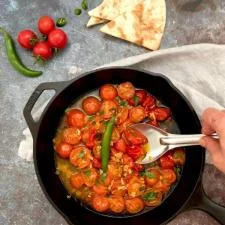
Galayet bandora is a Palestinian dish of tomatoes simmered with garlic, green chilli and olive oil until soft and rich. It comes together in one pan and is traditionally served with Arabic bread for scooping.
Ingredients
- 1 boxbaby plum tomatoes (or 3–4 medium ripe tomatoes)
- 4–5 clovesgarlic, crushed
- 60 ml (¼ cup)extra-virgin olive oil
- 1hot green chilli
- ¼ teaspoongranulated sugar
- ¼sea salt, adjusted to taste
Instructions
- 1
Heat the oil
Warm the extra-virgin olive oil in a frying pan, then add the crushed garlic and green chilli.
- 2
Brown the garlic
Cook until the garlic is golden. Lift out half of the garlic and chilli to use as a topping later, leaving the rest with the oil in the pan.
- 3
Cook the tomatoes
Add the chopped tomatoes and cook over high heat for about 10 minutes, letting them sizzle and stirring as little as possible.
- 4
Season gently
Add the salt and a pinch of sugar, then stir gently to combine.
- 5
Soften the tomatoes
Lower the heat to medium and cook uncovered for another 10–15 minutes, until the tomatoes are fully cooked and soft.
- 6
Add the topping
Scatter the reserved garlic and chilli over the cooked tomatoes.
- 7
Serve warm
Turn off the heat and serve hot or at room temperature with khubez, or Arabic bread.
What is galayet bandora?
Galayet bandora is a Palestinian tomato dish whose name refers to tomatoes cooked in a pan. It is made with a short list of everyday ingredients and can be served as a simple meal or as part of a larger spread.
This version builds flavour by browning the garlic first, then simmering the tomatoes in the fragrant oil. Bread is an ideal accompaniment for scooping up the softened tomatoes and their juices.
Nutrition and macros by portion
The nutrition label shows one serving as written: 270 calories, 2g protein, 9g carbs, 27g fat.
| Portion | Adjustment | kcal | Protein | Carbs | Fat |
|---|---|---|---|---|---|
| Lighter | Use less olive oil | 189 kcal | 1g | 6g | 19g |
| This serving | As written | 270 kcal | 2g | 9g | 27g |
| Hungry | Serve with extra bread | 405 kcal | 3g | 14g | 41g |
The olive oil supplies most of the fat and a substantial share of the energy, while tomatoes contribute most of the carbohydrates and some fibre. The dish has little protein on its own; serve it with hummus or another protein-rich accompaniment, alongside bread and a fresh salad, for a more balanced plate.
Choosing the tomatoes
Baby plum tomatoes: their small size makes them easy to chop and cook down, while ripe fruit brings plenty of flavour.
Medium tomatoes: use ripe ones if substituting; chop them into pieces of similar size so they soften evenly.
Brown the garlic carefully
Garlic: cook it only until golden, as it can turn bitter if it gets too dark. Removing half at this stage keeps some pieces distinct for the topping.
Chilli: it cooks in the oil alongside the garlic, giving the dish a warm heat. Keep it whole or chop it, depending on how pronounced you want the chilli flavour.
Let the tomatoes soften
High heat: the first 10 minutes lets the tomatoes sizzle and begin to break down. Stir only occasionally so they have time to cook against the hot pan.
Medium heat: continue uncovered for 10–15 minutes, until the tomatoes are tender and the mixture has thickened to your liking. The exact time can vary with the ripeness and size of the tomatoes.
Season to balance
Salt: the listed amount is written as ¼ without a unit, so add it gradually and taste as you go. You can always add more near the end.
Sugar: use just the pinch specified to round out the tomatoes’ acidity; it should not make the dish taste sweet.
Serve with bread
Arabic bread: khubez or taboon bread makes the dish easy to scoop up and turns the tomatoes into a more substantial meal.
For a fuller table, serve it alongside other small dishes such as hummus or a crisp salad. The recipe also works as a warm accompaniment to a larger Palestinian or Middle Eastern-style meal.
Recipe notes & tips
- Use ripe tomatoes for a softer, more flavourful result.
- Keep an eye on the garlic as it browns, since it can darken quickly.
- If using larger tomatoes, chop them into evenly sized pieces.
- Taste before serving and adjust the salt to suit your bread and accompaniments.
- Leave the pan uncovered during the final simmer so the tomato mixture can reduce.
Variations
- Milder chilli: remove the seeds before cooking for less heat.
- More heat: chop the chilli before adding it to the pan.
- Herb finish: scatter chopped parsley over the dish just before serving.
- Richer tomatoes: use ripe medium tomatoes in place of the baby plum tomatoes.
- More substantial meal: serve with hummus and extra Arabic bread.
Common mistakes to avoid
- Burning the garlic: take it off the heat or remove it as soon as it turns golden.
- Stirring constantly: let the tomatoes sizzle between occasional gentle stirs.
- Cooking covered: leave the pan uncovered during the final simmer so the mixture can reduce.
- Adding all the garlic at once: reserve half after browning so you can use it as the topping.
- Using firm tomatoes: choose ripe tomatoes so they soften properly within the cooking time.
How to store
Refrigerate leftovers in a covered container for up to 3 days. Reheat gently in a pan until hot, or serve at room temperature as described in the method.
Frequently asked questions
Can I use regular tomatoes instead of baby plum tomatoes?
Yes. The recipe suggests 3–4 medium ripe tomatoes as an alternative; chop them before adding them to the pan.
How spicy is this dish?
The heat depends on the chilli. For a milder result, remove its seeds or use less chilli.
Do I need to peel the tomatoes?
The method does not call for peeling them, so you can simply chop and cook them with their skins on.
Can I serve galayet bandora at room temperature?
Yes. The method says to serve it hot or at room temperature.
What bread goes with galayet bandora?
Khubez, or Arabic bread, is the suggested accompaniment; taboon bread is also mentioned in the recipe description.
Cook it from the original
This recipe comes from palestineinadish.com. Their page has the author’s own photos, notes and tips — the best place to cook it from.
Open the recipe on palestineinadish.com