
Homemade Tvorog - Farmer's Cheese
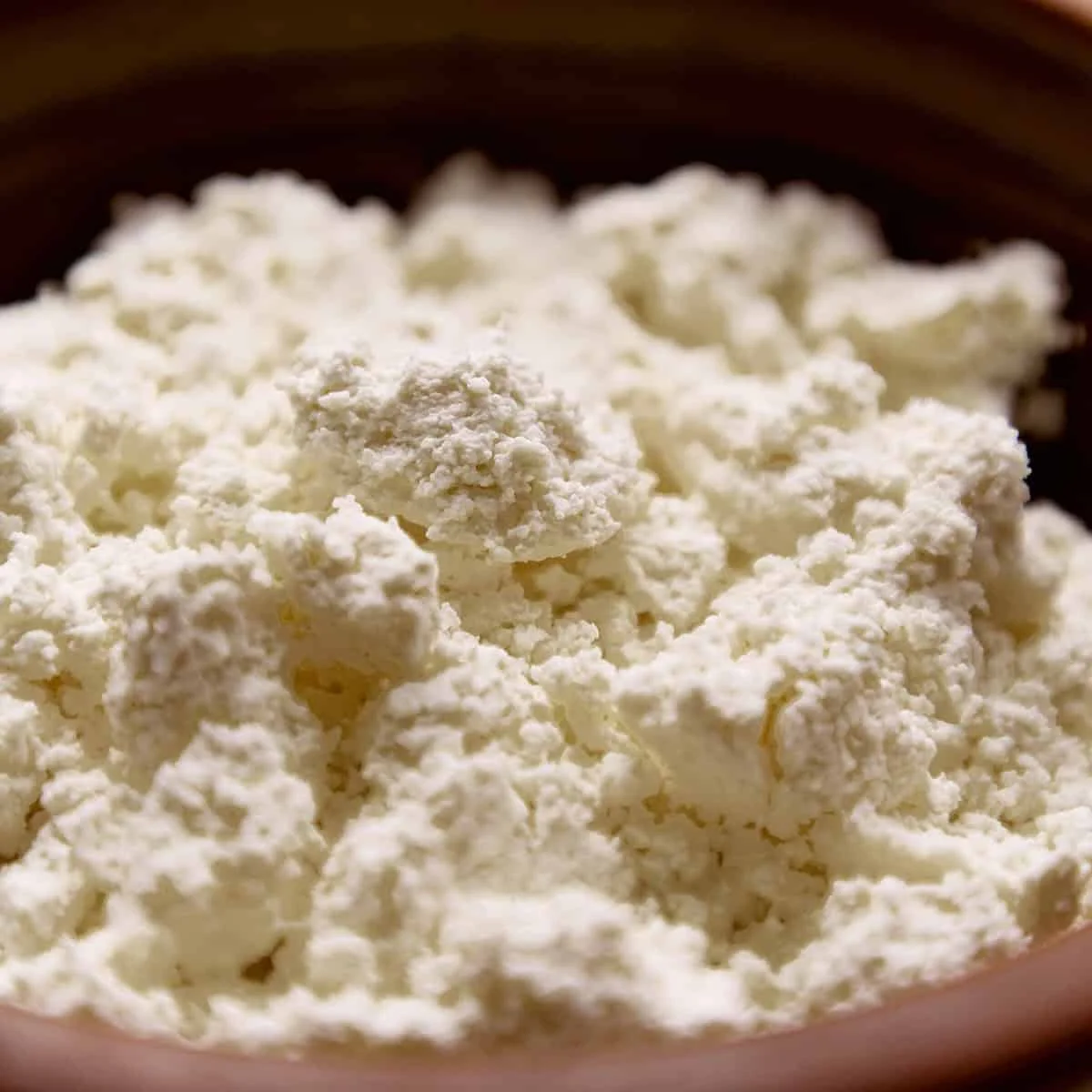
Tvorog is a fresh, tangy farmer’s cheese made by separating milk into curds and whey. This homemade version uses milk and kefir or live yoghurt, then drains the curds until they reach the texture you want for syrniki, pastries or spreads.
Ingredients
- 1500 gwhole milk, pasteurised, not UHT
- 500 gkefir or live yoghurt
- 60 glemon juice or vinegar, for the quick version instead of kefir or yoghurt
Instructions
- 1
Mix the ingredients
Put the milk and kefir or yoghurt in a large pot and stir well to combine.
- 2
Ferment the milk
Leave the mixture in a warm place at 36°C for 8 to 12 hours. An oven with its light on or a spot above a radiator can provide warmth.
- 3
Warm the oven
For a more controlled temperature, preheat the oven to 100°C, switch it off, then put the covered pot inside for the required fermentation time.
- 4
Heat the curds
When the mixture has separated into curds and whey, gently cut the curds with a knife. Slowly heat both to 75°C, stirring occasionally, and do not let the mixture boil.
- 5
Drain the whey
Pour the curds and whey through a sieve lined with cheesecloth. Leave to drain at room temperature for 2 hours, with a light weight on top to help the whey run off.
- 6
Press and store
A few stacked bowls can serve as a light weight. The longer the curds drain, the firmer the tvorog will be. Refrigerate or freeze it if you are not using it straight away, and keep the whey for other recipes.
What is tvorog?
Tvorog is a fresh curd cheese widely used in Eastern European cooking, where it can be served simply or used in dishes such as syrniki and pastries. Its flavour is gently tangy, and its texture can range from soft and creamy to firm, depending on how long it drains.
Milk and a cultured dairy ingredient provide the base for this version. Slow fermentation gives the curds time to form before gentle heating separates them from the whey.
Nutrition and macros by portion
The nutrition label shows one serving as written: 140 calories, 16g protein, 25g carbs, 16g fat.
| Portion | Adjustment | kcal | Protein | Carbs | Fat |
|---|---|---|---|---|---|
| Lighter | Serve a smaller portion | 98 kcal | 11g | 18g | 11g |
| This serving | As written | 140 kcal | 16g | 25g | 16g |
| Hungry | Serve a larger portion | 210 kcal | 24g | 38g | 24g |
The recipe’s nutrition figures are supplied per serving, but the ingredient list is mainly milk and kefir or yoghurt, so the protein comes chiefly from the dairy and the carbohydrates largely from its natural lactose. The milk’s fat contributes most of the fat in the cheese; serve a portion with fruit or vegetables for a more balanced plate.
Choose your milk and culture
Milk: Use whole pasteurised milk that is not UHT, as specified in the recipe. UHT milk may not form curds in the same way.
Culture: Kefir or live yoghurt is used for the slower method. The listed lemon juice or vinegar is for a quicker version and replaces the kefir or yoghurt rather than being added alongside it.
Keep the warmth steady
Fermentation: The mixture rests at 36°C for 8 to 12 hours. Check that the resting spot stays warm, rather than exposing the pot to direct high heat.
Oven: The recipe’s oven method is to preheat to 100°C, switch the oven off, then place the covered pot inside. The oven is only being used as a warm resting place during fermentation.
Heat gently
Curds: Once the milk mixture has separated, cut the curds gently so they are divided without being mashed.
Temperature: Bring the curds and whey slowly to 75°C, stirring occasionally. Avoid boiling, which can make the curds tougher and less delicate.
Set the texture by draining
Draining: Line a sieve with cheesecloth and allow the whey to run off for 2 hours at room temperature, as directed. A light weight can help the whey drain faster.
Firmness: Longer draining produces firmer tvorog, while a shorter drain leaves a softer result. Use a modest weight so the curds are pressed gently rather than crushed.
Use the curds and whey
Serving ideas: Use tvorog in syrniki, pastries or spreads, or serve it simply as a fresh cheese. Its mild tang works well in both savoury and sweet preparations.
Whey: Save the drained liquid instead of pouring it away; it can be used in other recipes. Refrigerate or freeze the finished tvorog if you are not using it immediately.
Recipe notes & tips
- Use a large pot so the milk mixture has room to heat evenly.
- Keep the pot covered during fermentation to protect the mixture while it rests.
- Cut the curds gently after they have separated, rather than stirring them vigorously.
- Use a thermometer to check the 36°C fermentation temperature and the 75°C heating temperature.
- Start with the stated 2-hour drain and continue longer if you prefer firmer tvorog.
- Save the whey for use in another recipe.
Variations
- Quick method: Use 60 g lemon juice or vinegar instead of kefir or live yoghurt.
- Softer curds: Drain for less time and use little or no weight.
- Firmer curds: Leave the cheesecloth-wrapped curds to drain longer.
- Syrniki: Use the finished tvorog as the fresh-cheese base for Eastern European cheese pancakes.
- Sweet spread: Serve the tvorog as a spread with your preferred sweet accompaniment.
Common mistakes to avoid
- Using UHT milk: Choose pasteurised milk that is not UHT, as the recipe specifies.
- Overheating during fermentation: Keep the mixture in a warm place at 36°C rather than applying direct heat.
- Boiling the curds: Heat slowly to 75°C and remove the pot from the heat before it boils.
- Breaking up the curds: Cut them gently with a knife and stir only occasionally while heating.
- Pressing too hard: Use a light weight so the curds drain without being crushed.
- Discarding the whey: Keep it for use in other recipes.
How to store
Refrigerate the finished tvorog in a covered container if you are not using it straight away, or freeze it for longer storage. Keep the whey separately if you plan to use it in another recipe.
Frequently asked questions
Can I use lemon juice or vinegar instead of kefir?
Yes. The listed 60 g of lemon juice or vinegar is for the quick version and replaces the kefir or live yoghurt.
How do I know the milk has fermented?
The mixture should have separated into curds and whey before you cut the curds and heat them.
Why should the curds not boil?
The method calls for slow heating to 75°C without boiling. Gentle heating helps keep the curds from becoming overly tough.
How can I make the tvorog firmer?
Let it drain for longer. The recipe also suggests placing a light weight on top to help the whey drain faster.
What can I do with the leftover whey?
Keep it rather than discarding it; the recipe notes that whey is useful in other recipes.
Cook it from the original
This recipe comes from pantsdownapronson.com. Their page has the author’s own photos, notes and tips — the best place to cook it from.
Open the recipe on pantsdownapronson.com