
Moroccan Preserved Lemons
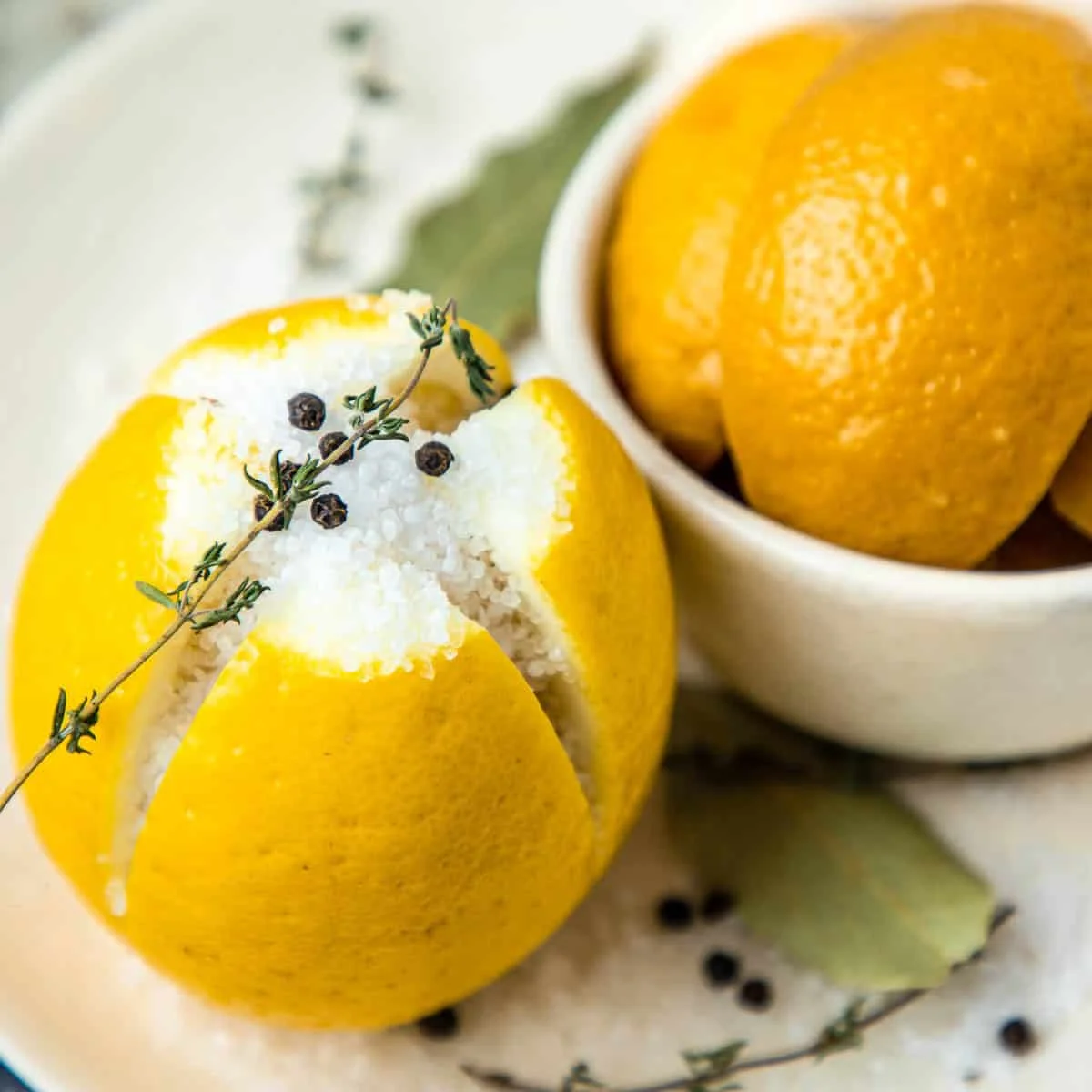
Moroccan preserved lemons are a simple, punchy condiment made by curing lemons with salt until their peel softens and their flavour deepens. Make a jar ahead of time to brighten tagines, stews, sauces and salads.
Ingredients
- 1.6 kg (8 large regular lemons)lemons
- 150 gcoarse salt (kosher salt)
- 100 gsugar or honey (optional)
- 2 tablespoons (optional)peppercorns
- 6 (optional)bay leaves
- 4 sprigs (optional)thyme
Instructions
- 1
Cut the lemons
Rinse the lemons and cut them into quarters. Remove the central white pith and any visible seeds. If using smaller Moroccan lemons, do not cut all the way through; leaving the base intact helps them keep their shape.
- 2
Add salt and sugar
Add the salt and sugar to the lemons. If using peppercorns or herbs, leave them out for now.
- 3
Release the juice
Squeeze and bruise the lemons to release their juice. If there is not enough juice to cover them in the next step, squeeze a few extra lemons separately.
- 4
Pack and ferment
Pack the lemons tightly into a glass jar, adding any aromatics. Press them down so they are covered with juice, topping up with extra juice if needed. Weigh them down with a fermentation weight or a sealed bag filled with water, then close the jar with a lid. Keep the lemons fully submerged and ferment at room temperature for at least 1 month.
What are Moroccan preserved lemons?
Preserved lemons are a North African condiment made by curing lemons in salt and their own juice. They are closely associated with Moroccan cooking, where their softened peel and concentrated citrus flavour bring depth to dishes such as tagines.
This version uses a little sugar or honey if desired, plus optional herbs and peppercorns. The simple method lets the lemon flavour remain the focus.
Nutrition and macros by portion
The nutrition label shows one serving as written: 115 calories, 3g protein, 33g carbs, 1g fat.
| Portion | Adjustment | kcal | Protein | Carbs | Fat |
|---|---|---|---|---|---|
| Lighter | Use less sugar or honey | 81 kcal | 2g | 23g | 1g |
| This serving | As written | 115 kcal | 3g | 33g | 1g |
| Hungry | Serve with a larger meal | 173 kcal | 5g | 50g | 2g |
The listed nutrition per serving is 115 kcal, with 33 g of carbohydrate and 3 g of protein; the lemons and optional sugar or honey contribute most of the carbohydrate. The listed fat is 1 g, and the salt is an important source of sodium, so pair a small amount of preserved lemon with vegetables, grains and a protein-rich food for a balanced plate.
Choose and prepare the lemons
Large lemons: cut these into quarters and remove the central white pith and visible seeds as directed. Smaller Moroccan lemons can be left attached at the base so they stay intact while curing.
Juice: the lemons need to remain covered throughout fermentation. Have a few extra lemons ready to squeeze if the jar needs more juice.
Salt, sugar and aromatics
Coarse salt: it is the main curing ingredient, so distribute it among the lemons before packing them into the jar. The recipe also includes sugar or honey, which is optional.
Aromatics: peppercorns, bay leaves and thyme are all optional additions. Add them when packing the lemons, rather than with the salt and sugar.
Keep the lemons submerged
Tight packing: press the lemons firmly into a clean glass jar so they sit under their juice. Top up with extra lemon juice if necessary.
Weight: use a fermentation weight or a sealed, water-filled bag to hold the fruit below the liquid. Check that the lemons remain submerged during the room-temperature cure.
Allow time for curing
The listed preparation time is 20 minutes, but the lemons need at least 1 month at room temperature to ferment. Plan ahead, as they are not ready to use straight after packing.
Once cured, the peel should be soft and the flavour distinctly lemony and intense. Use the peel in small amounts to start, then adjust to taste.
Ways to use them
Cooked dishes: add chopped preserved lemon to tagines, stews or sauces for a savoury citrus note. It pairs particularly well with dishes that benefit from a concentrated lemon flavour.
Fresh dishes: finely chop the peel for salads, or try a little in a cocktail. Serve alongside grains or vegetables to make a more rounded plate.
Recipe notes & tips
- Use a glass jar large enough to pack the lemons tightly and keep them under the juice.
- Squeeze extra lemons if the fruit is not fully covered after pressing it down.
- Add the optional herbs and peppercorns during packing, not with the salt and sugar.
- Use a weight or sealed water-filled bag to keep the lemons submerged.
- Give the lemons at least 1 month to ferment before using them.
Variations
- Herb-scented: add the optional thyme and bay leaves when packing the lemons.
- Peppery: include the optional peppercorns for a warm, aromatic note.
- Honey-sweetened: use honey instead of sugar if you want to include the optional sweetener.
- Plain: leave out the sugar or honey, peppercorns and herbs for a simple lemon-and-salt cure.
Common mistakes to avoid
- Lemons above the juice: press them down and add more freshly squeezed lemon juice so they stay submerged.
- Adding aromatics too early: hold back the herbs and peppercorns until you pack the lemons into the jar.
- Cutting small lemons all the way through: leave their base intact so the segments remain attached.
- Using them too soon: allow at least 1 month of room-temperature fermentation before tasting.
- Leaving visible seeds in place: remove any you can see while preparing the lemons.
How to store
During fermentation, keep the jar at room temperature and ensure the lemons remain fully submerged for at least 1 month. Once cured, refrigerate the jar and keep the lemons covered by their juice; use a clean utensil to remove them.
Frequently asked questions
How long do the lemons need to ferment?
They need at least 1 month at room temperature. Keep them fully submerged throughout the curing period.
Do I have to add sugar or honey?
No. The recipe lists sugar or honey as optional, so you can leave it out.
Can I leave out the herbs and peppercorns?
Yes. Bay leaves, thyme and peppercorns are optional; the lemons and salt form the essential base.
What can I use if I do not have a fermentation weight?
The method suggests a sealed bag filled with water as an alternative. Make sure it holds the lemons below the juice.
How do I use preserved lemons?
Chop the softened peel and add it to tagines, stews, sauces or salads. You can also use a little in a cocktail.
Cook it from the original
This recipe comes from pantsdownapronson.com. Their page has the author’s own photos, notes and tips — the best place to cook it from.
Open the recipe on pantsdownapronson.com