
Weeknight Creamy Chicken Alfredo
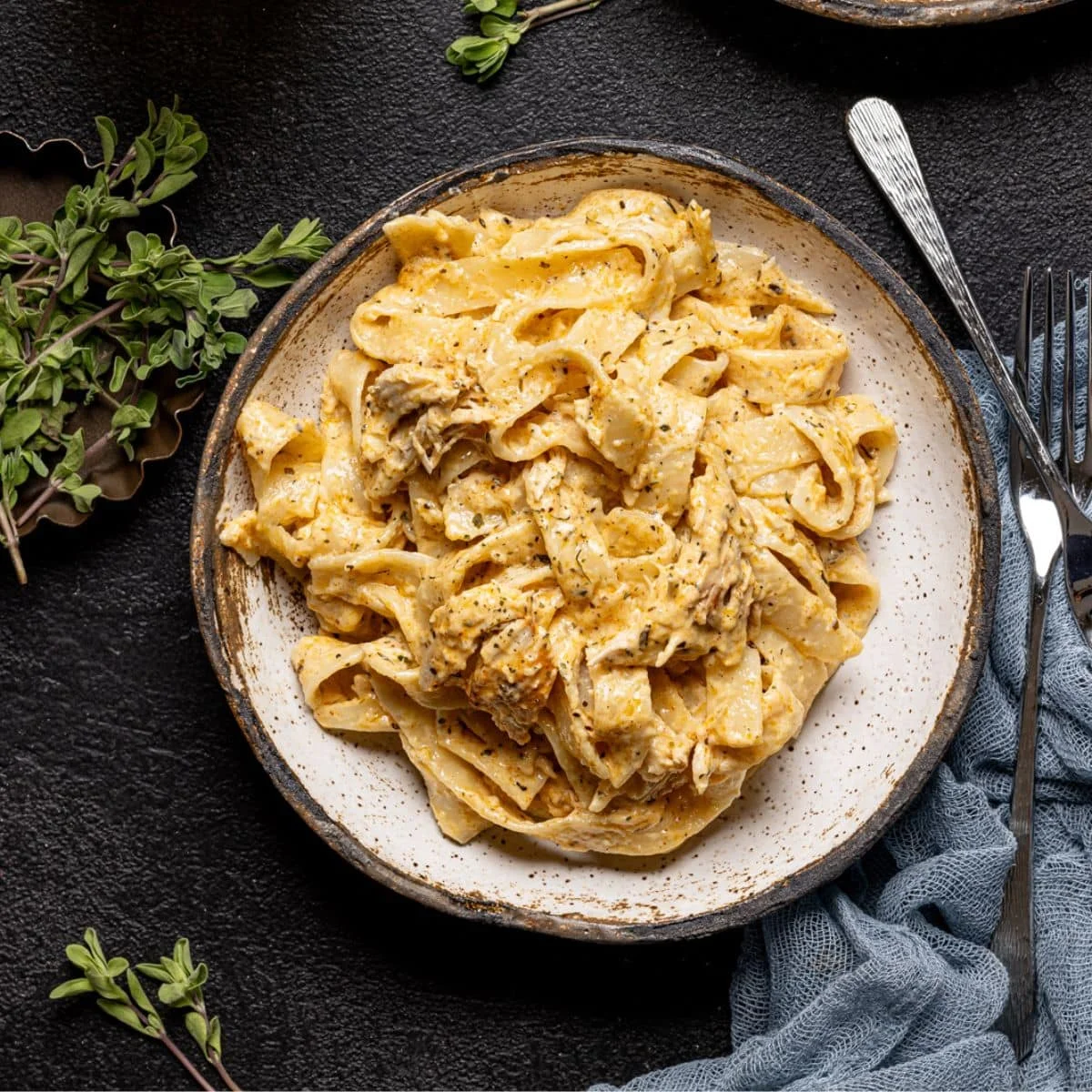
Creamy chicken Alfredo pairs ribbon-shaped pasta and cooked chicken with a rich Alfredo sauce. It is a quick, comforting dinner that comes together in about 25 minutes, especially when the chicken and sauce are ready to use.
Ingredients
- 3–4 cupscooked chicken, shredded, cubed or sliced
- 454 g (16 oz)ribbon-shaped pasta, such as tagliatelle
- 475 ml (2 cups)homemade Alfredo sauce
- 60 ml (¼ cup), optionalsoftened cream cheese
- al gustoherbs and seasonings, optional
Instructions
- 1
Cook the pasta
Cook the pasta according to the packet instructions. Tagliatelle usually takes about 7–10 minutes, though the exact time depends on the brand.
- 2
Make the sauce
Prepare the homemade Alfredo sauce by following its recipe. For a less traditional version, mix in 60 ml (¼ cup) softened cream cheese, herbs and seasonings.
- 3
Combine and serve
Drain the cooked pasta and add it to the sauce, tossing until the sauce coats the ribbons. Add the cooked chicken and toss to coat, or divide the pasta among plates or bowls and top with shredded or sliced chicken. Serve immediately.
What is chicken Alfredo?
Chicken Alfredo is a creamy pasta dish associated with Italian-American cooking, built around pasta tossed with a rich cheese-and-cream-style sauce. This version keeps the ingredient list short and uses cooked chicken for an easy weeknight meal.
Ribbon-shaped pasta gives the sauce plenty of surface to cling to. Tagliatelle is the suggested choice, but other ribbon pasta can work too.
Nutrition and macros by portion
The nutrition label shows one serving as written: 696 calories, 17g protein, 13g carbs, 66g fat.
| Portion | Adjustment | kcal | Protein | Carbs | Fat |
|---|---|---|---|---|---|
| Lighter | More chicken, less pasta | 487 kcal | 12g | 9g | 46g |
| This serving | As written | 696 kcal | 17g | 13g | 66g |
| Hungry | Larger pasta portion | 1044 kcal | 26g | 20g | 99g |
The pasta supplies most of the carbohydrates, while the Alfredo sauce is the main source of fat; the chicken contributes protein. Serve a portion with green vegetables or salad to add a fresh contrast to the creamy pasta.
Choose the pasta
Ribbon pasta: Tagliatelle is named in the recipe, and similar-width ribbons make a good substitute. Check the packet for the cooking time, as brands can differ.
Cook just until tender: Start checking at the lower end of the packet’s timing so the pasta does not become too soft when tossed with the sauce.
Get the sauce ready
Homemade sauce: The method calls for a separate Alfredo sauce recipe, so have the full 475 ml ready as the pasta cooks.
Optional addition: Softened cream cheese, herbs and seasonings can make the sauce less traditional. Stir them into the sauce as directed before coating the pasta.
Coat without clumping
Drain promptly: Once the pasta is cooked, drain it and add it to the sauce rather than letting it sit in the colander.
Toss thoroughly: Keep turning the pasta until the sauce covers the ribbons and clings to them. Add the chicken to the sauce as well, or arrange it on top when serving.
Check the finish
Pasta texture: The ribbons should be tender but still hold their shape. Use the packet timing as a guide and taste a piece before draining.
Sauce coating: Look for an even coating across the pasta rather than a pool of sauce at the bottom of the pan. Serve as soon as it is combined.
Serve it as a meal
The chicken and pasta make this a filling main course. A crisp green salad or steamed green vegetables add freshness alongside the creamy sauce.
Serve straight away for the best texture. If the sauce thickens while you plate, toss the pasta once more before serving.
Recipe notes & tips
- Use the packet timing for your chosen pasta rather than relying only on the tagliatelle estimate.
- Have the sauce ready before draining the pasta so the ribbons can be coated promptly.
- Shred, cube or slice the cooked chicken before you start combining the dish.
- Toss the pasta thoroughly to distribute the sauce across the ribbons.
- Serve immediately after combining for the best texture.
Variations
- Use another ribbon pasta: Swap tagliatelle for a similar ribbon-shaped pasta and follow its packet cooking time.
- Add cream cheese: Stir softened cream cheese into the sauce for the less traditional option described in the recipe.
- Season the sauce: Add herbs and seasonings to the sauce to suit your taste.
- Change the chicken cut: Use shredded, cubed or sliced cooked chicken, as convenient.
- Serve with greens: Add a side salad or green vegetables for a fresh contrast.
Common mistakes to avoid
- Overcooking the pasta: Check it at the packet’s suggested time so it keeps its shape when tossed.
- Letting drained pasta sit: Add it to the sauce promptly to make coating easier.
- Adding chicken too late: Either toss it with the pasta and sauce or arrange it on top just before serving.
- Tossing too briefly: Keep turning the ribbons until the sauce coats them evenly.
- Making the sauce at the last minute: Prepare it while the pasta cooks so it is ready for combining.
How to store
Refrigerate leftovers in a covered container and use within 3 days. Reheat gently in a pan or microwave until hot throughout; the sauce may thicken, so stir regularly.
Frequently asked questions
Can I use a different pasta shape?
Yes. The recipe suggests ribbon-shaped pasta, but another pasta shape can be used; follow the cooking time on its packet.
How long does tagliatelle take to cook?
The recipe gives a usual range of 7–10 minutes, depending on the brand. Check the packet and taste for tenderness before draining.
Can I use leftover cooked chicken?
Yes. The recipe uses cooked chicken, so leftover chicken can be shredded, cubed or sliced and added to the pasta.
Do I mix the chicken into the pasta?
Either approach works: toss it with the pasta and sauce, or serve it on top of the sauced pasta.
Can I make the sauce less traditional?
The recipe suggests adding 60 ml (¼ cup) softened cream cheese, along with herbs and seasonings, to the homemade Alfredo sauce.
Cook it from the original
This recipe comes from orchidsandsweettea.com. Their page has the author’s own photos, notes and tips — the best place to cook it from.
Open the recipe on orchidsandsweettea.com