
Tulapho Recipe (Crispy Fried Pork)
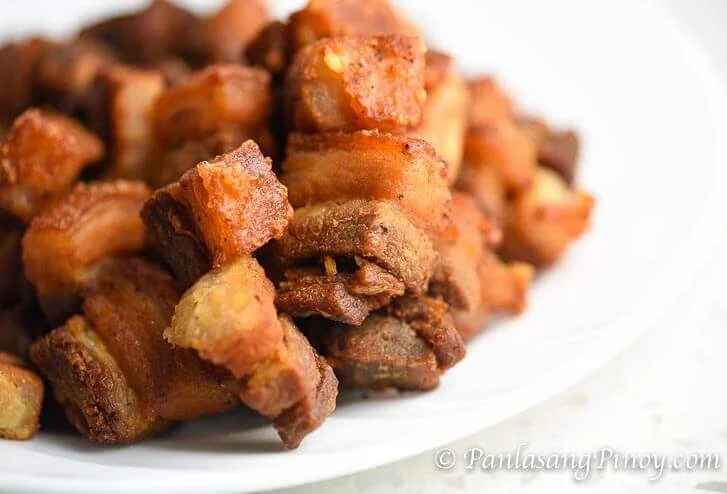
Tulapho is Filipino pork belly simmered with bay leaves and seasoning, then fried until its surface is crisp and golden. The two-stage method tenderises the meat before it cooks in its own rendered fat.
Ingredients
- 450 g (1 lb)sliced pork belly
- 4dried bay leaves
- 1½ tablespoonsrock salt or coarse sea salt
- ¼ teaspoonground black pepper
- 950 ml (4 cups)water
Instructions
- 1
Boil the water
Pour the water into a cooking pot and bring it to the boil.
- 2
Season the water
Add the salt, black pepper and bay leaves.
- 3
Simmer the pork
Carefully slide in the pork and wait for the water to return to the boil. Cover the pot and boil over medium heat until the pork is tender, adding more water if needed.
- 4
Evaporate the water
When the pork is tender, take off the lid. Keep the heat at medium and cook, stirring, until all the water has evaporated.
- 5
Fry until golden
Continue cooking the pork in its own oil, turning it frequently, until it is golden brown.
- 6
Drain the pork
Lift the pork out of the pot or pan and place it on a paper-towel-lined plate.
- 7
Serve the tulapho
Serve the pork as it is, or use it as an ingredient in another Filipino dish.
What is tulapho?
Tulapho is a Filipino preparation of pork belly that is simmered until tender and then fried until browned. This version uses bay leaves, salt and pepper to season the cooking liquid, keeping the flavour straightforward and savoury.
The method makes the most of pork belly’s fat: simmering softens the meat, while the final stage lets it brown in the fat it releases.
Nutrition and macros by portion
The nutrition label shows one serving as written: 650 calories, 12g protein, 0g carbs, 66g fat.
| Portion | Adjustment | kcal | Protein | Carbs | Fat |
|---|---|---|---|---|---|
| Lighter | Smaller pork portion | 455 kcal | 8g | 0g | 46g |
| This serving | As written | 650 kcal | 12g | 0g | 66g |
| Hungry | Larger pork portion | 975 kcal | 18g | 0g | 99g |
Pork belly supplies most of the calories and fat, along with the recipe’s protein; the water and bay leaves contribute little energy. Serve a moderate portion with rice for carbohydrates and vegetables for freshness and balance.
Why simmer before frying?
Tenderise first: the pork cooks in seasoned water before it is fried, giving the belly time to soften without relying on high heat from the start.
Dry it in the pot: once tender, uncover the pork and let the water evaporate. The transition to frying is easier when the liquid is gone.
Choosing and seasoning the pork
Pork belly: sliced belly provides both meat and fat, which renders during cooking and becomes the frying medium. Keep the pieces reasonably similar in thickness so they cook at a similar pace.
Salt and bay: rock salt or coarse sea salt seasons the simmering liquid, while dried bay leaves add a gentle savoury aroma. The recipe gives a choice of salt, so use either one.
Getting the crisp finish
Evaporate fully: stir as the last of the water cooks away, taking care around the hot pot. The pork will begin to fry once the watery bubbling stops.
Turn frequently: keep flipping the pieces as they brown in their own oil. Take them off the heat when they are golden brown, then drain them on paper towel.
How to tell when it is ready
Tenderness: during the simmer, the pork should be tender before you uncover the pot. The recipe does not specify a fixed simmering time, so use the texture as your guide.
Colour: in the final frying stage, look for an even golden-brown surface. Watch closely once the water has evaporated, as the pork can brown more quickly at this point.
Serving and using tulapho
Serve it on its own while freshly cooked, or use it as an ingredient in another Filipino dish. Its rich, savoury flavour pairs well with plain rice and a fresh or sharp side to balance the pork.
Drain the pieces before serving so excess rendered fat does not pool on the plate.
Recipe notes & tips
- Use a pot large enough to hold the pork without crowding it.
- Add more water during simmering if the pot becomes too dry before the pork is tender.
- Stir as the water evaporates so the pork does not catch on the bottom.
- Turn the pork often during frying for more even browning.
- Drain the finished pieces on paper towel before serving.
Variations
- Coarser salt: use rock salt or coarse sea salt as the recipe allows.
- More pepper: add extra ground black pepper for a stronger peppery note.
- Garlic aroma: add crushed garlic to the simmering water for a savoury variation.
- Rice plate: serve with plain rice and a crisp vegetable side.
- Dish ingredient: cut the cooked pork into smaller pieces before adding it to another Filipino dish.
Common mistakes to avoid
- Frying too early: the pork will not have had time to tenderise; simmer it until tender first.
- Leaving water in the pot: the pork will keep boiling rather than frying; cook until the liquid has fully evaporated.
- Using high heat throughout: the surface may brown before the meat is tender; follow the medium-heat simmer and frying stages.
- Not turning the pork: some sides may brown too quickly; flip the pieces frequently.
- Skipping the drain: excess oil can make the serving greasy; rest the pork on paper towel.
How to store
Refrigerate cooled tulapho in an airtight container for up to 3 days. Reheat in a frying pan over medium heat until hot, turning the pieces so they warm evenly and regain some crispness.
Frequently asked questions
Can I use a different cut of pork?
Pork belly is the cut specified and supplies the fat used for frying. A leaner cut will not render the same amount of oil or have the same texture.
How long should I simmer the pork?
The recipe does not give a fixed time. Simmer over medium heat until the pork is tender, adding water if needed.
Why does the pork need to be boiled first?
The simmering stage cooks the pork until tender before the final frying. Once the water evaporates, the pork can brown in its own rendered fat.
Can I use table salt instead?
The recipe specifies rock salt or coarse sea salt. If using fine table salt, it may season the liquid more strongly, so adjust it to taste.
Can I make tulapho ahead?
You can cook it ahead and refrigerate it, though it is crispest when freshly fried. Reheat it in a pan to bring back some of the crisp surface.
Cook it from the original
This recipe comes from panlasangpinoy.com. Their page has the author’s own photos, notes and tips — the best place to cook it from.
Open the recipe on panlasangpinoy.com