
Easy Short-Cut Orange Rolls
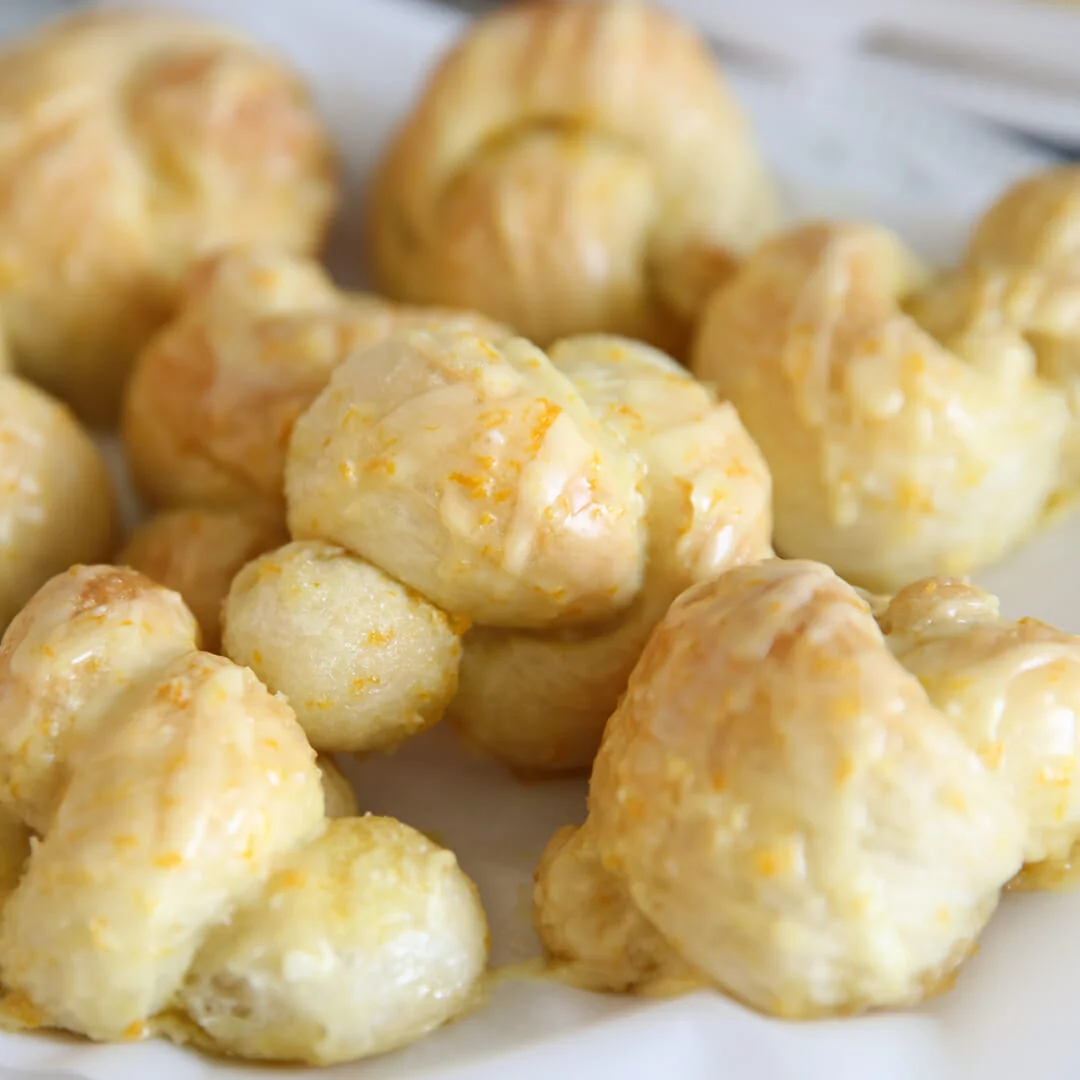
These shortcut orange rolls turn frozen bread dough into soft, fluffy knots coated in orange-scented sugar and finished with a citrus glaze. They’re a handy choice when you want homemade-style rolls without making dough from scratch.
Ingredients
- ½ bag (about 18 rolls)frozen Rhodes rolls, unbaked
- 300 gsugar
- Zest of 1 very large or 2 medium orangesorange zest
- 57 gbutter, melted
- 240 gicing sugar
- 7 gbutter, melted
- 60 mlorange juice
- 1 tablespoonorange zest
- ½ teaspoonvanilla extract
Instructions
- 1
Thaw the rolls
Thaw the frozen rolls until they are no longer frozen but have not risen. You can leave them in the fridge overnight or set them on a baking sheet at room temperature; the original cook’s batch took about an hour.
- 2
Shape and coat
While the rolls thaw, mix the sugar and orange zest in a shallow bowl with a fork until the sugar turns pale orange. Gently stretch each dough ball into a rope about 15 cm long, dip it in the melted butter, then roll it in the sugar mixture. Tie each rope in a simple knot and place it on a baking sheet.
- 3
Rise and bake
Leave the shaped dough to rise until roughly doubled in size and plump. Bake in an oven preheated to 175°C until browned, about 20 minutes.
- 4
Glaze the rolls
When the rolls are nearly done, whisk the icing sugar, melted butter, orange juice, orange zest and vanilla until smooth. Let the rolls cool until just warm, then drizzle with the glaze. Transfer them to a serving plate before the gooey sugar mixture on the baking sheet hardens, if desired.
What are orange rolls?
Orange rolls are sweet, yeasted buns flavoured with citrus and often finished with a glaze. This shortcut version uses ready-made frozen bread dough rather than a homemade dough, making the process more straightforward.
The flavour comes from orange zest mixed into the sugar coating and added again to the glaze. Knotted dough gives the rolls plenty of edges for the buttery sugar and icing to cling to.
Nutrition and macros by portion
The nutrition label shows one serving as written: 186 calories, 2g protein, 42g carbs, 1g fat.
| Portion | Adjustment | kcal | Protein | Carbs | Fat |
|---|---|---|---|---|---|
| Lighter | Smaller, unglazed rolls | 130 kcal | 1g | 29g | 1g |
| This serving | As written | 186 kcal | 2g | 42g | 1g |
| Hungry | Serve two rolls | 279 kcal | 3g | 63g | 2g |
The supplied nutrition lists 42 g of carbohydrate per roll, chiefly from the dough, sugar coating and icing sugar. The dough provides some protein, while the butter contributes fat; the provided estimate is 1 g fat per serving. Pair a roll with fresh fruit or another less-sweet breakfast item if you want a more balanced plate.
Why use frozen dough?
Ready-made dough: the rolls start with frozen bread dough, so there’s no need to mix or knead a dough from scratch. Thaw it only until pliable; the recipe calls for shaping before it has risen.
Gentle handling: stretch each piece into a rope without pulling it so hard that it tears. A simple knot is enough to shape the rolls.
Building the orange coating
Zest and sugar: rubbing them together with a fork distributes the citrus aroma through the coating. Use the specified zest from one very large or two medium oranges.
Butter dip: coat each rope before rolling it in the orange sugar. This helps the sugar mixture adhere and creates the gooey layer beneath the baked rolls.
Getting the rise right
Thawing: the dough should be thawed but not risen before shaping. The recipe gives an hour at room temperature as an example, while an overnight thaw in the fridge is another option.
Proofing: after shaping, wait until the knots look plump and about doubled in size. The method gives this visual cue rather than a set rise time.
Baking and glazing
Colour: bake at 175°C for about 20 minutes, until the rolls are browned. Keep an eye on them towards the end, as the recipe uses colour as the doneness cue.
Warm, not hot: let the rolls cool until just warm before adding the glaze. This gives the icing a chance to sit on the surface rather than disappearing into very hot dough.
Serving the rolls
Sticky base: the baked rolls sit in buttery, orange-flavoured sugar that can harden as it cools. Move them to a serving plate before that happens if you want to avoid leaving them in the baking-sheet mixture.
What to serve alongside: offer the rolls with coffee or tea for breakfast or a snack. Their sweet citrus glaze also pairs simply with fresh fruit.
Recipe notes & tips
- Use a shallow bowl so each dough rope can be rolled evenly in the orange sugar.
- If thawing the dough at room temperature, check it before an hour so it does not begin rising before shaping.
- Stretch the dough gently into ropes to help prevent tears.
- Wait for the knots to look plump and roughly doubled before baking.
- Whisk the glaze until smooth before drizzling it over the rolls.
- Move the rolls off the baking sheet before the sticky sugar mixture sets if you want to serve them neatly.
Variations
- More citrus: add extra orange zest to the glaze for a more pronounced orange flavour.
- Lemon twist: replace some of the orange zest with lemon zest for a mixed-citrus finish.
- Spiced sugar: mix a little ground cinnamon into the coating for a warmer flavour.
- Thinner glaze: add a small amount of orange juice at a time until the icing reaches your preferred consistency.
- No vanilla: leave out the vanilla extract for a simpler orange glaze.
Common mistakes to avoid
- Dough already rising before shaping: thaw only until the rolls are no longer frozen, then shape them.
- Torn ropes: stretch the dough gently instead of pulling it sharply.
- Uneven coating: dip each rope in butter first, then roll it through the sugar mixture.
- Under-proofed knots: wait until the shaped rolls look plump and about doubled before baking.
- Glazing hot rolls: let them cool until just warm so the glaze stays more visible.
- Sugar setting on the tray: transfer the rolls to a serving plate before the gooey mixture hardens.
How to store
Store cooled rolls in an airtight container at room temperature and eat within 1–2 days for the softest texture. Warm briefly before serving if desired; the glaze may become sticky again.
Frequently asked questions
Can I thaw the rolls overnight?
Yes. The recipe suggests thawing them in the fridge overnight, or at room temperature until thawed but not risen.
How long does the dough take to thaw?
The original cook’s rolls took about an hour at room temperature, but the time can vary. Use the dough’s condition—thawed but not risen—as your guide.
How do I know when the rolls have risen enough?
They should look plump and be about double their shaped size. The recipe does not specify a set time for this rise.
Can I make the glaze ahead?
The method makes the glaze when the rolls are nearly done. If you prepare it earlier, whisk it again before drizzling in case it has thickened.
Why should I move the rolls off the baking sheet?
The buttery sugar mixture beneath them can harden as it cools. Transfer the rolls to a serving plate while that mixture is still soft if you want to keep them from sticking to the tray.
Cook it from the original
This recipe comes from ourbestbites.com. Their page has the author’s own photos, notes and tips — the best place to cook it from.
Open the recipe on ourbestbites.com