
Potato Stew-Side Dish for Appam-Idiyappam
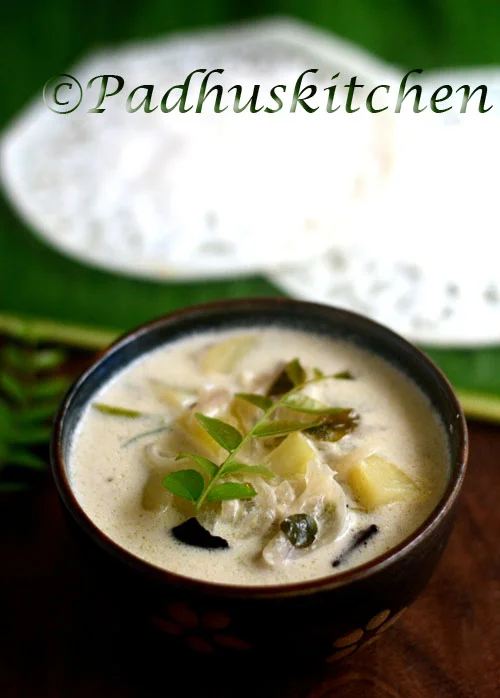
This Kerala-style potato stew is gently spiced and simmered in two additions of coconut milk for a creamy, pourable finish. Serve it with appam, idiyappam or chapati to make a comforting meal.
Ingredients
- 3 mediumpotatoes
- 1onion, thinly sliced
- 3green chillies, slit
- 240 ml (1 cup)thin, diluted coconut milk
- 300 ml (1 1/4 cups)thick coconut milk
- 1/2 tspcoriander powder
- to tastesalt
- 2 tspcoconut oil
- 2.5 cm (1 inch)cinnamon
- 2cloves
- 1bay leaf
- 1/2 tspfennel seeds
- 1 sprigcurry leaves
- 1 tspcoconut oil
- 1 sprigcurry leaves
Instructions
- 1
Prepare the potatoes
Wash and peel the potatoes, then cut them into medium-sized pieces. Slit the green chillies and thinly slice the onion.
- 2
Prepare the coconut milk
Extract the thin and thick coconut milk.
- 3
Heat the spices
Heat 1 tsp coconut oil in a pan. Add the cinnamon, cloves, bay leaf and fennel seeds.
- 4
Soften the onion
When the fennel seeds splutter, add the onion and green chillies. Sauté until the onion turns transparent, without letting it brown.
- 5
Add potatoes
Add the potato pieces, coriander powder, salt to taste and thin coconut milk.
- 6
Cook until tender
Cook until the potatoes are soft. Alternatively, pressure-cook for 3 whistles.
- 7
Mash a few pieces
Once the potatoes are cooked, lightly mash a few pieces in the pan.
- 8
Add thick coconut milk
Pour in the thick coconut milk and simmer for 1 minute.
- 9
Finish the stew
Add a sprig of curry leaves and drizzle over 1 tsp coconut oil. Keep the stew thin.
- 10
Serve the stew
Serve with appam, idiyappam or chapati.
What is potato stew?
Potato stew, also called ishtu, is a gently spiced Kerala dish often served alongside appam or idiyappam. Coconut milk gives it a mellow, creamy character without the need for a thick gravy.
This version builds flavour with whole spices, onion and green chillies, then uses thin coconut milk to cook the potatoes and thick coconut milk to finish.
Nutrition and macros by portion
The nutrition label shows one serving as written: 595 calories, 6g protein, 43g carbs, 43g fat.
| Portion | Adjustment | kcal | Protein | Carbs | Fat |
|---|---|---|---|---|---|
| Lighter | Use less thick coconut milk | 417 kcal | 4g | 30g | 30g |
| This serving | As written | 595 kcal | 6g | 43g | 43g |
| Hungry | Serve with extra appam | 893 kcal | 9g | 65g | 65g |
Potatoes provide most of the carbohydrates, while coconut milk and coconut oil contribute most of the fat; the dish has relatively little protein. For a more balanced plate, serve a moderate portion alongside a protein-rich dish and vegetables.
The coconut milk matters
Thin milk: use this to simmer the potatoes so they cook in a light, well-seasoned liquid.
Thick milk: add it only near the end, then simmer briefly to keep its richness and avoid making the stew too heavy.
Keep the aromatics gentle
Onion: cook it until transparent rather than browned, as the recipe calls for a mild, softly flavoured base.
Whole spices: let the fennel seeds, cinnamon, cloves and bay leaf warm in the oil before adding the onion. This helps their aroma spread through the stew.
Cook the potatoes evenly
Even pieces: cut the potatoes to a similar medium size so they soften at roughly the same time.
Tenderness: check that a piece can be pierced easily before adding the thick coconut milk. Lightly mashing a few pieces gives the liquid a little body while keeping the stew thin.
Finish without boiling
After adding thick coconut milk, simmer for just 1 minute. A longer or vigorous boil can make the finish less smooth.
The final curry leaves and drizzle of coconut oil add a fresh, fragrant note; add them at the end as directed.
What to serve it with
Appam and idiyappam are natural partners for this gently flavoured stew, as their mild taste works well with the coconut-milk sauce.
Chapati is another option. Serve the stew while warm, keeping enough liquid in each portion to spoon over the bread.
Recipe notes & tips
- Cut the potatoes into similar-sized pieces so they cook evenly.
- Keep the onion pale and translucent rather than browning it.
- Add the thick coconut milk only after the potatoes are tender.
- Mash just a few potato pieces to add a little body while keeping the stew pourable.
- Taste for salt before serving, as the recipe leaves the amount to preference.
Variations
- Adjust the heat: use fewer slit green chillies for a milder stew.
- Make it thicker: mash a few more potato pieces before adding the thick coconut milk.
- Use homemade coconut milk: prepare thin and thick extracts separately, as the recipe directs.
- Change the accompaniment: serve with chapati instead of appam or idiyappam.
Common mistakes to avoid
- Browning the onion: cook it only until transparent to keep the flavour gentle.
- Adding thick milk too early: wait until the potatoes are soft before stirring it in.
- Boiling after the finish: simmer the thick coconut milk for just 1 minute.
- Over-mashing: mash only a few pieces so the stew remains thin and potato chunks remain.
- Uneven potato pieces: cut them to a similar medium size for more even cooking.
How to store
Cool leftovers promptly and refrigerate in a covered container for up to 2 days. Reheat gently in a pan, stirring carefully and avoiding a vigorous boil; add a splash of water if the stew has thickened.
Frequently asked questions
Can I use canned coconut milk?
Yes. Use a diluted portion for the thin coconut milk and a richer portion for the thick milk. Keep the two additions separate, as in the recipe.
Can I pressure-cook the potatoes?
Yes. The method gives 3 whistles as an alternative to cooking them in the pan. Add the thick coconut milk after the potatoes are cooked.
How can I tell when the potatoes are done?
They should be soft enough to pierce easily and lightly mash with a spoon. Check a larger piece before adding the thick coconut milk.
Should this stew be thick?
No. The recipe specifies a thin stew. Mash only a few potato pieces and avoid reducing the liquid too much.
What can I serve with potato stew?
Serve it with appam, idiyappam or chapati, as suggested in the recipe.
Cook it from the original
This recipe comes from padhuskitchen.com. Their page has the author’s own photos, notes and tips — the best place to cook it from.
Open the recipe on padhuskitchen.com