
Ultimate South African Biltong Recipe
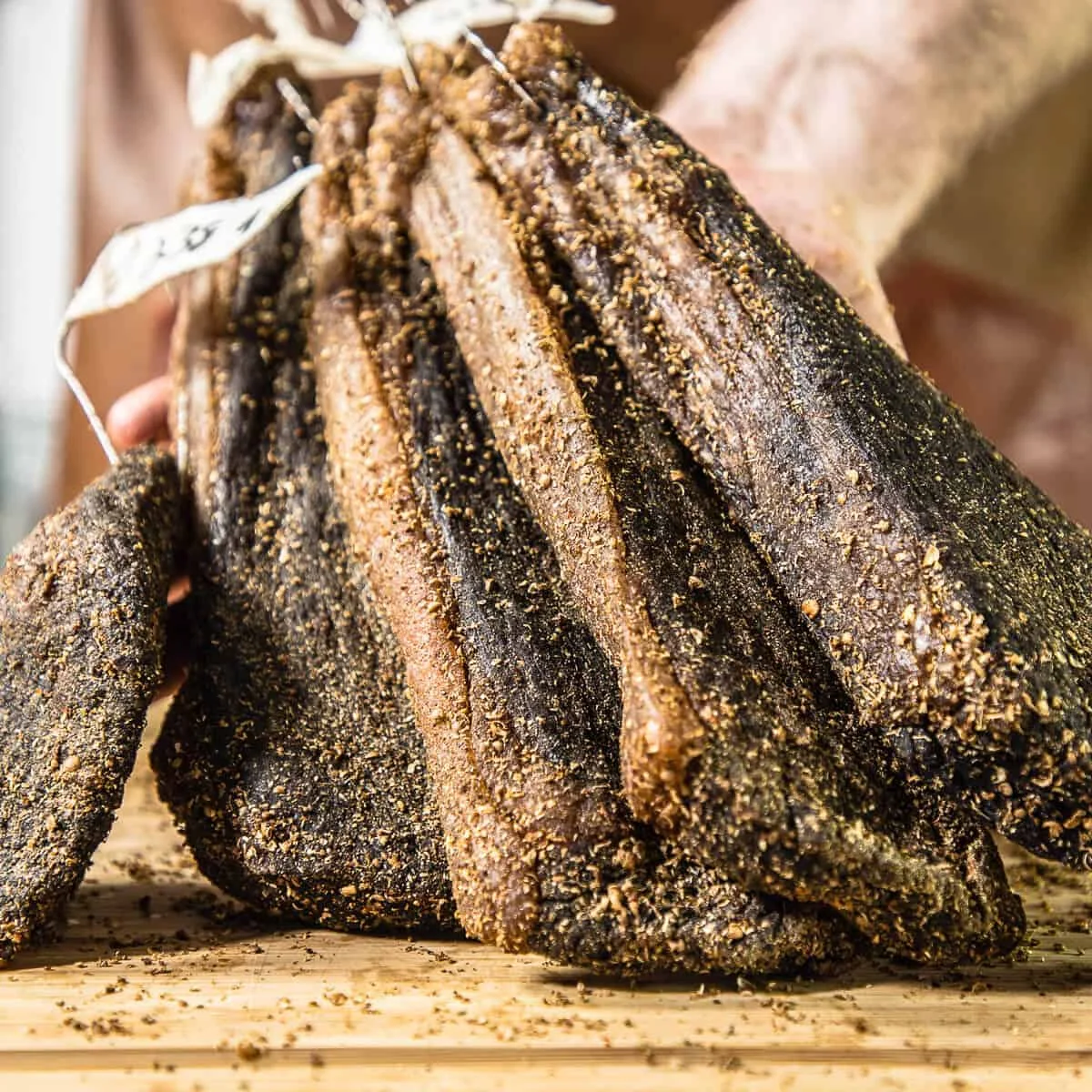
Biltong is a South African-style dried, cured meat seasoned with vinegar, spices and a little honey. This batch uses a short salt and vinegar cure before hanging the meat to dry, making it a flavourful snack to slice and share.
Ingredients
- 2000 gtop rump (or topside with plenty of fat)
- 120 gcoarse sea salt
- 120 gred wine vinegar
- 120 gWorcestershire sauce
- 60 ghoney
- 40 gcoriander seeds
- 20 gfennel seeds
- 4 gchilli flakes
- 10 gblack peppercorns
- 6 g, optionalbaking soda
Instructions
- 1
Cut the meat
Cut the meat along the grain into strips about 3 cm (1.1 inches) thick. Trim away silver skin and connective tissue, and remove any unwanted fat; leaving some fat on is suggested for moisture and flavour.
- 2
Salt the meat
Sprinkle the coarse salt over every surface, including the sides. Leave the meat in the salt for 3 hours, turning it a few times for even salting.
- 3
Mix the cure
While the meat is salting, combine the red wine vinegar, Worcestershire sauce and honey.
- 4
Marinate the meat
After 3 hours, rub the salt off the meat without washing it. Put the meat and wet cure in a suitably sized, food-safe, non-reactive plastic or ceramic container and marinate for 2 hours, turning the meat a few times.
- 5
Toast the spices
While the meat marinates, toast the coriander seeds, fennel seeds and chilli flakes in a dry pan over medium heat. Work in a well-ventilated kitchen.
- 6
Cool and grind
When the spices smell fragrant and are slightly smoky, take them off the heat and let them cool completely. Grind them in a spice grinder or with a pestle and mortar until broken up but still recognisable.
- 7
Add the soda
If using baking soda, mix it into the meat along with the marinade. The mixture will froth as the soda reacts with the acid.
- 8
Dry the meat
Once the froth settles, lift the meat out of the marinade and pat it dry with paper towel. Discard the marinade, or use it for other meat; if reusing it for another batch of biltong, add more vinegar because the acid has been partly neutralised.
- 9
Season and label
Cover the meat completely with the ground spices, working them into every nook and cranny. Put a small meat hook or paperclip through each piece and attach a label; weigh the meat and write its weight on the label so you can track moisture loss.
- 10
Hang to dry
Hang the meat in a well-ventilated, dry-air, warm place close to 30°C, protected from insects and animals. Aim for 50% weight loss; drying should take around a week, but start monitoring it after 4 days.
- 11
Slice and store
When the meat is ready, remove the hooks and slice it thinly with a sharp knife. Keep it wrapped airtight or in vacuum bags in the fridge, or freeze it for longer storage.
What is biltong?
Biltong is a cured and dried meat associated with South Africa and also enjoyed across southern Africa, including Namibia. It is seasoned before drying, rather than cooked like a roast, and is commonly sliced thinly to eat as a snack.
This version layers a brief salt rest with a vinegar-based cure, then adds toasted coriander, fennel, chilli and pepper. Leaving some fat on the meat is suggested here for extra moisture and flavour.
Nutrition and macros by portion
The nutrition label shows one serving as written: 101 calories, 12g protein, 1g carbs, 6g fat.
| Portion | Adjustment | kcal | Protein | Carbs | Fat |
|---|---|---|---|---|---|
| Lighter | Choose leaner beef | 71 kcal | 8g | 1g | 4g |
| This serving | As written | 101 kcal | 12g | 1g | 6g |
| Hungry | Serve a larger portion | 152 kcal | 18g | 2g | 9g |
The listed nutrition is 101 kcal per serving, with 12 g protein, 1 g carbohydrate and 6 g fat; most of the protein and fat come from the beef, while the small amount of carbohydrate comes mainly from the honey and seasonings. Pair a portion with vegetables or fruit and a source of fibre, such as bread, to make a more balanced snack or plate.
Choosing and cutting the meat
Cut along the grain: The recipe specifies strips about 3 cm thick and cut with the grain. Keeping the pieces a similar size helps them dry at a more comparable pace.
Trim with care: Remove silver skin and connective tissue, but the recipe suggests keeping some fat. Top rump is listed, with topside as an alternative when it has plenty of fat.
The two-part cure
Salt first: Coat all sides, then leave the meat in salt for 3 hours, turning it a few times. Rub the salt off afterwards rather than rinsing the meat.
Vinegar mixture: The red wine vinegar, Worcestershire sauce and honey make the wet cure. Marinate the meat for 2 hours in a non-reactive, food-safe plastic or ceramic container, turning it during that time.
Toasting the spices
Toast gently: Coriander, fennel and chilli flakes go into a dry pan over medium heat. The recipe calls for a well-ventilated kitchen while toasting.
Keep some texture: Cool the toasted spices completely before grinding. Stop when they are broken up but still visibly distinct, rather than turning them into a fine powder.
Applying the seasoning
Cover every surface: Pat the meat dry after it comes out of the cure, then work the spice mixture into all its nooks and crannies. Thorough coverage helps each strip carry the seasoning.
Optional soda: Baking soda can be mixed into the meat with the marinade, where it will froth as it reacts with the acid. Wait for the froth to settle before removing and drying the meat.
Drying and checking readiness
Hang with airflow: The recipe specifies a warm, dry-air, well-ventilated place close to 30°C, protected from insects and animals. Attach a label with the starting weight so you can follow moisture loss.
Track the weight: The target is 50% weight loss, with around a week given as a guide. Begin checking after 4 days, since the drying time can vary.
Serving and pairing
Slice the finished biltong thinly with a sharp knife once it is ready. It works as a snack on its own or as part of a sharing board.
For a more complete plate, serve it with fresh vegetables or fruit and a starchy side such as bread. Those additions balance the meat's savoury, spiced flavour.
Recipe notes & tips
- Cut the strips to a consistent thickness so they dry at a similar rate.
- Use a food-safe, non-reactive plastic or ceramic container for the wet cure.
- Turn the meat a few times during both the salt rest and the 2-hour marinade.
- Let the toasted spices cool completely before grinding them.
- Label each piece with its starting weight to make moisture loss easier to monitor.
- Start checking the drying meat after 4 days rather than relying only on the week-long estimate.
Variations
- Milder spice: Leave out the chilli flakes for a gentler seasoning.
- More heat: Increase the chilli flakes to make the spice coating hotter.
- Pepper-forward: Add more black peppercorns for a sharper, savoury edge.
- Alternative cut: Use topside with plenty of fat in place of top rump.
- Skip the soda: Leave out the optional baking soda and follow the rest of the curing method.
Common mistakes to avoid
- Cutting across the grain: Cut along the grain as instructed so the strips follow the recipe's intended direction.
- Rinsing after salting: Rub off the salt but do not wash the meat.
- Grinding while warm: Cool the toasted spices completely before grinding them.
- Grinding too finely: Stop once the spices are broken up and still identifiable.
- Guessing the drying time: Weigh the meat and start monitoring after 4 days, aiming for 50% weight loss.
- Leaving meat unprotected: Hang it away from insects and animals in the specified well-ventilated place.
How to store
Keep the finished biltong wrapped airtight or in vacuum bags in the fridge. Freeze it for longer storage; the recipe does not specify a storage duration.
Frequently asked questions
How long does biltong take to dry?
The recipe gives around a week as a guide, but says to start monitoring after 4 days. Use the labelled starting weight and aim for 50% weight loss.
Can I use topside instead of top rump?
Yes. The recipe lists topside as an alternative, preferably with plenty of fat.
Do I need to rinse the salt off?
No. After the 3-hour salting period, rub the salt off without washing the meat.
Can I leave out the baking soda?
Yes, it is optional. If you use it, mix it with the meat and marinade and wait for the froth to settle before taking the meat out.
What should I do with the leftover marinade?
The method says to discard it or use it to marinate other meat. If using it for another batch of biltong, add more vinegar because the acid has been partly neutralised.
How should I store biltong?
Wrap it airtight or put it in vacuum bags and refrigerate it. For longer storage, freeze it.
Cook it from the original
This recipe comes from pantsdownapronson.com. Their page has the author’s own photos, notes and tips — the best place to cook it from.
Open the recipe on pantsdownapronson.com