
Beef Adobo
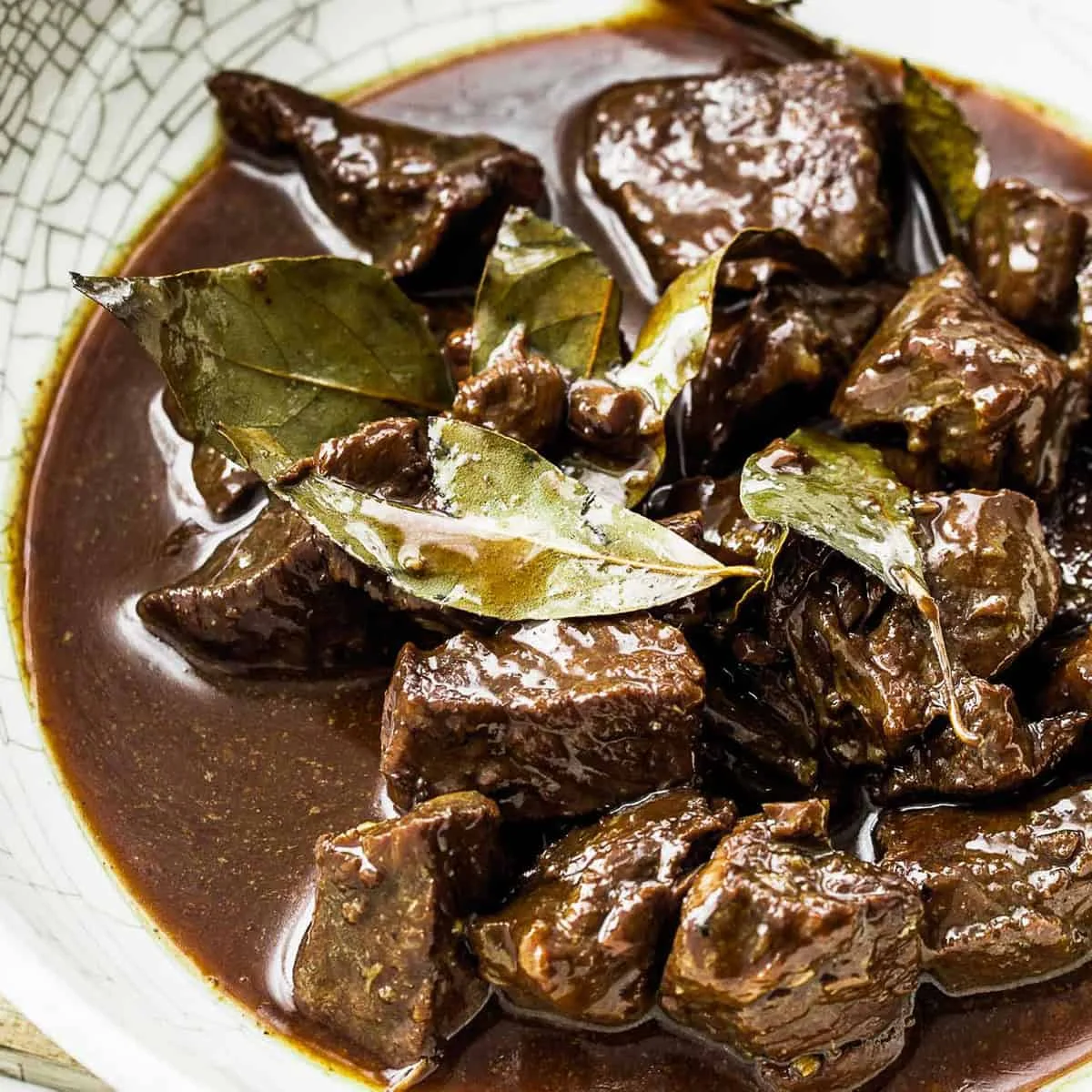
Beef adobo is a Filipino braise of beef cooked until tender in a savoury, tangy sauce with soy sauce, vinegar, garlic and spices. An overnight marinade and a slow oven braise make it a make-ahead dish that works well with rice.
Ingredients
- 1 kgbeef blade (or stewing beef such as chuck)
- 300 gwater (or beef stock)
- 70 gcoconut sap vinegar (red wine or apple cider vinegar also works)
- 150 gsoy sauce (use gluten-free soy sauce if needed)
- 40 gbrown sugar
- 30 gchopped garlic
- 2 gbay leaf
- 2 gblack peppercorns
- 5 gcornflour
- 10 gwater
Instructions
- 1
Prepare the marinade
Cut the beef into chunks and make the marinade from the listed marinade ingredients. Short ribs or beef cheeks can also be used.
- 2
Marinate the beef
Mix the beef with the marinade, cover and refrigerate overnight, or for about 8 hours.
- 3
Remove the beef
The next morning, take the beef out of the marinade.
- 4
Sear the meat
Pat the beef dry with a clean kitchen cloth, then sear it in a heavy-based cast-iron pan. Drying the surface helps it brown.
- 5
Boil the marinade
Once the beef is seared, add the marinade directly to the pan and bring it to the boil.
- 6
Strain the sauce
The sauce may look split as it boils. Strain it through a sieve, then transfer the beef and strained liquid to an ovenproof dish.
- 7
Braise the beef
Cover the dish tightly with foil or a lid. Cook in an oven at 150°C for 3 hours, or until the beef is soft and tender.
- 8
Check for tenderness
Check the beef after cooking and continue until it is rich, soft and succulent. Once tender, the adobo is ready to serve or to finish the sauce.
- 9
Make a slurry
Pour the sauce into a small pan. Mix the cornflour with 10 g water to make a smooth slurry.
- 10
Thicken the sauce
Bring the sauce to the boil, then whisk in the slurry. Cook until it thickens slightly; it should not become overly thick.
- 11
Return and serve
Stir the beef back into the sauce and serve with a side of your choice.
What is beef adobo?
Adobo is a Filipino cooking style known for simmering ingredients with vinegar, soy sauce and aromatics. The exact mix varies between cooks and households.
This version uses beef blade and a long, covered oven braise. The vinegar and soy-based marinade seasons the meat, while slow cooking makes a tougher cut tender.
Nutrition and macros by portion
The nutrition label shows one serving as written: 703 calories, 101g protein, 22g carbs, 21g fat.
| Portion | Adjustment | kcal | Protein | Carbs | Fat |
|---|---|---|---|---|---|
| Lighter | More vegetables, less rice | 492 kcal | 71g | 15g | 15g |
| This serving | As written | 703 kcal | 101g | 22g | 21g |
| Hungry | Larger beef portion | 1055 kcal | 152g | 33g | 32g |
The beef supplies most of the protein and also contributes fat, while the brown sugar and any rice served alongside provide carbohydrates. The sauce ingredients contribute flavour and sodium, particularly the soy sauce. Serve with a generous portion of vegetables and a measured serving of rice to round out the plate.
Why choose beef blade?
Cut choice: Beef blade, chuck, short ribs or beef cheeks suit this method because they can become tender during a long braise. Cut the beef into chunks so it is easier to handle and serve.
Marinade: Soy sauce brings savouriness, vinegar adds tang, and brown sugar rounds out the sharpness. Garlic, bay leaf and peppercorns build the aromatic base.
The overnight marinade
Timing: Leave the beef in the marinade in the fridge for about 8 hours or overnight, as directed. This gives the flavours time to mingle before cooking.
Before searing: Lift the beef out of the marinade and pat it dry. A dry surface browns more readily than one coated in liquid.
Searing and straining
Searing: Use a heavy-based cast-iron pan and brown the dried beef. Then add the marinade to the pan and bring it to the boil.
Straining: The boiling liquid may look split as proteins from the meat coagulate. Strain the liquid through a sieve before combining it with the beef in the ovenproof dish.
How to judge doneness
Braising: Keep the dish covered and cook at 150°C for 3 hours. The beef is ready when it feels soft and tender rather than resistant when tested.
Sauce: Mix the cornflour with the measured water before adding it to boiling sauce. Whisk as you pour, and stop when the sauce has thickened slightly.
What to serve with it
Rice: Plain steamed rice is a simple partner for the savoury, tangy sauce and tender beef. Spoon some sauce over the rice as you serve.
Vegetables: Add a side of steamed greens or another vegetable to bring freshness and contrast to the rich braise.
Recipe notes & tips
- Cut the beef into evenly sized chunks so they cook at a similar rate.
- Pat the beef dry before searing for better browning.
- Bring the marinade to the boil before transferring it with the beef to the ovenproof dish.
- Keep the dish tightly covered during the braise to limit moisture loss.
- Mix the cornflour fully with its water before adding it to the hot sauce.
- Add the slurry gradually and stop when the sauce is lightly thickened.
Variations
- Use chuck: Swap in stewing beef such as chuck if beef blade is unavailable.
- Try short ribs: Use beef short ribs for a different cut with the same braising method.
- Use beef cheeks: Beef cheeks can stand in for the blade and suit slow cooking.
- Change the vinegar: Use red wine vinegar or apple cider vinegar instead of coconut sap vinegar.
- Choose gluten-free soy sauce: Use a gluten-free option if required.
- Serve with rice: Pair the finished beef and sauce with steamed rice.
Common mistakes to avoid
- Wet beef: Pat the chunks dry before searing so they brown rather than steam.
- Skipping the sieve: Strain the boiled marinade as directed before putting it in the ovenproof dish.
- Uncovered braising: Cover the dish with foil or a lid to keep the braise enclosed.
- Stopping too soon: Check that the beef is soft and tender before finishing the sauce.
- Lumpy slurry: Stir the cornflour and water together smoothly before whisking them into the sauce.
- Over-thickening: Add the slurry while whisking and stop once the sauce has thickened slightly.
How to store
Cool leftovers and refrigerate them in a covered container for up to 3 days. Reheat gently in a pan until piping hot, adding a little water if the sauce has become too thick.
Frequently asked questions
Can I use a different cut of beef?
Yes. The recipe suggests chuck, short ribs or beef cheeks as alternatives to beef blade. Keep the covered braising method and cook until tender.
How long should I marinate the beef?
Marinate it in the fridge overnight or for about 8 hours, as specified in the method.
Why does the sauce look split when it boils?
The method attributes this appearance to proteins from the meat juices coagulating at the surface. Strain the liquid through a sieve before braising.
Can I use stock instead of water?
Yes. The recipe lists beef stock as an alternative to the 300 g water.
How can I tell when the beef is ready?
After the 3-hour braise at 150°C, check whether the beef is soft and tender. If it is still firm, continue cooking until it reaches that texture.
Can I make the sauce thicker?
The recipe uses a cornflour slurry to thicken the sauce slightly. Add it while whisking and avoid making the sauce overly thick.
Cook it from the original
This recipe comes from pantsdownapronson.com. Their page has the author’s own photos, notes and tips — the best place to cook it from.
Open the recipe on pantsdownapronson.com