
Sheikh el Mahshi
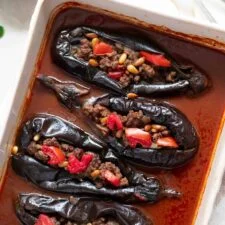
Sheikh el mahshi is a Middle Eastern dish of tender eggplants filled with spiced minced meat and pine nuts, then baked in tomato broth. It makes a comforting main meal, especially served over white or vermicelli rice.
Ingredients
- 6–8Italian aubergines
- 30 ml (2 tablespoons)olive oil
- ¼ teaspoonsea salt
- 30 ml (2 tablespoons)olive oil or neutral oil
- 1 mediumsweet onion, diced
- 227 g (½ pound)minced beef or lamb, or a mixture of both
- A pinchground cinnamon, nutmeg and pepper
- ½ teaspoonallspice
- ½ teaspoonsea salt
- 35 g (¼ cup)pine nuts
- 240 ml (1 cup)meat broth
- 15–30 ml (1–2 tablespoons)tomato paste
- ¼ teaspoonsalt, adjusted to taste
- ¼ teaspoonallspice
- 1–2tomatoes, diced
Instructions
- 1
Prepare aubergines
Heat the oven to 200°C (400°F) and lightly grease a baking tray. With a sharp knife, cut each aubergine lengthways from the top, keeping the stem attached.
- 2
Season and roast
Arrange the aubergines on the tray, brush them with olive oil and sprinkle with sea salt. Roast uncovered for 20–30 minutes, until softened.
- 3
Cook the onion
Heat the olive or neutral oil in a small saucepan over medium-high heat. Add the diced onion and sauté until caramelised.
- 4
Brown the meat
Add the meat to the onion and break it up with the back of a spatula. Stir in the cinnamon, allspice, nutmeg, salt and pepper, then cook for 8–10 minutes, until browned and fully cooked.
- 5
Add pine nuts
Stir the toasted pine nuts into the meat mixture.
- 6
Heat the oven
Set the oven to 180°C (350°F).
- 7
Fill the aubergines
When the aubergines are cool enough to handle, use your hands to open a pocket in each one. Fill each with about 2–3 tablespoons of the meat mixture, continuing until all are stuffed.
- 8
Arrange in dish
Place the stuffed aubergines in a Pyrex or other 23 × 33 cm (9 × 13 inch) casserole dish.
- 9
Mix the sauce
In a separate cup, combine the warm meat broth with the tomato paste, salt and allspice; blend if desired. Pour the mixture over and around the stuffed aubergines.
- 10
Bake covered
Cover the dish with foil and bake for 30 minutes.
- 11
Serve with rice
Serve hot over white or vermicelli rice.
What is Sheikh el mahshi?
Sheikh el mahshi is a Middle Eastern dish whose name is commonly associated with aubergines filled with a savoury meat mixture. Recipes vary across households and regions, but spiced meat, tender aubergine and a tomato-based sauce are a familiar combination.
This version roasts the aubergines before filling them, then bakes them in broth mixed with tomato paste. The method softens the aubergines first and gives the meat filling time to flavour the sauce.
Nutrition and macros by portion
The nutrition label shows one serving as written: 405 calories, 23g protein, 27g carbs, 27g fat.
| Portion | Adjustment | kcal | Protein | Carbs | Fat |
|---|---|---|---|---|---|
| Lighter | Use less oil and lean mince | 284 kcal | 16g | 19g | 19g |
| This serving | As written | 405 kcal | 23g | 27g | 27g |
| Hungry | Add a larger rice portion | 608 kcal | 35g | 41g | 41g |
The aubergines and tomatoes contribute most of the carbohydrates, while the meat provides protein and much of the fat; olive oil and pine nuts add further fat. Serve with a generous helping of vegetables alongside, and add rice according to how substantial you want the meal to be.
Choosing the aubergines
Size matters: small Italian aubergines are convenient to portion and easier to fill than large ones. Choose firm aubergines with unblemished skins, and keep the stems attached when cutting them lengthways.
Roast first: the initial bake softens the flesh enough to open a pocket without needing to scoop out and discard the inside. Let them cool until manageable before handling.
Building the meat filling
Brown the onion: cook it until caramelised before adding the meat, so it has time to soften and develop sweetness. Stir regularly to keep it from catching in the pan.
Season evenly: break the minced meat into small pieces as it cooks, then mix in the spices and salt. The filling is ready when the meat is browned and fully cooked; stir in the toasted pine nuts at the end.
Filling without tearing
Make a pocket: once the aubergines are cool enough to handle, gently open the cut with your fingers. Avoid pressing hard on the softened sides, which can split.
Keep portions modest: about 2–3 tablespoons of filling per aubergine is the suggested amount. If the aubergines vary in size, distribute the filling between them rather than overfilling the smallest ones.
Getting the sauce right
Dissolve the paste: mix the tomato paste thoroughly into the warm broth so it is evenly dispersed before pouring it into the casserole. Taste the mixture and adjust the salt to suit your broth.
Use the baking liquid: pour the sauce both over and around the aubergines, then cover the dish with foil. This keeps the aubergines moist while they bake for 30 minutes.
Serving and timing
The recipe takes about 90 minutes in total, including roasting, preparing the filling, stuffing and the final bake. The aubergines should be softened in the first roast, and the meat must be fully cooked before it goes into them.
Serve the stuffed aubergines hot over white or vermicelli rice, as suggested. A crisp salad or a bowl of plain yoghurt can also make a fresh contrast to the rich filling.
Recipe notes & tips
- Choose aubergines of similar size so they soften at roughly the same rate.
- Let the roasted aubergines cool enough to handle before opening their pockets.
- Break the mince into small pieces for a more evenly distributed filling.
- Toast the pine nuts before stirring them into the meat mixture.
- Mix the tomato paste into warm broth until smooth before pouring it over the aubergines.
- Check that the broth is not already very salty before adding the measured salt.
Variations
- Use lamb: choose minced lamb instead of beef for a richer-tasting filling.
- Combine the meats: use a mixture of beef and lamb as the recipe allows.
- Add fresh herbs: stir chopped parsley into the cooked filling for a fresh note.
- Make it meat-free: replace the meat with cooked lentils and keep the same spices.
- Serve with vermicelli rice: use vermicelli rice instead of plain white rice.
Common mistakes to avoid
- Cutting through the stem: keep it intact so the aubergine halves remain joined at the top.
- Handling them while hot: allow the roasted aubergines to cool enough to handle before making pockets.
- Overfilling: use about 2–3 tablespoons per aubergine so the softened sides are less likely to split.
- Leaving meat in large clumps: break it up with the spatula as it cooks for a more even filling.
- Pouring in lumpy paste: blend the tomato paste into the warm broth before adding it to the dish.
- Skipping the foil: cover the casserole for the final 30-minute bake to help retain moisture.
How to store
Refrigerate leftovers in a covered container for up to 3 days. Reheat in a covered ovenproof dish until piping hot throughout, or warm gently in the microwave; store rice separately if possible.
Frequently asked questions
Can I use large aubergines?
Yes, but cut them into portions that are easy to fill and serve. Larger pieces may need a little more time in the first roast to soften.
Do I have to use beef?
No. The recipe allows minced beef, lamb or a mixture of the two.
Can I prepare the dish ahead?
You can roast the aubergines and prepare the meat filling ahead, then assemble them with the sauce and bake when ready. Keep the prepared components covered and refrigerated in the meantime.
How do I know when the aubergines are ready to fill?
They should be softened after 20–30 minutes at 200°C (400°F), while still holding their shape well enough to open and fill.
Can I leave out the pine nuts?
Yes. The dish will still work without them, though the filling will lose their distinctive nutty crunch.
What should I serve with Sheikh el mahshi?
Serve it hot over white or vermicelli rice. A fresh salad or plain yoghurt is a useful accompaniment.
Cook it from the original
This recipe comes from palestineinadish.com. Their page has the author’s own photos, notes and tips — the best place to cook it from.
Open the recipe on palestineinadish.com