
Tabbouleh Without Bulgur
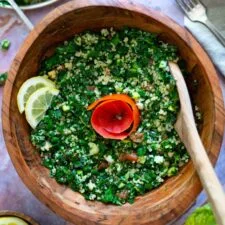
This fresh Middle Eastern-inspired tabbouleh swaps the usual bulgur for quinoa, with parsley, mint, tomatoes, cucumber and spring onions dressed in lemon and olive oil. It makes a bright vegan salad that works as a side or a light meal.
Ingredients
- 4 bunchesItalian parsley
- ½ a bunchfresh mint leaves
- 3cucumbers, finely chopped
- 4tomatoes, finely chopped
- 113–170 g (4–6 oz)spring onions (green onions)
- 125–185 ml (½–¾ cup)cooked quinoa
- 125–250 ml (½–1 cup)freshly squeezed lemon juice
- 60 ml (¼ cup)olive oil
- ½ teaspoon, or to tastesea salt
Instructions
- 1
Wash the herbs
Remove the stems from the parsley and mint leaves. Wash the leaves well, drain them, then spread them on a clean kitchen cloth to dry; use a salad spinner if you like.
- 2
Cook the quinoa
Rinse the quinoa well. In a pot over medium-high heat, combine ½ cup quinoa with 1 cup tap water. Once it boils, cover the pot, reduce the heat to low and simmer for 10–15 minutes.
- 3
Chop the herbs
Finely chop the mint and parsley with a sharp knife, or use a food processor for a quicker method.
- 4
Chop the vegetables
Finely chop the cucumbers, tomatoes and spring onions.
- 5
Mix and serve
Put the parsley and all the other ingredients, including the quinoa, in a large bowl. Add the lemon juice, salt and olive oil, mix well and serve.
What is tabbouleh?
Tabbouleh is a Levantine salad traditionally centred on finely chopped parsley, with mint, vegetables, lemon and olive oil. Bulgur is commonly included, but this version uses quinoa instead.
The generous herbs keep the salad fresh and aromatic, while cucumber and tomato add crunch and juiciness. Quinoa makes it a gluten-free variation, provided the quinoa is labelled gluten-free if that matters for your cooking.
Nutrition and macros by portion
The nutrition label shows one serving as written: 210 calories, 6g protein, 28g carbs, 11g fat.
| Portion | Adjustment | kcal | Protein | Carbs | Fat |
|---|---|---|---|---|---|
| Lighter | Use less olive oil | 147 kcal | 4g | 20g | 8g |
| This serving | As written | 210 kcal | 6g | 28g | 11g |
| Hungry | Larger portion | 315 kcal | 9g | 42g | 17g |
The quinoa and vegetables provide most of the carbohydrates, while the olive oil supplies most of the fat; quinoa contributes a modest amount of protein. Pair a serving with beans, lentils or another protein-rich dish to make the plate more filling.
The role of quinoa
Quinoa is a small, mild-tasting seed that gives this salad a little substance without taking over the herbs. The recipe uses cooked quinoa, and its method describes simmering ½ cup of rinsed quinoa with 1 cup of water.
Let the quinoa cool before mixing it into the salad so it does not wilt the herbs. Use the listed ½–¾ cup cooked quinoa in the bowl.
Drying and chopping the herbs
Dry herbs: drain the parsley and mint thoroughly after washing, using a salad spinner or kitchen cloth. Excess water can dilute the lemon and oil dressing.
Fine cuts: chop the leaves finely with a sharp knife, taking care not to crush them. A food processor is quicker, but pulse briefly and check often to avoid turning the herbs into a paste.
Balancing the dressing
Lemon juice: the recipe gives a range of ½–1 cup, so start at the lower end and add more to suit your taste. The lemon should brighten the herbs without overwhelming them.
Olive oil and salt: mix in the listed oil and salt, then taste the salad before serving. The vegetables release moisture as they sit, so a final stir helps redistribute the dressing.
Getting the texture right
Finely chopped vegetables let the cucumber, tomato and spring onion mingle evenly with the parsley. Keep the pieces small but distinct, rather than blending them into a wet mixture.
If the tomatoes seem especially juicy, chop them carefully and avoid adding excess liquid from the chopping board. This helps the salad stay fresh rather than watery.
When to make it
The stated total time is 55 minutes, including preparation and cooking the quinoa. Since the quinoa needs time to simmer, prepare it first and let it cool while you wash and chop the other ingredients.
Once mixed, the salad can be served straight away. A short rest lets the dressing coat the ingredients, but stir it again before bringing it to the table.
Serving ideas
Serve tabbouleh alongside grilled vegetables, falafel or roasted chickpeas for a more substantial meal. It also fits well on a mezze table with dips and flatbread.
For a simple plate, pair it with a source of protein such as beans or lentils. Keep any accompaniments separate until serving so the salad retains its fresh texture.
Recipe notes & tips
- Rinse the quinoa well before cooking to remove surface residue.
- Let the cooked quinoa cool before folding it into the herbs.
- Use a salad spinner or dry the herbs carefully to avoid a diluted dressing.
- Start with the lower amount of lemon juice and add more after tasting.
- Chop the vegetables and herbs finely for an even mix in each bite.
Variations
- Add chickpeas: fold in drained chickpeas for a heartier salad.
- Use extra herbs: increase the parsley or mint if you prefer a more herb-forward result.
- Add pepper: season with freshly ground black pepper to give the dressing a little warmth.
- Include red onion: swap some spring onion for finely chopped red onion for a sharper flavour.
- Serve with lettuce: spoon the salad into lettuce leaves for a crisp, hand-held serving.
Common mistakes to avoid
- Wet herbs: excess water thins the dressing; dry the leaves thoroughly before chopping.
- Hot quinoa: it can soften the herbs; cool it before adding it to the bowl.
- Over-processing: the herbs can turn to paste; pulse briefly and check their texture.
- Too much lemon at once: it can dominate the salad; begin with the smaller amount and adjust.
- Watery tomatoes: extra juice can make the salad soggy; leave excess liquid behind when transferring them.
How to store
Keep leftovers in an airtight container in the fridge and eat within 2 days for the best texture. Serve cold or bring it briefly to room temperature; this salad does not need reheating.
Frequently asked questions
Is this tabbouleh gluten-free?
It uses quinoa instead of bulgur, so it is a gluten-free variation. Check the quinoa packaging if you need to avoid possible cross-contamination.
Can I cook the quinoa ahead?
Yes. Cook it using the method provided, then let it cool and refrigerate it until you are ready to assemble the salad.
Can I use dried mint?
Fresh mint is specified and gives the salad its bright flavour. Dried mint has a different intensity and texture, so it will change the result.
How much lemon juice should I use?
The recipe allows ½–1 cup. Start with ½ cup, taste the salad, and add more if you want a sharper dressing.
Can I make it in advance?
You can prepare the quinoa and chop the ingredients ahead, storing them separately in the fridge. Mix with the dressing closer to serving for the freshest texture.
What can I serve with it?
Serve it with grilled vegetables, falafel, beans or lentils, or include it as part of a mezze spread.
Cook it from the original
This recipe comes from palestineinadish.com. Their page has the author’s own photos, notes and tips — the best place to cook it from.
Open the recipe on palestineinadish.com