
Sautéed Garlic Spinach
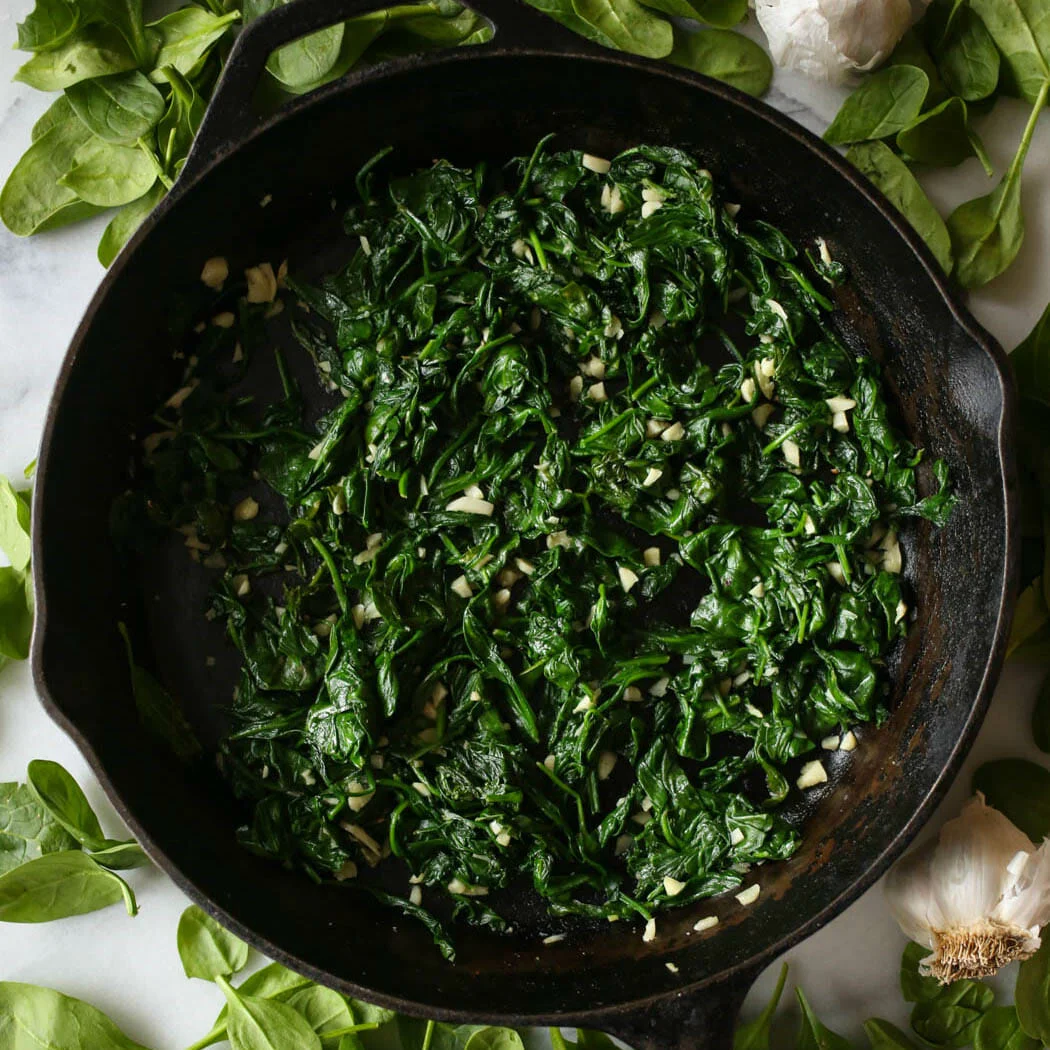
Sautéed garlic spinach is a quick, punchy side made by wilting baby spinach with olive oil and plenty of garlic. It uses up a bag of greens and works just as well in a meal-prep bowl or omelette as it does alongside dinner.
Ingredients
- 30 ml (2 tablespoons)extra virgin olive oil
- 283 g (10 ounces)baby spinach
- 10 clovesgarlic, minced
- to tastekosher salt and freshly ground black pepper
- 5–10 ml (1–2 teaspoons)Bragg's apple cider vinegar or lemon juice
Instructions
- 1
Heat the oil
Warm the olive oil in a large frying pan over medium heat.
- 2
Add spinach
Once the oil is hot, add the spinach and most of the garlic, reserving about 1 tablespoon of garlic for later. If the pan is too full, add roughly half the spinach first and let it wilt a little before adding the rest.
- 3
Wilt the greens
When the spinach has cooked down to about the top of the pan, add the reserved garlic. Cook, stirring very frequently, until the spinach is almost completely wilted and most of the liquid has evaporated.
- 4
Season and serve
Season to taste with salt, pepper and the vinegar or lemon juice. Serve straight away, or save for meal-prep bowls, omelettes and other meals.
What is sautéed garlic spinach?
This is a simple home-cooking side: leafy spinach cooked briefly in a pan with oil, garlic and a little acidity. Spinach dishes are found in many food traditions, so this version is best understood as a flexible everyday preparation rather than a dish with one specific origin.
Baby spinach wilts quickly, while the generous garlic gives the greens a savoury edge. A final splash of vinegar or lemon brightens the cooked leaves.
Nutrition and macros by portion
The nutrition label shows one serving as written: 87 calories, 4g protein, 7g carbs, 7g fat.
| Portion | Adjustment | kcal | Protein | Carbs | Fat |
|---|---|---|---|---|---|
| Lighter | Use less olive oil | 61 kcal | 3g | 5g | 5g |
| This serving | As written | 87 kcal | 4g | 7g | 7g |
| Hungry | Serve a larger portion | 131 kcal | 6g | 11g | 11g |
The spinach supplies most of the carbohydrates and fibre, while olive oil contributes most of the fat; the spinach and garlic provide a modest amount of protein. Pair a serving with a protein-rich food such as beans, eggs or fish, and a grain or starchy vegetable to make a more balanced plate.
Choosing the ingredients
Baby spinach: Its tender leaves cook down fast and need little preparation. If using larger spinach leaves, remove any tough stems and allow a little more time for them to wilt.
Garlic: Most goes into the pan early to flavour the oil and greens, while the reserved tablespoon is added near the end for a fresher garlic note.
Acid: Apple cider vinegar or lemon juice both work. Start with the smaller amount, taste, and add more if you want a sharper finish.
Managing the pan
A large frying pan gives the leaves room to wilt without spilling over. If the spinach reaches the rim, add it in batches and wait for the first portion to shrink before adding the rest.
Stir very frequently once the greens are in the pan. This helps them cook evenly and keeps the garlic from sitting in one hot spot for too long.
Getting the texture right
The spinach is ready when it has collapsed almost completely and most of the liquid in the pan has evaporated. It should be tender and glossy rather than swimming in green liquid.
Keep an eye on the reserved garlic after adding it; the leaves need only a short finish. Take the pan off the heat once the spinach is cooked down.
Timing and serving
The recipe gives no total cooking time, so use the changes in volume and moisture as your cues: the leaves should shrink substantially, and the excess liquid should mostly disappear.
Serve the spinach straight away as a side, or add it to meal-prep bowls and omelettes. It also pairs easily with grains, beans, eggs or a main dish of your choice.
Making it ahead
Cooked spinach releases some moisture as it stands, so let it cool and drain off any excess liquid before packing it away. Add fresh lemon or vinegar after reheating if the flavour needs lifting.
For meal prep, portion it alongside other components rather than mixing it into a dish that should stay crisp. Reheat only the amount you plan to eat.
Recipe notes & tips
- Use the largest frying pan you have to make adding the spinach easier.
- Add the spinach in batches if the leaves crowd the pan.
- Keep the garlic moving so it cooks evenly with the greens.
- Wait for most of the liquid to evaporate before seasoning.
- Add the vinegar or lemon juice gradually and taste as you go.
- Serve promptly for the best tender, glossy texture.
Variations
- Lemon finish: Use lemon juice and add a little finely grated zest for a citrusy note.
- Chilli heat: Add a pinch of chilli flakes to the oil with the garlic.
- Nutty topping: Scatter toasted pine nuts over the spinach just before serving.
- Cheesy finish: Add a little grated Parmesan after taking the pan off the heat.
- Mixed greens: Replace some of the spinach with another tender leafy green, adding tougher leaves first.
Common mistakes to avoid
- Overfilled pan: The leaves can spill out before they wilt; cook them in batches.
- Garlic left unattended: It can catch in the hot oil; stir frequently and add the reserved portion near the end.
- Too much liquid: The greens can turn watery; keep cooking until most of the moisture has evaporated.
- Adding all the garlic at once: The flavour can become less fresh; reserve about 1 tablespoon for the final stage.
- Over-seasoning early: The leaves shrink considerably; season to taste once they have cooked down.
How to store
Cool leftovers and refrigerate in a covered container for up to 3 days. Reheat gently in a frying pan or microwave until hot, draining away any excess liquid before serving.
Frequently asked questions
Can I use regular spinach instead of baby spinach?
Yes. Remove any tough stems and add the leaves in batches if needed; larger leaves may take a little longer to wilt.
Can I make this without vinegar or lemon juice?
Yes, though the finished spinach will taste less bright. You can leave it out or serve a wedge of lemon alongside.
How do I stop the spinach becoming watery?
Cook it until most of the liquid has evaporated, stirring frequently. If the leaves release a lot of moisture, continue cooking before taking the pan off the heat.
Can I prepare it ahead?
Yes. Refrigerate it once cooled, then reheat gently when needed. It is also suitable for meal-prep bowls and omelettes.
How can I tell when it is done?
The leaves should be almost completely wilted and most of the liquid should have evaporated. Stop cooking while they are still tender rather than letting them dry out.
Cook it from the original
This recipe comes from ourbestbites.com. Their page has the author’s own photos, notes and tips — the best place to cook it from.
Open the recipe on ourbestbites.com