
Sarciadong Isda Recipe
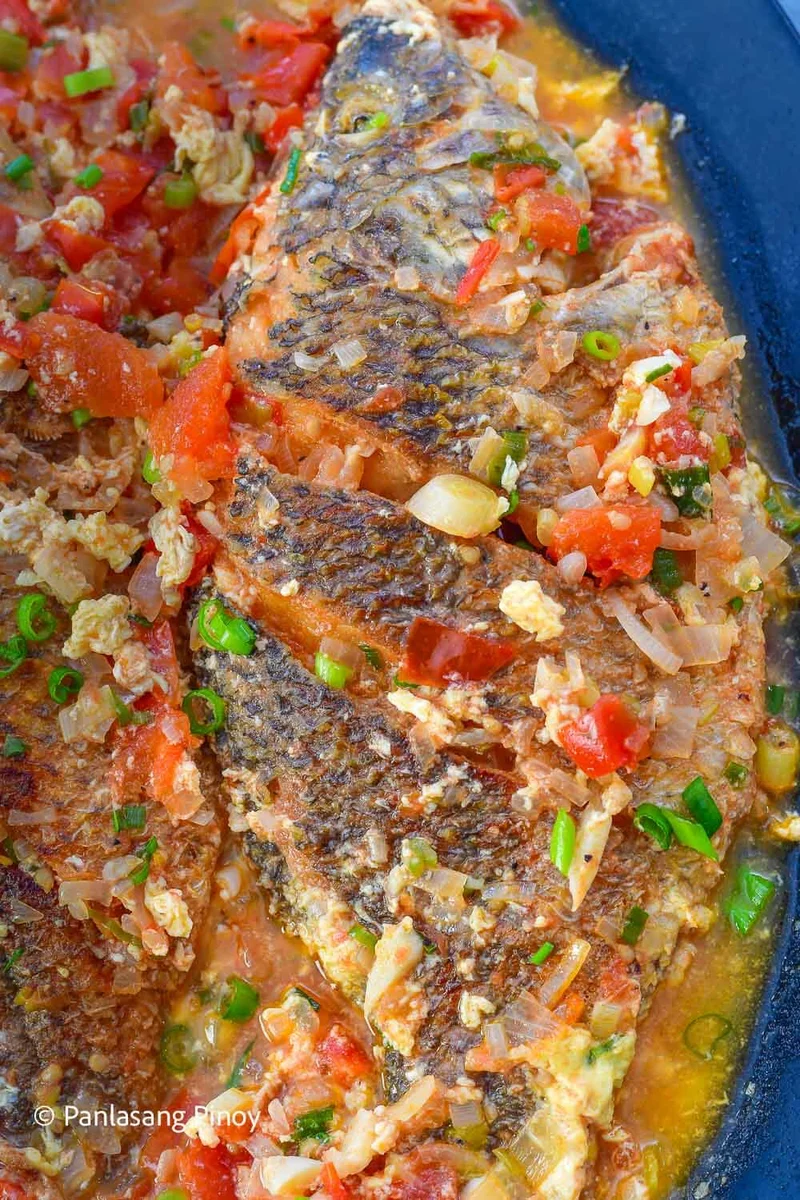
Sarciadong Isda is Filipino fried fish gently simmered with tomatoes, onions and garlic, then finished with egg. It’s a comforting way to serve tilapia with a savoury, softly set sauce.
Ingredients
- 907 g (2 lb)tilapia, cleaned
- 2tomatoes, diced
- 2onions, diced
- 240 ml (1 cup)water
- ½ teaspoonground black pepper
- 3spring onions, chopped (optional)
- 2 teaspoonsgarlic, minced
- 2eggs, beaten
- 120 ml (½ cup)cooking oil
- 2 teaspoonssalt
- to tastefish sauce
Instructions
- 1
Fry the fish
Heat the oil in a frying pan. Rub the salt over the fish, then fry it.
- 2
Drain the fish
Lift the fish from the pan and place it on a plate lined with kitchen paper. Set it aside.
- 3
Cook the aromatics
Using a clean pan, heat about 2 teaspoons of cooking oil. Sauté the garlic, onions and tomatoes.
- 4
Season the sauce
Add fish sauce and ground black pepper, then stir.
- 5
Bring to boil
Add the chopped spring onions and water, then bring the mixture to a boil.
- 6
Simmer the fish
Add the fried fish and simmer for 3 to 5 minutes.
- 7
Add the eggs
Pour the beaten eggs into the pan, distributing them evenly.
- 8
Set the eggs
Once the eggs begin to curdle or coagulate, start stirring the mixture.
- 9
Finish simmering
Simmer for another 2 minutes, then transfer everything to a serving plate.
- 10
Serve hot
Serve hot.
What is sarciadong isda?
Sarciadong isda is a Filipino fish dish in which fried fish is served in a tomato-based sauce with aromatics and egg. The name refers to the sauced preparation, and the combination makes a satisfying one-pan-style meal.
This version uses tilapia, which is fried first and then briefly simmered so it can take on the flavour of the sauce. Egg thickens the liquid and gives the finished dish a soft, savoury texture.
Nutrition and macros by portion
The nutrition label shows one serving as written: 536 calories, 50g protein, 9g carbs, 34g fat.
| Portion | Adjustment | kcal | Protein | Carbs | Fat |
|---|---|---|---|---|---|
| Lighter | Use less frying oil | 375 kcal | 35g | 6g | 24g |
| This serving | As written | 536 kcal | 50g | 9g | 34g |
| Hungry | Serve with extra rice | 804 kcal | 75g | 14g | 51g |
The tilapia supplies most of the protein, while the eggs contribute both protein and fat. The cooking oil is the main source of fat, and the tomatoes, onions and any rice served alongside provide most of the carbohydrates. Pair a serving with plenty of vegetables and a portion of rice suited to your appetite.
Choosing and frying the fish
Tilapia: Clean the fish well and rub it with the recipe’s salt before frying, as directed. Fry until cooked through and handle it gently when transferring it to the plate.
Oil: The ingredient list gives ½ cup for frying, while the method calls for about 2 teaspoons in the clean pan for sautéing. Use enough of the frying oil to cook the fish, then measure the smaller amount for the sauce.
Building the tomato sauce
Aromatics: Sauté the garlic, onions and diced tomatoes together in the clean pan. Stir as they cook so the garlic does not catch on the base.
Seasoning: Fish sauce adds savouriness, while black pepper brings gentle warmth. Add the fish sauce to taste, since its saltiness can vary.
Simmering without breaking the fish
Gentle heat: Once the water and spring onions come to a boil, add the fried fish and simmer it for 3 to 5 minutes. Keep the simmer steady rather than vigorous, and avoid moving the fish around unnecessarily.
Timing: The fish has already been fried, so this simmer is brief. Follow the stated 3-to-5-minute range, then move on to the egg.
Getting the egg texture right
Even addition: Pour the beaten eggs across the pan so they are distributed through the sauce. Let them begin to set before stirring.
Soft curds: When the egg starts to coagulate, stir gently, then simmer for another 2 minutes. Stirring too early can prevent distinct soft pieces from forming.
Serving the dish
Rice: Serve the fish and sauce hot, ideally with steamed rice to make a meal and catch the tomato-and-egg sauce.
Fresh contrast: Spring onions are optional in the recipe, but add a fresh finish. A simple vegetable side can round out the plate.
Recipe notes & tips
- Pat the cleaned fish dry before seasoning so it is easier to fry.
- Fry the fish in batches if the pan is crowded.
- Use a clean pan for the sauce, as the method specifies.
- Taste the sauce after adding fish sauce before adding any extra salt.
- Pour the egg evenly over the pan for a consistent finish.
Variations
- Use another fish: Choose a similar firm fish and adjust frying time to suit its size.
- Add more tomato: Increase the diced tomatoes for a more tomato-forward sauce.
- Keep the spring onions: Add them for a fresh, oniony finish.
- Adjust the fish sauce: Start with a little, taste, then add more as needed.
- Serve with vegetables: Add a side of steamed greens for a fuller plate.
Common mistakes to avoid
- Crowding the pan: The fish may fry unevenly; cook it in batches if needed.
- Skipping the salt rub: Season the fish with the listed salt before frying.
- Using a vigorous simmer: The fish can break apart; keep the sauce at a gentle simmer.
- Stirring the egg too soon: Wait until it begins to set, then stir gently.
- Adding too much fish sauce at once: Season gradually and taste as you go.
How to store
Refrigerate leftovers in a covered container within 2 hours and eat within 2 days. Reheat gently in a covered pan until piping hot throughout; avoid prolonged heating, which can dry out the fish.
Frequently asked questions
Can I use a different fish?
Yes. Choose a fish that holds together during frying and simmering, and adjust the frying time for its thickness.
Do I need to use all the cooking oil?
The recipe lists ½ cup for frying and calls for about 2 teaspoons in the clean pan for the sauce. Use enough oil to fry the fish, then use the stated small amount for sautéing.
When should I add the eggs?
Add them after the fried fish has simmered in the sauce for 3 to 5 minutes. Stir once they begin to set.
Can I leave out the spring onions?
Yes. They are marked optional in the ingredient list, so the dish can be made without them.
What should I serve with sarciadong isda?
Steamed rice is a natural accompaniment for the sauce. Vegetables on the side also work well.
Cook it from the original
This recipe comes from panlasangpinoy.com. Their page has the author’s own photos, notes and tips — the best place to cook it from.
Open the recipe on panlasangpinoy.com