
Easy Homemade Chicken Broth
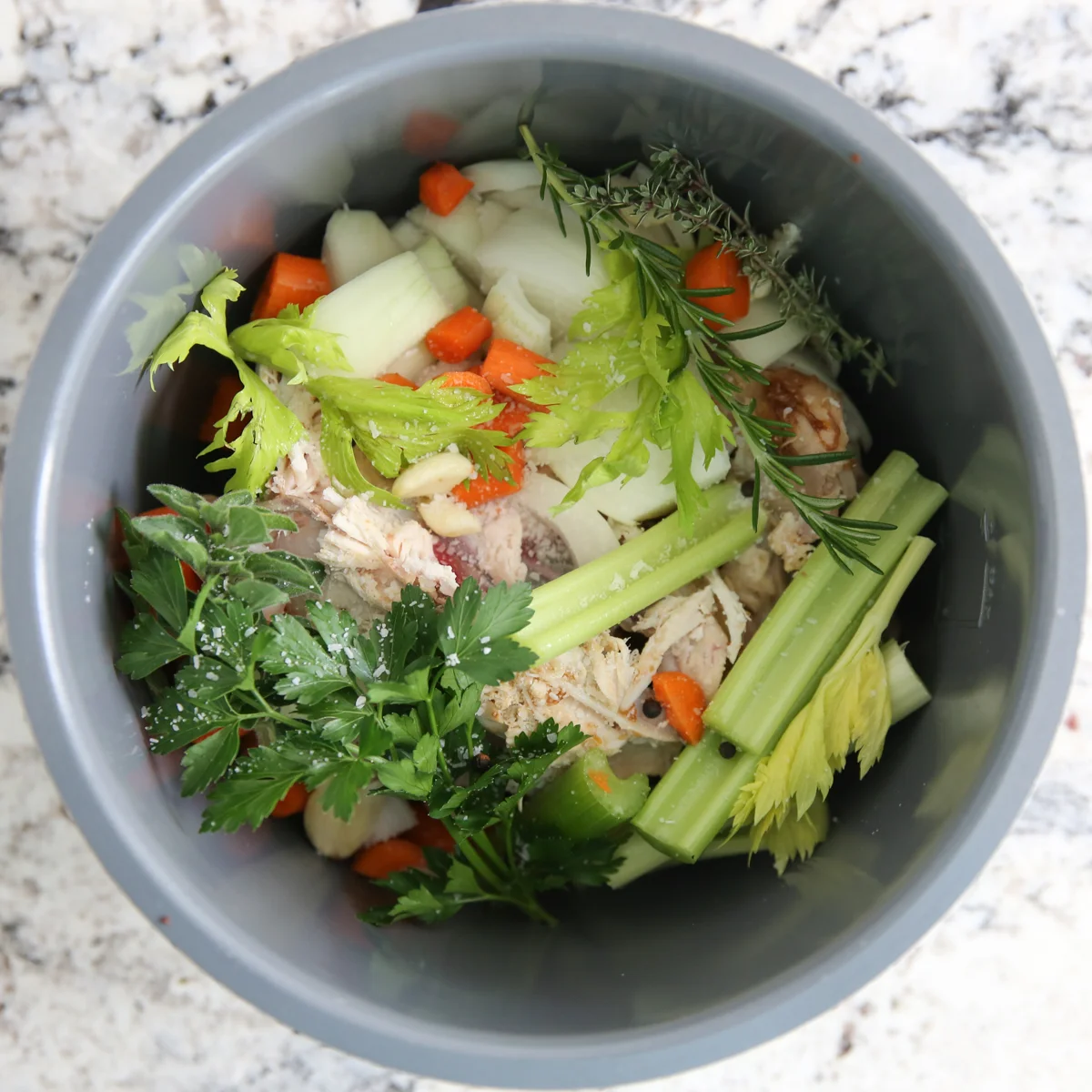
This flexible American-style chicken broth uses leftover rotisserie chicken, vegetables and herbs to make a savoury base for soups, sauces and grains. It can be cooked in a pressure cooker or gently simmered on the hob, then frozen in portions for later.
Ingredients
- 1leftover rotisserie chicken scraps
- 2–3 ribscelery, leaves included if desired
- 2carrots, or a handful of baby carrots
- 1 mediumonion
- 3 clovesgarlic, smashed or roughly chopped
- 10peppercorns
- 1 heaping tablespoonkosher salt
- To tastefresh herbs
- Enough to cover the ingredients by 2.5–5 cm; about 2.8 litres (12 cups) for a pressure cooker or 2.8–3.8 litres (12–16 cups) for a stock potwater
Instructions
- 1
Trim the chicken
Remove any excess fat and skin from the chicken scraps, then place them in a pressure cooker or stock pot.
- 2
Prepare the vegetables
Roughly chop the celery, carrots and onion and add them to the pot. Add the garlic, peppercorns, salt and fresh herbs.
- 3
Cover with water
Pour in enough water to cover the ingredients by a couple of inches. In a pressure cooker, stay below the maximum fill line; the recipe uses about 12 cups (2.8 litres) in its pressure cooker. For a stock pot, use about 12–16 cups (2.8–3.8 litres).
- 4
Cook under pressure
For a pressure cooker, cook at high pressure for 45 minutes, then allow the pressure to release naturally.
- 5
Simmer on the hob
For a stock pot, bring the broth to the boil, then reduce the heat to a simmer. Cover and simmer for 1–2 hours, stirring occasionally.
- 6
Strain and store
Strain out the solids and let the broth cool to room temperature. Divide it between containers and refrigerate for about 5 days or freeze for up to 3 months; the final quantity varies and will be lower after simmering.
What is chicken broth?
Chicken broth is a savoury liquid made by cooking chicken with vegetables and seasonings in water. It is a familiar part of American home cooking, used as a soup base or to add flavour to other dishes.
This version makes use of leftover rotisserie chicken, so the bones and scraps contribute flavour without requiring a whole raw bird. Celery, carrot, onion, garlic and herbs round it out, while the pressure-cooker and hob options suit different schedules.
Nutrition and macros by portion
The nutrition label shows one serving as written: 101 calories, 14g protein, 2g carbs, 4g fat.
| Portion | Adjustment | kcal | Protein | Carbs | Fat |
|---|---|---|---|---|---|
| Lighter | Skim fat after chilling | 71 kcal | 10g | 1g | 3g |
| This serving | As written | 101 kcal | 14g | 2g | 4g |
| Hungry | Add noodles and vegetables | 152 kcal | 21g | 3g | 6g |
The supplied per-serving nutrition is 101 kcal, with 14 g protein, 2 g carbohydrate and 4 g fat; the chicken contributes most of the protein and fat, while the vegetables provide a little carbohydrate. For a more balanced bowl, serve the broth with vegetables and a source of carbohydrate such as noodles or rice.
Making the most of leftover chicken
Chicken scraps: use the remaining meat, skin and bones from a rotisserie chicken, trimming away excess fat and skin as directed. The recipe does not specify a particular amount of leftover chicken beyond one chicken's scraps.
Flexible vegetables: celery leaves can stay on, and baby carrots can stand in for whole carrots. The recipe also invites you to add other vegetables you have, though they are not required.
Build the flavour
Aromatics: roughly chopping the celery, carrots and onion is sufficient because the solids will be strained out. Smashing or roughly chopping the garlic helps it release flavour into the cooking liquid.
Seasoning: peppercorns and fresh herbs give the broth a savoury, aromatic base. The listed salt is a heaping tablespoon, so taste the strained broth before adding more salt to a dish made with it.
Choose your cooking method
Pressure cooker: cook at high pressure for 45 minutes and let the pressure release naturally. Keep the water below the cooker’s maximum fill line, as the recipe directs.
Stock pot: bring the liquid to the boil, then lower it to a covered simmer for 1–2 hours. Stir occasionally while it cooks.
Check the liquid and finish
Water level: add enough water to cover the ingredients by a couple of inches, or about 2.5–5 cm. The suggested amount is about 2.8 litres for the pressure cooker and 2.8–3.8 litres for a stock pot.
Straining: once cooking is complete, strain away the chicken and vegetables. The amount of broth you get will vary, and some liquid will evaporate during simmering.
How to use the broth
Keep it simple: use the broth as a base for chicken soup or in place of water when cooking grains. It can also add savoury flavour to sauces and other recipes.
Serve a bowl of broth with vegetables, noodles or beans for a more substantial meal. If using it as a base, season the finished dish to taste rather than assuming it needs more salt.
Recipe notes & tips
- Leave the celery leaves on if you want to use the whole celery ribs.
- Keep the pressure cooker below its maximum fill line when adding water.
- Use the hob simmering option if you do not have a pressure cooker.
- Strain the broth before cooling and storing it.
- Cool the broth to room temperature before dividing it into storage containers.
Variations
- More vegetables: Add extra vegetables you have on hand, as the recipe allows.
- Herb choice: Experiment with the fresh herbs available to you.
- Baby carrots: Use a handful of baby carrots instead of two standard carrots.
- Celery leaves: Leave the leaves attached for a practical, no-waste option.
- Pressure cooker: Choose the 45-minute high-pressure method when you want to shorten the cooking time.
Common mistakes to avoid
- Overfilling the pressure cooker: Keep the water and ingredients below the maximum fill line.
- Adding too little water: Cover the ingredients by about 2.5–5 cm before cooking.
- Boiling throughout: On the hob, reduce the heat to a simmer after bringing the pot to the boil.
- Skipping the natural release: Let the pressure cooker release naturally after its 45-minute cook.
- Storing it with solids: Strain out the chicken and vegetables before cooling and storing the broth.
How to store
Cool the strained broth to room temperature, then store it in portioned containers in the fridge for about 5 days or in the freezer for up to 3 months. Thaw frozen portions in the fridge and reheat until hot before using.
Frequently asked questions
Can I make this without a pressure cooker?
Yes. Bring the ingredients to the boil in a stock pot, then cover and simmer for 1–2 hours, stirring occasionally.
How much water should I add?
Add enough to cover the ingredients by a couple of inches, about 2.5–5 cm. The recipe suggests about 2.8 litres for a pressure cooker or 2.8–3.8 litres for a stock pot.
Can I use baby carrots?
Yes. The recipe gives a handful of baby carrots as an alternative to two carrots.
Do I need to remove the celery leaves?
No. The recipe says you can leave the leaves on.
Why does the amount of broth vary?
The amount depends on the ingredients and cooking method, and the liquid reduces as it simmers. Strain the broth once it is cooked.
How long does homemade chicken broth keep?
Keep it in the fridge for about 5 days or in the freezer for up to 3 months, in portioned containers.
Cook it from the original
This recipe comes from ourbestbites.com. Their page has the author’s own photos, notes and tips — the best place to cook it from.
Open the recipe on ourbestbites.com