
Roast beef, mustard and watercress sandwiches
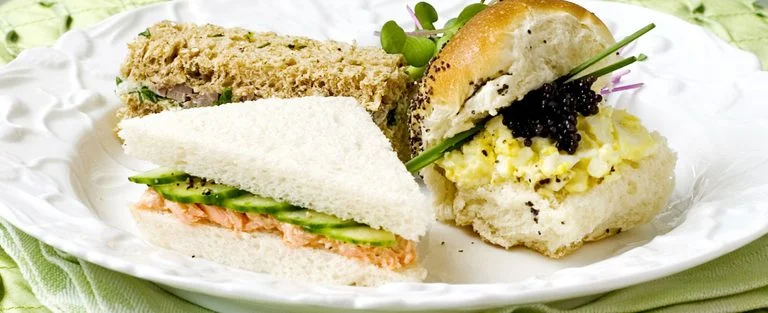
These roast beef sandwiches pair brown bread and Dijon mustard with a creamy watercress and pickled walnut filling. They make a savoury choice for afternoon tea or a quick light lunch.
Ingredients
- 50 gbutter
- 6 slicesbrown bread
- 3 slicesroast beef, finely chopped
- 1, mashed (optional)pickled walnut
- a handful, finely choppedwatercress
- 1 tbspcrème fraîche
- 2 tspDijon mustard
- to tasteseasoning
Instructions
- 1
Butter the bread
Butter all six slices of brown bread. Divide the chopped roast beef between three slices.
- 2
Add the walnut
If using it, add the mashed pickled walnut over the beef.
- 3
Make the topping
Mix the chopped watercress with the crème fraîche, season to taste and spread the mixture over the beef.
- 4
Finish the sandwiches
Spread the Dijon mustard on the remaining three slices of bread and place them on top. Trim off the crusts, then cut each sandwich into three fingers.
What are roast beef and watercress sandwiches?
These are small filled sandwiches built around roast beef, mustard and a creamy, peppery watercress mixture. Sandwiches are a familiar feature of British afternoon tea, and cutting them into neat fingers suits that style of serving.
This version balances savoury beef with tangy Dijon and the sharp, briny note of pickled walnut. Crème fraîche softens the watercress and helps it sit neatly between the slices.
Nutrition and macros by portion
The nutrition label shows one serving as written: 119 calories, 5g protein, 9g carbs, 7g fat.
| Portion | Adjustment | kcal | Protein | Carbs | Fat |
|---|---|---|---|---|---|
| Lighter | Use less butter | 83 kcal | 4g | 6g | 5g |
| This serving | As written | 119 kcal | 5g | 9g | 7g |
| Hungry | Add another sandwich | 179 kcal | 8g | 13g | 11g |
The bread supplies most of the carbohydrates, while butter and crème fraîche contribute much of the fat; roast beef provides some protein. Pair a serving with fresh vegetables or salad for a more substantial plate.
Choosing the bread and beef
Brown bread: Choose slices that are soft enough to cut cleanly but sturdy enough to hold the filling. Buttering the bread helps create a barrier against the moisture in the topping.
Roast beef: Finely chopping the beef helps distribute it across the sandwiches, so each finger gets some in every bite.
Getting the watercress mixture right
Watercress: Chop it finely so the leaves are easy to spread and do not pull out when you bite into a sandwich.
Crème fraîche: Mix just until the watercress is coated. Season to taste, bearing in mind that the pickled walnut and mustard already bring plenty of flavour.
Balancing the flavours
Dijon mustard: Spread it over the top slices rather than mixing it into the watercress, which keeps its sharpness distinct from the creamy filling.
Pickled walnut: It is optional, but its tangy, savoury flavour adds contrast to the beef. Mash it before adding so it is spread evenly rather than sitting in one large piece.
Cutting tidy sandwich fingers
Assembly: Keep the fillings in an even layer and press the top slices gently into place. A sharp knife helps trim the crusts without squeezing the filling out.
Portions: Cut each assembled sandwich into three fingers, as directed. Wipe the blade between cuts if the creamy mixture gathers on it.
Serving ideas
Serve the fingers soon after assembling for the best contrast between soft bread and fresh watercress. They work well alongside other afternoon tea sandwiches or with a simple salad for lunch.
For a larger meal, add vegetable sticks, tomatoes or a bowl of soup rather than making the sandwich filling heavier.
Recipe notes & tips
- Let the butter soften slightly so it spreads without tearing the bread.
- Chop the roast beef and watercress finely for even filling in each finger.
- Taste the watercress and crème fraîche mixture before adding extra seasoning.
- Keep the pickled walnut finely mashed so its flavour is spread throughout.
- Use a sharp knife and gentle pressure when trimming the crusts.
Variations
- Extra mustard: Add a little more Dijon to the bread for a sharper finish.
- No walnut: Leave out the pickled walnut for a simpler beef and watercress filling.
- More watercress: Increase the chopped leaves for a greener, pepperier centre.
- Wholemeal swap: Use another style of brown bread with a similar soft texture.
- Herby filling: Stir finely chopped fresh herbs into the crème fraîche and watercress.
Common mistakes to avoid
- Overfilling: Too much mixture can squeeze out when cut; spread it in an even, modest layer.
- Coarse chopping: Large pieces can make the filling difficult to bite through; chop the beef and watercress finely.
- Wet watercress: Excess water can loosen the crème fraîche; wash the leaves ahead and dry them well.
- Hard butter: Cold butter may tear the bread; let it soften enough to spread smoothly.
- Dull knife: A blunt blade can squash the sandwiches; use a sharp knife and cut with steady pressure.
How to store
These sandwiches are best assembled and eaten fresh. If needed, cover and refrigerate them promptly, then eat within a day; the bread may soften as it stands.
Frequently asked questions
Can I make these sandwiches ahead?
They are best made shortly before serving so the bread stays in good condition. You can chop the beef and watercress in advance, then assemble close to serving.
Is the pickled walnut essential?
No, it is optional. The sandwiches still have plenty of flavour from the beef, mustard and watercress.
How should I cut the sandwiches?
Trim the crusts after assembling, then cut each sandwich into three fingers as instructed. A sharp knife helps keep the edges neat.
Can I use a different mustard?
Dijon gives the filling its characteristic sharpness, but another smooth mustard can be used if that is what you have. Its flavour may be milder or sweeter.
How do I keep the bread from going soggy?
Butter the bread as directed, dry the watercress well and assemble near serving time. Avoid adding a very wet watercress mixture.
Cook it from the original
This recipe comes from olivemagazine.com. Their page has the author’s own photos, notes and tips — the best place to cook it from.
Open the recipe on olivemagazine.com