
Chicken Pad Thai (Takeout-Style)
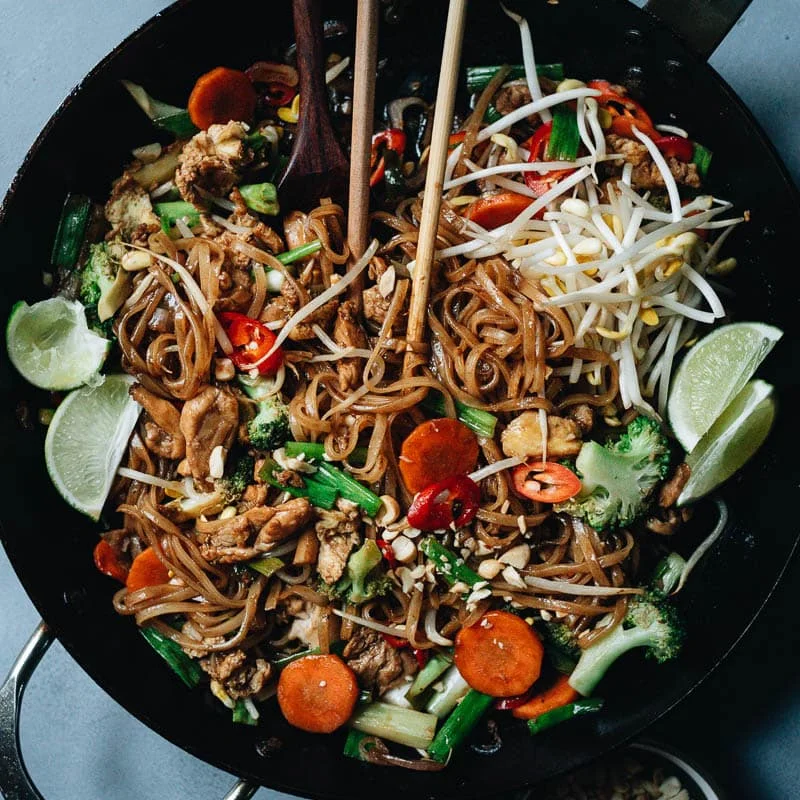
This takeout-style chicken pad Thai pairs chewy rice noodles and tender chicken with crisp vegetables in a tangy, sweet sauce. It is a one-pan main with plenty of colour and no fish sauce.
Ingredients
- 115 g (4 oz)dried rice noodles, about 5 cm wide
- 225 g (8 oz)chicken breast, thinly sliced against the grain, or chicken thigh
- 5 ml (1 teaspoon)soy sauce
- 45 ml (3 tablespoons)brown sugar or palm sugar
- 30 ml (2 tablespoons)tamarind purée or tamarind paste
- 30 ml (2 tablespoons)oyster sauce or vegetarian oyster sauce
- 30 ml (2 tablespoons)soy sauce
- ½ headbroccoli, cut into small bite-sized florets
- 60 ml (4 tablespoons)peanut oil or vegetable oil
- 2eggs, beaten
- 4 clovesgarlic, minced
- 1shallot, sliced
- ½carrot, sliced
- 5spring onions, cut into 2.5 cm pieces
- 1long red pepper, sliced, or bird’s eye chilli for more heat
- 225 g (1½ cups)mung bean sprouts, plus extra for garnish
- 45 ml (3 tablespoons)peanuts, coarsely chopped
- 1lime, cut into wedges for garnish
Instructions
- 1
Soak the noodles
Submerge the rice noodles in room-temperature water for 30–40 minutes. Drain them when they are flexible enough to wrap around your fingers without breaking, but still too firm to bite comfortably.
- 2
Season the chicken
In a medium bowl, mix the chicken with 5 ml (1 teaspoon) soy sauce until evenly coated. Leave it to marinate while you prepare the remaining ingredients.
- 3
Mix the sauce
Combine the brown sugar, tamarind purée, oyster sauce and 30 ml (2 tablespoons) soy sauce. Stir until the sugar has dissolved.
- 4
Steam the broccoli
Pour 60 ml (¼ cup) water into a large frying pan and heat over medium-high until simmering. Add the broccoli, cover and steam for 40 seconds to 1 minute, until al dente. Transfer it to a plate and wipe the pan clean with kitchen paper.
- 5
Brown the chicken
Heat 15 ml (1 tablespoon) oil in the same pan. Arrange the chicken with as little overlap as possible and cook without moving it until the underside is golden. Turn and cook for about 30 seconds, until the other side just turns golden, then transfer to a plate.
- 6
Cook the eggs
Add another 15 ml (1 tablespoon) oil to the pan and pour in the beaten eggs. Leave them undisturbed until the base sets, then scramble gently until they are nearly cooked. Transfer them to the plate with the chicken.
- 7
Soften the aromatics
Add the remaining 30 ml (2 tablespoons) oil, garlic, shallot and carrot to the pan. Cook, stirring, for 1 minute to release their fragrance.
- 8
Coat the noodles
Add the drained noodles and stir a few times to combine. Pour in the sauce and cook, stirring, until it is mostly absorbed.
- 9
Return the fillings
Add the cooked chicken, eggs and broccoli back to the pan. Stir a few times to mix them through.
- 10
Finish the vegetables
Add the spring onions, red pepper and bean sprouts, then toss for about 30 seconds, until the vegetables are just wilted. Carefully taste a noodle; if it is still too firm, add a splash of water and stir. Cook for a further 1–2 minutes, until the noodles have the texture you like.
- 11
Garnish and serve
Top with the extra bean sprouts, chopped peanuts and lime wedges. Serve hot as a main dish.
What is chicken pad Thai?
Pad Thai is a Thai stir-fried noodle dish, commonly made with rice noodles and a balance of tangy, sweet and savoury flavours. This version combines chicken with a substantial mix of vegetables and a sauce based on tamarind, sugar, oyster sauce and soy.
The noodles are soaked before they go into the pan, while the chicken and eggs are cooked separately and returned later. That staging helps keep the ingredients distinct rather than letting them simmer together.
Nutrition and macros by portion
The nutrition label shows one serving as written: 368 calories, 22g protein, 26g carbs, 21g fat.
| Portion | Adjustment | kcal | Protein | Carbs | Fat |
|---|---|---|---|---|---|
| Lighter | Use less oil and peanuts | 258 kcal | 15g | 18g | 15g |
| This serving | As written | 368 kcal | 22g | 26g | 21g |
| Hungry | Increase the noodle portion | 552 kcal | 33g | 39g | 32g |
The rice noodles and brown sugar provide most of the carbohydrates, while peanut oil and peanuts contribute much of the fat. Chicken and eggs supply most of the protein, with the vegetables adding volume and variety; serve with extra vegetables if you want a more vegetable-forward plate.
Getting the sauce balanced
Tamarind: Its tartness offsets the brown sugar and gives the sauce its lively edge. Stir until the sugar dissolves so the flavour is evenly distributed.
Oyster sauce and soy: Together they bring savoury depth without fish sauce. Use vegetarian oyster sauce if you want to keep the dish meat-free, and check labels if you need a gluten-free version.
Choose the right noodle texture
Soaking: Room-temperature water softens the dried noodles gradually. Drain them when they bend without snapping but are still too firm to eat; they will finish cooking in the sauce.
Finishing: Noodle thickness and soaking time can affect how quickly they soften in the pan. Taste one near the end and add a splash of water with another minute or two of cooking if needed.
Cook in stages for better texture
Broccoli: A brief covered steam leaves the florets al dente before they meet the noodles. Drain or transfer them promptly so they do not keep cooking in residual water.
Chicken and eggs: Brown the chicken without moving it at first, then take it out while you cook the eggs. Returning both towards the end helps avoid overcooking them during the noodle stir-fry.
Keep the pan moving at the end
Aromatics: Give the garlic, shallot and carrot just 1 minute in the oil, stirring as they cook. This releases their fragrance without leaving them in the pan for the full noodle cooking time.
Fresh vegetables: Add the spring onions, pepper and sprouts last and toss for about 30 seconds. They should be just wilted, with some freshness and bite left.
Make the stir-fry manageable
Pan space: Use a large frying pan so the chicken can sit with minimal overlap and the noodles can be tossed. If the pan is crowded, ingredients are harder to brown and combine evenly.
Preparation: Slice the vegetables and mix the sauce before you start cooking. Once the aromatics are in the pan, the remaining stages move quickly.
Serving ideas
Serve the pad Thai hot, with lime wedges for a fresh, sharp finish and the reserved bean sprouts for extra crunch. The peanuts add a nutty contrast to the soft noodles.
Because the dish already includes chicken, egg and vegetables, it works as a main on its own. For a larger spread, serve it alongside a simply dressed salad or additional steamed vegetables.
Recipe notes & tips
- Cut the chicken thinly against the grain so the pieces cook quickly.
- Keep the soaked noodles slightly firm before adding them to the pan.
- Prepare the sauce and slice the vegetables before heating the pan.
- Cook the chicken in a single layer where possible to encourage browning.
- Taste a noodle before finishing, and add a splash of water if it remains too firm.
- Add the bean sprouts near the end so they retain some bite.
Variations
- Make it vegetarian: Use vegetarian oyster sauce and replace the chicken with firm tofu.
- Add more heat: Choose a bird’s eye chilli instead of the long red pepper.
- Swap the chicken: Use chicken thigh in place of breast as suggested in the recipe.
- Change the oil: Use vegetable oil instead of peanut oil.
- Adjust the sugar: Use palm sugar instead of brown sugar.
- Make it gluten-free: Choose suitable gluten-free soy and oyster-style sauces and check the other product labels.
Common mistakes to avoid
- Over-soaking the noodles: They can become too soft before they reach the pan; drain them while still firm to the bite.
- Crowding the chicken: Overlapping pieces are less likely to brown evenly; leave space between them.
- Skipping the pan clean: Wipe away residue after steaming the broccoli so the next ingredients cook in fresh oil.
- Cooking the sprouts too long: They lose their fresh bite; toss them in only for the final 30 seconds.
- Serving noodles that are still tough: Taste one near the end and add a splash of water, then cook for another 1–2 minutes as needed.
How to store
Cool leftovers promptly and store in a covered container in the fridge for up to 2 days. Reheat in a frying pan until piping hot, adding a small splash of water if the noodles have dried out.
Frequently asked questions
Can I use chicken thigh instead of breast?
Yes. The recipe lists chicken thigh as an alternative; slice it thinly against the grain as you would the breast.
How do I know when the noodles are ready to drain?
They should bend around your fingers without snapping, but still be too firm to bite comfortably. They soften further in the pan.
Can I make this without fish sauce?
Yes. This recipe uses oyster sauce and soy sauce in the sauce rather than fish sauce. Use vegetarian oyster sauce if you prefer.
Can I make the dish vegetarian?
Use vegetarian oyster sauce and replace the chicken with firm tofu. The recipe already includes egg, so omit it too if you want a vegan version.
Can I make it gluten-free?
The rice noodles are a suitable starting point, but check that the soy sauce and oyster sauce are labelled gluten-free and verify the labels of the other ingredients.
What should I do if the noodles are too firm?
Add a splash of water and stir it through, then cook for another 1–2 minutes. Taste again and stop when they reach your preferred texture.
Cook it from the original
This recipe comes from omnivorescookbook.com. Their page has the author’s own photos, notes and tips — the best place to cook it from.
Open the recipe on omnivorescookbook.com