
Braised Pork Shank with Black Beans
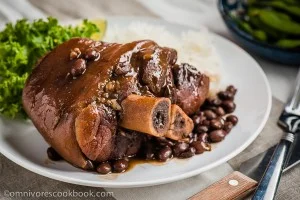
Pork shank is slowly braised until tender in a savoury, aromatic sauce with soft black beans. It makes a generous one-pot meal, with plenty of sauce to spoon over steamed rice or noodles.
Ingredients
- 1 shank (about 907 g / 2 lb total, or 2 pork hocks)pork shank
- 45 ml (3 tablespoons), dividedpeanut oil (or vegetable oil)
- 1 teaspooncoriander seeds
- 1 teaspoonSichuan peppercorns
- 5 clovesgarlic
- 2, white parts onlyspring onions
- 1 thumb-sized piece, slicedginger
- 1 stick (about 5 cm / 2 inches)cinnamon
- 2whole star anise
- ¼ teaspoonfive-spice powder
- 45 ml (3 tablespoons)light soy sauce
- 5 ml (1 teaspoon)dark soy sauce
- 15 ml (1 tablespoon)Golden Mountain Sauce (or light soy sauce)
- 30 ml (2 tablespoons)palm sugar (or white sugar)
- 4, optionalskinless chicken thighs
- 1 can (400 g / 15 oz), with its liquidblack beans
- About 1.4 litres (6 cups), or enough to cover the porkwater
- To servesteamed rice
Instructions
- 1
Dry the pork
Pat the pork shank thoroughly dry with kitchen paper to reduce splattering when it goes into the hot oil.
- 2
Brown the shank
Heat 30 ml (2 tablespoons) of the oil in a wok or large Dutch oven over medium-high heat. Add the pork and brown it for 2–3 minutes on each side, turning until the whole surface is golden. Pour in 1.4 litres (6 cups) of water, or enough to cover the pork.
- 3
Prepare spices
Put the Sichuan peppercorns and coriander seeds into a mesh tea strainer or infuser.
- 4
Add aromatics
Add the spice strainer, garlic, spring onion whites, ginger, cinnamon, star anise and five-spice powder to the pot. Stir to combine.
- 5
Clear the broth
Bring the pot to a boil and skim off the foam until the broth looks clear.
- 6
Simmer the pork
Cover the pot, reduce the heat to low and simmer for 40 minutes. Keep the broth gently boiling throughout.
- 7
Season the broth
Add the light soy sauce, dark soy sauce, Golden Mountain Sauce and palm sugar. Stir well.
- 8
Continue braising
Cover the pot and bring it to a boil over medium-high heat. Keep covered and simmer for 1 hour.
- 9
Brown the chicken
If using the chicken thighs, heat the remaining 15 ml (1 tablespoon) of oil in a frying pan over medium-high heat. Lay in the thighs and cook without moving for 2–3 minutes, until the undersides are golden. Turn and brown the other side, then transfer the thighs to the pot with the pork.
- 10
Add black beans
Tip the black beans and all their liquid into the pot with the pork.
- 11
Finish the braise
Cover and bring the pot to a boil over medium-high heat, then keep covered and simmer for 1 hour, until the pork is tender. If the liquid gets low before the pork is tender, add warm water to cover it.
- 12
Thicken the sauce
If the broth is still thin, cook uncovered over medium-high heat until it thickens. The beans help thicken the sauce; there should still be plenty left, around half the original amount.
- 13
Serve over rice
Serve the meat, beans and sauce over steamed rice.
- 14
Store leftovers
Keep leftovers in an airtight container in the fridge for up to a week or in the freezer for up to 2 months.
- 15
Use extra sauce
Save any leftover sauce to add to a bowl of noodles for a rich noodle soup.
What is Chinese-style braised pork shank?
Braised pork shank is a slow-cooked dish in which a well-used cut becomes tender in a seasoned liquid. This version pairs the pork with black beans and fragrant spices, and serves the meat and sauce over rice.
The long, covered simmer is what makes the dish work: it gives the shank time to soften while the broth takes on flavour from the aromatics, soy sauces and sugar.
Nutrition and macros by portion
The nutrition label shows one serving as written: 610 calories, 50g protein, 51g carbs, 24g fat.
| Portion | Adjustment | kcal | Protein | Carbs | Fat |
|---|---|---|---|---|---|
| Lighter | Use less oil | 427 kcal | 35g | 36g | 17g |
| This serving | As written | 610 kcal | 50g | 51g | 24g |
| Hungry | Serve with extra rice | 915 kcal | 75g | 77g | 35g |
The pork and optional chicken provide most of the protein, while the black beans and rice contribute much of the carbohydrate. The pork, peanut or vegetable oil and chicken contribute fat; serve with rice and consider adding a portion of vegetables to balance the plate.
Choosing the pork and beans
Pork shank: Use one shank or two hocks weighing about 907 g altogether. Drying and browning the surface first helps build flavour before the meat simmers.
Black beans: Add them with their canning liquid, as directed. Their soft texture and starch help give the finished sauce body.
Building the aromatic broth
Whole spices: Coriander seeds and Sichuan peppercorns go into a mesh strainer or infuser, making them easier to remove from the pot later.
Fresh aromatics: Garlic, spring onion whites and sliced ginger simmer with cinnamon, star anise and five-spice powder. The soy sauces and sugar are added after the first 40 minutes of cooking.
Browning before braising
Dry surface: Pat the shank thoroughly with kitchen paper before it meets the oil; moisture can make hot oil splatter.
Even colour: Turn the pork every 2–3 minutes until the surface is golden all over. Take care when adding water to the pot, as it may bubble around the hot pan.
Checking tenderness and sauce
Tender meat: After the final hour of simmering with the beans, check that the pork is tender. If it needs longer and the liquid is running low, add warm water to cover it.
Thickened sauce: If the broth is thin, simmer uncovered over medium-high heat until it thickens. The beans contribute starch, so keep a generous amount of sauce in the pot.
How to serve it
Rice: Spoon the pork, beans and sauce over steamed rice so the grains catch the braising liquid.
Noodles: Leftover sauce can be added to noodles for a hearty bowl. The recipe also gives the option of adding browned chicken thighs to the pot.
Recipe notes & tips
- Dry the pork well before browning to help prevent oil splashes.
- Brown all sides of the shank rather than stopping after the first two sides.
- Keep the pot covered during the longer simmering stages to limit evaporation.
- Add warm water if the braising liquid no longer covers the pork before it is tender.
- If the sauce is thin at the end, simmer it uncovered until it thickens.
- Keep any extra sauce for serving with noodles.
Variations
- Use pork hocks: Replace the shank with 2 hocks weighing about 907 g in total.
- Add chicken: Brown the optional skinless thighs and simmer them in the pot with the pork.
- Swap the oil: Use vegetable oil instead of peanut oil.
- Change the sugar: Use white sugar in place of palm sugar.
- Replace the sauce: Use light soy sauce instead of Golden Mountain Sauce.
Common mistakes to avoid
- Wet pork: Oil can splatter; pat the shank thoroughly dry before browning.
- Uneven browning: The shank needs colour all over; keep turning it until every side is golden.
- Unskimmed broth: Foam can cloud the liquid; skim the surface until the broth is clear.
- Liquid running low: The pork can be left uncovered; add warm water to cover it if needed.
- Thin sauce: It may need more evaporation; simmer uncovered over medium-high heat.
- Discarded sauce: It is useful with noodles; save leftovers in an airtight container.
How to store
Refrigerate leftovers in an airtight container for up to a week, or freeze for up to 2 months. Reheat the pork, beans and sauce until piping hot; add a little water if the sauce has thickened too much.
Frequently asked questions
Can I use pork hocks instead of a shank?
Yes. The recipe allows for 2 pork hocks in place of 1 shank, with about 907 g of pork in total.
Do I have to add the chicken thighs?
No. They are optional, so you can make the braise with pork and black beans alone.
Why are the black beans added with their liquid?
The recipe adds the beans along with all the liquid in the can. Their starch also helps thicken the sauce as the dish finishes cooking.
How do I know when the pork is ready?
It should be tender after the final hour of simmering with the beans. If it is not yet tender, continue cooking and add warm water if the liquid runs low.
Can I make the sauce thicker?
Yes. Once the pork is tender, simmer the pot uncovered over medium-high heat until the sauce thickens.
What can I do with leftover sauce?
Store it with the leftovers or serve it with noodles to make a rich noodle soup.
Cook it from the original
This recipe comes from omnivorescookbook.com. Their page has the author’s own photos, notes and tips — the best place to cook it from.
Open the recipe on omnivorescookbook.com