
Chinese Coconut Buns (Cocktail Buns)
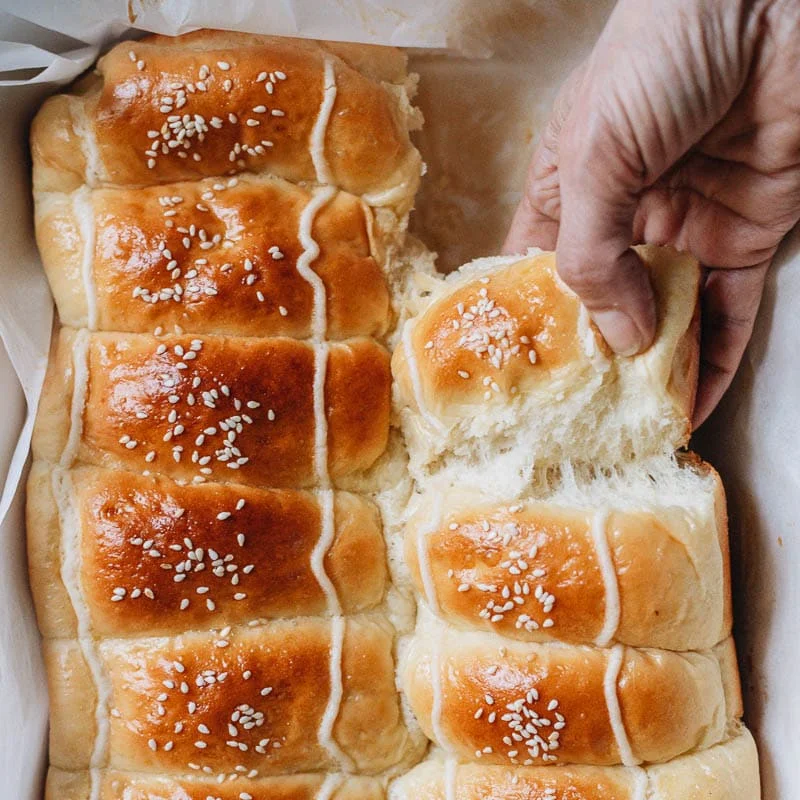
Chinese coconut buns, also known as cocktail buns, are soft milk bread rolls with a buttery, sweet coconut centre. They take a little time to rise, but make a lovely weekend baking project and can be frozen for later.
Ingredients
- 260 ml (1 cup + 1 tablespoon), heated to 43°C (110°F)milk
- 1 1/2 teaspoons (6 g)active dry yeast
- 400 g (2 3/4 cups)bread flour
- 50 g (1/4 cup)sugar
- 1 g (1/4 teaspoon)salt
- 40 g (3 tablespoons), meltedbutter
- 1 largeegg
- 40 g (2/3 cup)unsweetened shredded coconut
- 85 g (6 tablespoons), meltedbutter
- 30 g (1/4 cup)dry milk powder
- 50 g (1/4 cup)sugar
- 20 g (2 tablespoons)all-purpose flour
- 1 g (1/4 teaspoon)salt
- 21 g (1 1/2 tablespoons), meltedunsalted butter
- 18 g (2 tablespoons)all-purpose flour
- 10 g (1 tablespoon)icing sugar
- 1 largeegg
- 1 tablespoondouble cream (or milk)
- To taste (optional)toasted sesame seeds
Instructions
- 1
Activate the yeast
In a small bowl, stir the warm milk with a pinch of the dough sugar and the yeast. Leave for 5 minutes, until bubbly.
- 2
Mix the dough
Put the bread flour, remaining dough sugar and salt in a stand mixer bowl, and make a well in the centre. Add the activated yeast mixture, melted butter and egg to the well. Fit the dough hook and mix on low until a rough dough forms, stopping to scrape flour from the bowl sides if needed.
- 3
Knead the dough
Knead on medium speed (setting 4) for 15–20 minutes, until smooth and elastic. If the dough is too wet for the hook to gather, add flour 1 teaspoon at a time; if it seems too dry, add a little more milk. The dough should be wet, and a small amount may remain stuck to the bowl base.
- 4
Let dough rise
Lightly oil or butter a large bowl. Gather the dough into a ball, place it in the bowl and cover with cling film. Leave until doubled in size, about 1 hour; depending on warmth and humidity, this may take 45–90 minutes.
- 5
Mix the filling
Combine all the filling ingredients in a medium bowl and mix with a spatula until crumbly. The mixture should hold its shape when lifted and pressed by hand; if it is too dry to shape, add a little melted butter. Set aside.
- 6
Divide the dough
Press the risen dough to deflate it, then transfer it to a clean work surface and knead briefly until it returns to its original size. Divide into 12 or 16 equal pieces: about 65 g each for 12 buns or 49 g each for 16. Cover the pieces straight away with cling film so they do not dry out.
- 7
Shape the dough
Work with one piece at a time: pull and pinch the dough together at the top to make a round, then turn it seam-side down. Cup your hand over it and roll in small circles with light pressure. Cover each shaped piece, and once they are all done, leave them to rest for 10 minutes.
- 8
Fill the buns
Line a 23 x 33 cm (9 x 13 inch) baking dish with baking parchment. Flatten one dough piece and roll it into a 7 x 12 cm (3 x 5 inch) oval, with thinner sides and a thicker centre. Put a heaped tablespoon of filling in the middle for 12 buns, or a scant tablespoon for 16. Bring the edges up around the filling, pinch to seal and form an oval bun; place on the lined tray and cover. Repeat with the remaining pieces.
- 9
Rise and heat oven
Leave the shaped buns to rise for 30–40 minutes. During this rise, heat the oven to 176°C (350°F) and prepare the topping.
- 10
Make the topping
Mix the topping ingredients in a small bowl until they form a smooth paste. Put the paste in a small zip-lock bag, press it into one corner and push out as much air as possible before sealing. Snip about 6 mm (1/4 inch) from the corner.
- 11
Mix the egg wash
Just before baking, beat the egg and double cream together in a small bowl until well combined.
- 12
Bake the buns
When the second rise is complete, gently brush the buns with egg wash. Pipe two strips of topping across the short ends of each bun, and sprinkle with sesame seeds if using. Bake for 20 minutes, or until golden brown, then transfer the dish to a wire rack to cool.
- 13
Serve and store
Serve warm or at room temperature. Once completely cool, store in a zip-lock bag or airtight container in the fridge for up to 3 days, or freeze for up to 3 months. Reheat refrigerated buns in the microwave or in a 148°C (300°F) oven for 5 minutes; reheat frozen buns in the oven for 10–15 minutes, until warmed through.
What are Chinese coconut buns?
These bakery-style buns, often called cocktail buns, are a familiar Chinese bakery treat: soft, slightly sweet bread wrapped around a rich coconut filling. The name is associated with the buns’ rolled, oval shape rather than a cocktail flavour.
This version uses a milk-enriched dough for a light, tender crumb, while the coconut, butter and milk powder make a sweet, crumbly centre. A piped topping and golden egg wash give the buns their characteristic finish.
Nutrition and macros by portion
The nutrition label shows one serving as written: 203 calories, 5g protein, 28g carbs, 8g fat.
| Portion | Adjustment | kcal | Protein | Carbs | Fat |
|---|---|---|---|---|---|
| Lighter | Use less filling | 142 kcal | 3g | 20g | 6g |
| This serving | As written | 203 kcal | 5g | 28g | 8g |
| Hungry | Make a larger portion | 305 kcal | 7g | 43g | 12g |
The bread flour and sugar provide most of the carbohydrates, while the butter in the dough and filling supplies much of the fat. The egg, milk and dry milk powder contribute protein. For a more balanced plate, serve a bun with fresh fruit and an unsweetened drink.
The milk bread dough
Yeast: The milk should be warm, not hot, when mixed with the yeast. Bubbles after 5 minutes are a useful sign that the yeast has activated.
Kneading: This is a soft, wet dough, so it may cling slightly to the bowl base even when properly kneaded. Add flour only a teaspoon at a time if the dough will not gather around the hook; too much can make the buns less tender.
Making a shapeable filling
Texture: Mix the coconut filling until it is crumbly but holds together when pressed. If it falls apart and feels dry, work in a little extra melted butter so it can be portioned and enclosed.
Portioning: Keep the filling centred and leave enough dough around it to pinch closed. Use a heaped tablespoon for 12 buns, or a scant tablespoon if dividing the dough into 16.
Sealing and shaping
Round the dough pieces first by pinching the seams together underneath and rolling each piece gently on the work surface. Cover the pieces while you work to stop their surfaces drying.
For the filled buns, gather the dough edges over the coconut mixture and pinch firmly to seal. A secure seam helps keep the filling inside as the buns rise and bake.
Rising and baking cues
First rise: Allow roughly an hour for the dough to double, though the recipe notes that it can take 45–90 minutes depending on the room’s warmth and humidity. Look for the increase in size rather than relying only on the clock.
Second rise: After filling and shaping, give the buns 30–40 minutes to puff. Bake for 20 minutes at 176°C (350°F), checking for a golden-brown surface before taking them out.
The topping and serving
Piping: The flour-and-butter topping should be a smooth paste that can be squeezed through a small opening in a bag. Pipe two strips across the short ends of each bun, then add sesame seeds if you like.
Serving: These buns are enjoyable warm or at room temperature, with tea or coffee. Their sweet coconut centre also pairs well with fresh fruit for a simple afternoon-tea plate.
Recipe notes & tips
- Weigh the dough portions if you want the buns to bake to a similar size.
- Keep unshaped dough pieces covered while you fill the buns.
- Let the filling cool enough to handle if the melted butter makes it too soft.
- Pipe the topping just before baking so it stays easy to handle.
- Cool the buns completely before packing them away.
Variations
- Smaller buns: Divide the dough into 16 pieces and use a scant tablespoon of filling for each.
- Sesame finish: Sprinkle toasted sesame seeds over the egg-washed buns before baking.
- Milk wash: Use milk instead of double cream in the egg wash if that is what you have.
- Extra coconut: Add a little more shredded coconut to the filling, keeping it moist enough to shape.
- No piping bag: Spoon the topping into a small food bag and snip a corner to pipe it.
Common mistakes to avoid
- Adding too much flour: The dough is meant to be wet, so add flour only a teaspoon at a time if it will not gather.
- Using hot milk: Excess heat can affect the yeast; use milk warmed to 43°C (110°F).
- Leaving dough uncovered: It can dry out while you work, so keep unused pieces covered with cling film.
- Overfilling the buns: Too much filling makes sealing harder; use the specified amount for your batch size.
- Skipping the second rise: Give the formed buns 30–40 minutes to rest before baking for the intended light texture.
How to store
Once fully cooled, keep the buns in an airtight container or zip-lock bag in the fridge for up to 3 days, or freeze for up to 3 months. Reheat refrigerated buns in the microwave or in a 148°C (300°F) oven for 5 minutes; heat frozen buns in the oven for 10–15 minutes, until warmed through.
Frequently asked questions
Can I make these buns ahead?
Yes. Once cooled completely, store them in the fridge for up to 3 days or freeze them for up to 3 months. Reheat before serving.
How can I tell when the dough has risen enough?
For the first rise, wait until it has doubled in size; this may take 45–90 minutes. The second rise is 30–40 minutes.
Can I make 16 buns instead of 12?
Yes. Divide the dough into 16 pieces of about 49 g each and use a scant tablespoon of filling per bun.
What if my filling is too crumbly to shape?
Mix in a little melted butter until you can lift and shape the filling with your hands.
Can I use milk instead of double cream for the egg wash?
Yes. The recipe allows milk as an alternative to double cream.
Can I reheat the buns from frozen?
Yes. Warm them in a 148°C (300°F) oven for 10–15 minutes, until heated through.
Cook it from the original
This recipe comes from omnivorescookbook.com. Their page has the author’s own photos, notes and tips — the best place to cook it from.
Open the recipe on omnivorescookbook.com