
Asian Beef Stock
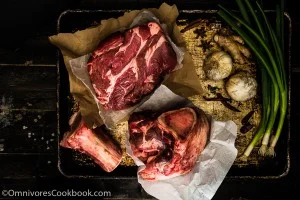
A slow-simmered beef stock built from roasted bones, chuck and aromatic spices. Make it as a flavourful base for noodle soups such as beef pho, or reserve the tender beef for another dish.
Ingredients
- 1.36–1.81 kg (3–4 pounds)beef stock bones (the original recipe uses 5280 beef knuckle bones and marrow bones, sawn into smaller pieces; see footnote 1)
- 907 g (2 pounds)beef chuck or brisket, cut into 4–5 cm (1½–2 inch) chunks (see footnote 2)
- al gustovegetable oil
- 2spring onions
- 1 thumb-sized pieceginger, sliced
- 2bay leaves
- 60 ml (¼ cup)Japanese sake
- 2dried chilli peppers
- 2cloves
- 1 wholestar anise
- 1 wholenutmeg
- ½ teaspoonblack pepper
- ½ teaspooncoriander seeds
Instructions
- 1
Preheat the oven
Heat the oven to 200°C (400°F).
- 2
Roast the bones
Arrange the bones and meat in a large roasting tin and spray a thin coating of oil over them. Roast on the bottom shelf for about 40 minutes, turning once halfway through, until evenly golden brown. Keep an eye on them; cover any parts browning too quickly with aluminium foil.
- 3
Deglaze the tin
Move the bones and meat to a large stockpot. Pour 1 cup of hot water into the roasting tin and scrape up the browned bits, then pour the water and scrapings into the pot.
- 4
Simmer the stock
Add cold water until the ingredients are covered by about 2.5 cm (1 inch). Turn the heat to high and add the spring onions, ginger, bay leaves, sake and spices. Bring to the boil, stirring a few times, then lower the heat to a gentle simmer. Cover and cook for 4–6 hours, removing the beef during this time. The stock is ready when the collagen has come away from the bones and most of the marrow has dissolved. Check it during cooking and skim brown foam from the surface with a large spoon.
- 5
Reserve beef early
For beef stew, take the chuck out after 1 hour of simmering and keep it in a container to use later.
- 6
Remove tender beef
If you plan to serve the beef straight away, take it out once tender, after 2–3 hours.
- 7
Reduce if desired
When the stock is ready, remove the bones. You can bring the liquid to a higher heat and reduce it to make it easier to store.
- 8
Strain and store
Pour the stock through a colander into airtight containers. Leave the fat on top. Refrigerate for up to 1 week or freeze for up to 3 months.
What is Asian beef stock?
This is a Chinese-style beef stock intended as a foundation for dishes such as Taiwanese beef noodle soup and Vietnamese pho. Roasted bones and beef provide depth, while ginger, spring onion and whole spices give the broth its aromatic character.
This version gets much of its flavour from roasting the bones and meat before the long, gentle simmer. That extra step develops browned flavours that a plain pot of raw bones would not have.
Nutrition and macros by portion
The nutrition label shows one serving as written: 280 calories, 26g protein, 3g carbs, 18g fat.
| Portion | Adjustment | kcal | Protein | Carbs | Fat |
|---|---|---|---|---|---|
| Lighter | Use less beef chuck | 196 kcal | 18g | 2g | 13g |
| This serving | As written | 280 kcal | 26g | 3g | 18g |
| Hungry | Add noodles and beef | 420 kcal | 39g | 5g | 27g |
The beef and marrow bones contribute protein and fat, while the chuck also adds protein and some fat; this stock contains very little carbohydrate. Serve it with noodles or rice for carbohydrates, and add vegetables to round out the meal.
Choosing the bones and beef
Stock bones: Knuckle and marrow bones are specified in the recipe, cut into smaller pieces. Roasting them helps build a savoury base for the long-cooked broth.
Chuck or brisket: Either cut can be used in 4–5 cm chunks. The beef is removed before the bones have finished simmering, so it can be saved for serving or another meal.
Build flavour in the roasting tin
Even browning: Spread the bones and meat in a large tin so they roast rather than crowd together. Turn them once during the 40-minute roast and cover any areas that colour too quickly.
Browned scraps: Scraping the roasting tin with hot water lifts its browned bits into the stockpot. These carry concentrated flavour, so transfer the liquid and scrapings along with the meat and bones.
Keep the simmer gentle
Heat: Bring the pot up to a boil, then turn the heat down to maintain a gentle simmer. A calm simmer gives the bones time to release their contents without the stock boiling vigorously.
Skimming: Check the surface during cooking and remove the brown foam with a large spoon. The recipe calls for leaving the fat in place when storing the finished stock.
When to take out the beef
For stew: Remove the chuck after 1 hour of simmering and keep it in a container for later use.
For serving now: Take the beef out after 2–3 hours, once tender. The bones need to continue simmering for 4–6 hours, so removing the meat earlier helps keep it available for serving.
How to tell when the stock is ready
Bone cues: The recipe describes the stock as ready when the collagen has fallen away from the bones and most of the marrow has dissolved. Use these signs alongside the 4–6-hour simmering window.
Storage texture: The recipe suggests reducing the strained stock over higher heat if you want to make it easier to store. Strain it through a colander before transferring it to airtight containers.
Ways to use the stock
Noodle soups: Use the stock as a base for beef noodle soup or pho, adding the cooked beef when serving. Its ginger and whole-spice notes suit aromatic broths.
Stews: Reserve the chuck after its first hour of simmering and use it later in a beef stew. The stock can also be portioned and stored for future cooking.
Recipe notes & tips
- Use a roasting tin large enough to spread the bones and meat out.
- Turn the bones and meat once during roasting so they brown on more than one side.
- Keep the pot at a gentle simmer after bringing it to the boil.
- Remove the chuck at the time that suits how you plan to serve it.
- Leave the fat on top when storing, as directed in the recipe.
- Label containers with the date before refrigerating or freezing the stock.
Variations
- Use brisket: Swap the chuck for brisket cut into the same-sized chunks.
- Adjust the spice mix: Leave out a whole spice if you prefer a less pronounced aroma.
- Make it spicier: Add another dried chilli pepper to the pot.
- Serve as noodle soup: Use the stock as a base and add noodles and the reserved beef.
- Use for stew: Take the beef out after 1 hour and save it for a later stew.
Common mistakes to avoid
- Crowding the roasting tin: Spread the bones and meat out so they can brown evenly.
- Burning the high points: Check the bones during roasting and shield fast-browning areas with foil.
- Skipping the tin scrapings: Add the hot water and loosened browned bits to the stockpot.
- Boiling hard: Lower the heat after the initial boil and maintain a gentle simmer.
- Leaving the beef in too long: Remove it after 1 hour for stew or after 2–3 hours when serving it straight away.
How to store
Strain into airtight containers and refrigerate for up to 1 week or freeze for up to 3 months. The recipe advises leaving the fat on top; reheat the amount you need before using it.
Frequently asked questions
Can I use brisket instead of chuck?
Yes. The recipe gives brisket as an alternative; cut it into 4–5 cm chunks.
When should I remove the beef?
For beef stew, remove it after 1 hour of simmering. If serving it straight away, take it out when tender, after 2–3 hours.
How long should the bones simmer?
Simmer the stock for 4–6 hours. The recipe says it is ready when the collagen has come away from the bones and most of the marrow has dissolved.
Do I need to skim the fat?
No. Skim brown foam from the surface during cooking, but the recipe says not to skim the fat when storing the stock.
Can I freeze this stock?
Yes. Transfer it to airtight containers and freeze it for up to 3 months.
What can I use the stock for?
It is intended as a base for Asian noodle dishes, including Taiwanese beef noodle soup and Vietnamese pho. The recipe also suggests saving the beef for stew.
Cook it from the original
This recipe comes from omnivorescookbook.com. Their page has the author’s own photos, notes and tips — the best place to cook it from.
Open the recipe on omnivorescookbook.com