
ROASTED MASHED BUTTERNUT SQUASH
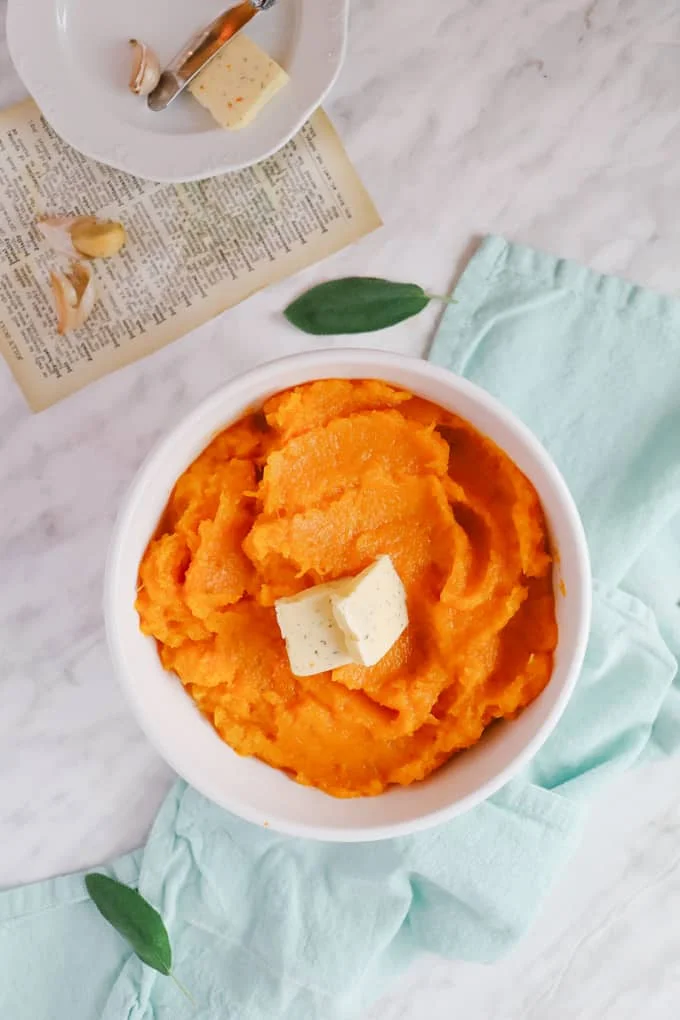
This roasted butternut squash is mashed with butter and cream for a smooth, savoury side with a gentle garlic note if you choose to add it. Roasting softens the squash and concentrates its flavour, while the optional crisp sage makes a fragrant finishing touch.
Ingredients
- 1.814 kg (4 lb)butternut squash
- 5 ml (1 tsp)salt
- A pinchpepper
- 15 ml (1 tbsp)olive oil
- 3garlic cloves (optional)
- 43 g (3 tbsp)butter
- 60 ml (¼ cup)heavy cream (35%)
- 5–6sage leaves (optional)
Instructions
- 1
Preheat the oven
Heat the oven to 200°C (400°F).
- 2
Prepare the squash
Cut the butternut squash in half and scoop out the seeds.
- 3
Arrange the halves
Set the squash halves cut-side up on a baking sheet.
- 4
Season the squash
Drizzle with olive oil, then season with salt and pepper.
- 5
Roast until tender
Bake for 1 hour, or until a knife slides smoothly into the thickest part of the squash.
- 6
Cool briefly
Take the squash out of the oven and leave it for a few minutes, until it is cool enough to handle.
- 7
Scoop the flesh
Scoop the flesh from the skin into a large mixing bowl.
- 8
Mash the squash
Use a potato masher to mash the squash until smooth.
- 9
Stir in dairy
Add the heavy cream and butter, then stir until combined.
- 10
Serve hot
Serve while hot.
- 11
Finish with sage
For the optional garnish, melt some butter in a pan and add a few sage leaves. Cook until crisp, crumble a few leaves into the mash and use the rest to garnish.
What is roasted mashed butternut squash?
This is a simple American-style side dish: squash is roasted until tender, then mashed with butter and cream. Roasting before mashing gives it a rich, mellow flavour and avoids the need to boil the squash.
This version keeps the seasoning straightforward, with optional garlic and crisp sage for extra savoury flavour. It works alongside a roast or as part of a vegetable-led meal.
Nutrition and macros by portion
The nutrition label shows one serving as written: 342 calories, 5g protein, 49g carbs, 18g fat.
| Portion | Adjustment | kcal | Protein | Carbs | Fat |
|---|---|---|---|---|---|
| Lighter | Use less butter and cream | 239 kcal | 4g | 34g | 13g |
| This serving | As written | 342 kcal | 5g | 49g | 18g |
| Hungry | Serve a larger portion | 513 kcal | 8g | 74g | 27g |
The squash provides most of the carbohydrates, while butter, cream and olive oil contribute much of the fat. The recipe has a modest amount of protein, so serve it with a protein-rich main and extra vegetables to round out the plate.
Roast the squash for flavour
Cut-side up: placing the halves this way lets the cut surfaces roast while the squash softens in the oven. A little olive oil and seasoning go on before baking.
Choose evenly sized halves where possible so they cook at a similar rate. If one is noticeably larger, judge doneness by testing the thickest part rather than relying on the clock alone.
Check for tenderness
Knife test: the squash is ready when a knife passes smoothly into its thickest section. If it still feels firm, return it to the oven and check again after a short interval.
Let it cool briefly before scooping, but mash while it is still warm so the butter and cream blend in readily.
Get the texture right
Mash by hand: a potato masher gives a soft, slightly rustic texture. Mash until smooth, then stir in the cream and butter.
Add the dairy after mashing, as directed, and stir to combine. If you prefer a less rich result, use a smaller amount of cream or butter.
Make the sage topping
Crisp sage: melt butter in a pan and cook a few sage leaves until crisp. Keep an eye on them, as small leaves can crisp quickly.
Crumble some into the mash and reserve the rest for the top. Both the sage and garlic are optional, so the squash can be served simply seasoned if preferred.
Serving ideas
Serve the mash hot alongside roast chicken, pork or a plant-based main. Its creamy texture also pairs well with crisp or simply cooked green vegetables.
For a balanced plate, add a source of protein and a generous portion of vegetables alongside the squash.
Recipe notes & tips
- Use a sturdy baking sheet to support the squash halves.
- Scoop the seeds out thoroughly before roasting.
- Test the thickest part of each half for tenderness.
- Let the squash cool just enough to handle safely before scooping.
- Stir the butter and cream through the mash while the squash is warm.
- Keep the sage leaves moving in the pan and remove them once crisp.
Variations
- Add garlic: roast the optional cloves with the squash, then mash them into the flesh.
- Skip the sage: serve the mash without a garnish for a simpler side.
- Use less cream: reduce the amount for a firmer, less rich mash.
- Add extra sage: crumble more crisp leaves through the mash for a stronger herbal flavour.
- Make it rustic: stop mashing while a little texture remains.
Common mistakes to avoid
- Under-roasting the squash: keep baking until a knife slides easily into the thickest part.
- Handling it too soon: let the squash rest for a few minutes before scooping.
- Leaving large lumps: continue mashing until the flesh reaches the texture you want.
- Adding the dairy to cold squash: mash while the squash is warm so the butter and cream combine readily.
- Burning the sage: cook the leaves briefly and watch them closely as they crisp.
How to store
Refrigerate leftovers in a covered container for up to 3 days. Reheat gently in a saucepan or microwave, stirring occasionally; add a small splash of cream if the mash seems too thick.
Frequently asked questions
Can I make this without garlic?
Yes. The garlic is optional, and the squash can be seasoned with just salt, pepper and olive oil.
How do I know when the squash is cooked?
A knife should pass smoothly into the thickest part. If it meets resistance, roast the squash for longer and test again.
Can I prepare the mash ahead?
Yes. Store it covered in the fridge and reheat gently before serving, stirring it as it warms.
Can I use a blender instead of a potato masher?
The method uses a potato masher for a smooth mash with some control over its texture. A blender may make it very smooth, so avoid over-processing.
Do I have to add the sage?
No. Sage is optional; the mash is also good served without the garnish.
Cook it from the original
This recipe comes from noshingwiththenolands.com. Their page has the author’s own photos, notes and tips — the best place to cook it from.
Open the recipe on noshingwiththenolands.com