
Cioppino
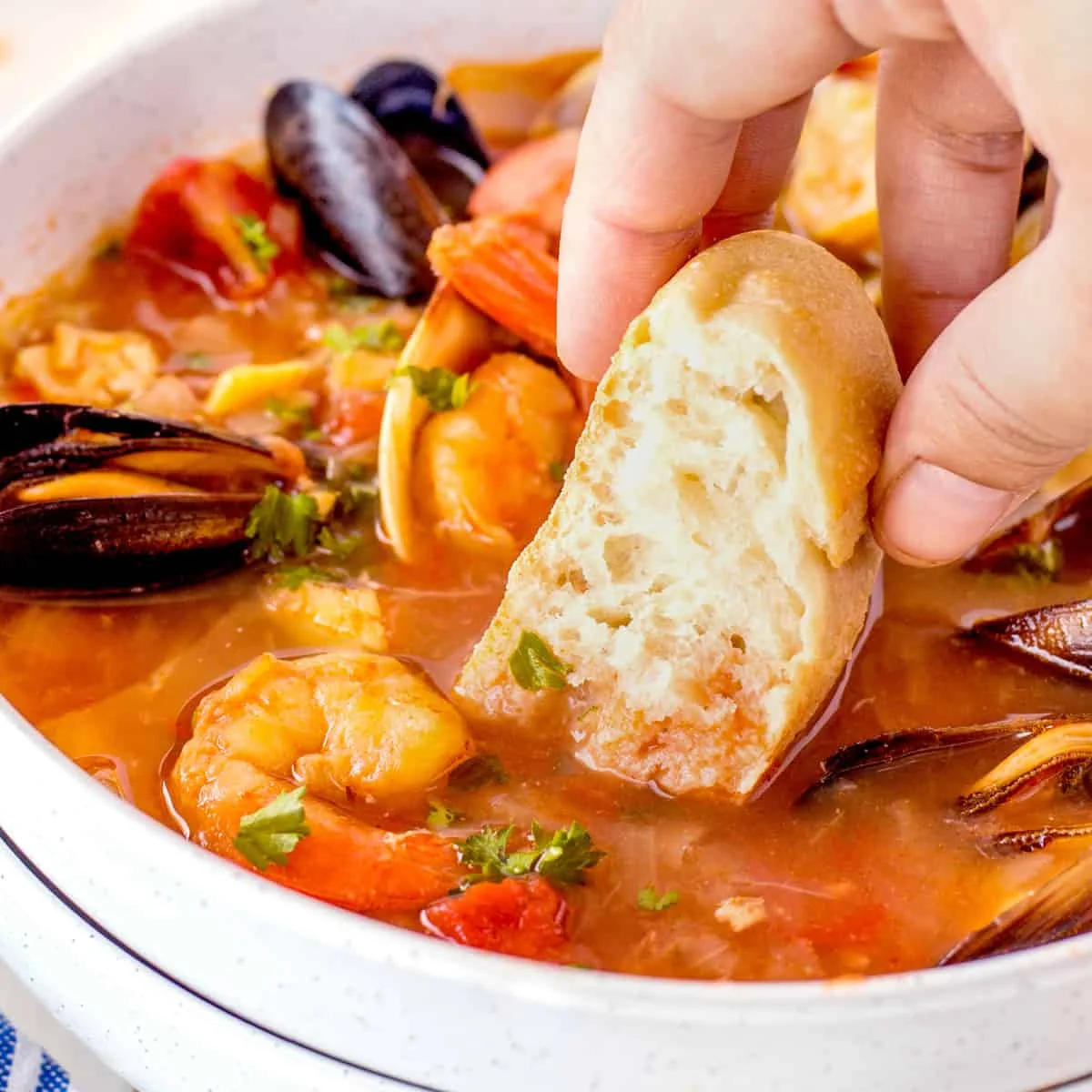
Cioppino is a San Francisco-born Italian American seafood stew, simmered in a tomato, wine and stock broth. This generous pot brings clams, mussels, shrimp and firm fish together for a warming meal made for sharing.
Ingredients
- 45 ml (3 Tbsp.)olive oil
- 1onion, chopped
- 3 largeshallots, chopped
- 10 ml (2 tsp.)salt
- 12–16 clovesgarlic, chopped
- 5–10 ml (1–2 tsp.)crushed red pepper flakes
- 60 ml (1/4 cup)tomato paste
- 794 g (1 28 oz. can)diced tomatoes
- 355 ml (1 1/2 cups)dry white wine
- 1.18 litres (5 cups)chicken stock (fish stock if you can find it)
- 1bay leaf
- 454 g (1 lb.)clams, scrubbed
- 454 g (1 lb.)mussels, scrubbed and debearded
- 454 g (1 lb.)uncooked large shrimp, peeled and deveined
- 681 g (1 1/2 lb.)firm fish such as halibut or sea bass, cut into chunks
- Optional; amount not specifiedprecooked snow crab claws
Instructions
- 1
Soften the aromatics
Heat the olive oil in a very large pot. Add the onion and shallots and sauté until translucent.
- 2
Add garlic and seasoning
Stir in the garlic, red pepper flakes to taste and salt. Continue sautéing for about 2 minutes.
- 3
Build the broth
Mix in the tomatoes, tomato paste, wine, stock and bay leaf.
- 4
Simmer the broth
Cover the pot and bring the broth to a boil, then lower the heat and simmer for 30 minutes.
- 5
Cook the shellfish
Add the clams and mussels and cook for 5 minutes.
- 6
Add fish and shrimp
Add the shrimp and fish, then simmer gently for another 5 minutes, until the shrimp and fish are cooked and the mussels and clams have opened.
- 7
Discard closed shells
Remove and discard any mussels or clams that have remained shut.
- 8
Warm crab claws
If using snow crab claws, gently add them about 2 minutes before the stew is finished so they heat through.
- 9
Serve straight away
Serve immediately with crusty bread.
What is cioppino?
Cioppino is an Italian American seafood stew associated with San Francisco, where it developed from the cooking traditions of Italian immigrant fishermen. The name is commonly linked to the idea of gathering or chopping together whatever seafood is available.
This version layers shellfish, shrimp and firm fish in a tomato-and-wine broth. Simmering the broth before adding the seafood helps build flavour while keeping the delicate ingredients from cooking for too long.
Nutrition and macros by portion
The nutrition label shows one serving as written: 774 calories, 101g protein, 35g carbs, 20g fat.
| Portion | Adjustment | kcal | Protein | Carbs | Fat |
|---|---|---|---|---|---|
| Lighter | More broth, less bread | 542 kcal | 71g | 25g | 14g |
| This serving | As written | 774 kcal | 101g | 35g | 20g |
| Hungry | Larger seafood portion | 1161 kcal | 152g | 53g | 30g |
The tomatoes and any bread served alongside contribute most of the carbohydrates, while olive oil supplies much of the fat. The fish, shrimp, clams and mussels provide most of the protein. Pair a bowl with a generous portion of vegetables, or serve bread on the side so you can choose how much to add.
Build flavour in the broth
Aromatics: cook the onion and shallots until translucent before adding garlic and chilli flakes. This gives them time to soften and flavour the oil without rushing the base.
Tomato and wine: stir in the tomato paste, diced tomatoes, wine and stock, then simmer the mixture for 30 minutes. Fish stock can be used if available; the recipe otherwise calls for chicken stock.
Add seafood in stages
Shellfish first: clams and mussels go into the simmering broth for 5 minutes before the shrimp and fish. This gives them a head start on opening.
Delicate seafood: the shrimp and fish need only another gentle 5 minutes in the pot. If using precooked crab claws, add them about 2 minutes before the end, just long enough to heat through.
Check for doneness
Shells: look for the clams and mussels to open during cooking. Discard any that remain shut, as directed in the method.
Fish and shrimp: the recipe gives a 5-minute gentle simmer after adding them; check that the fish and shrimp are cooked through before serving. Avoid a vigorous boil at this stage, which can break up the fish.
Choose the seafood
Firm fish: halibut or sea bass are suggested because the chunks are intended to hold their shape in the stew. Cut the fish into pieces of a similar size so they cook at a similar pace.
Shellfish preparation: scrub the clams and scrub and debeard the mussels before they go into the pot. The shrimp should be peeled and deveined, as listed in the ingredients.
Plan the cooking time
The full recipe takes 75 minutes, including the 30-minute broth simmer and the shorter seafood cooking stages. Prepare and clean the seafood while the broth simmers so it is ready to add in sequence.
Keep the pot covered while bringing the broth to a boil, then reduce the heat for the simmer. Once the seafood is added, use a gentle simmer and serve promptly when it is cooked.
Serve with crusty bread
Crusty bread is the suggested accompaniment and is useful for soaking up the tomato-rich broth. Serve the stew immediately, while the seafood is hot and the shellfish is freshly cooked.
For a fuller meal, offer the bread alongside the stew rather than stirring it into the pot. This keeps the seafood and broth easy to portion at the table.
Recipe notes & tips
- Use a very large pot so the shellfish and fish can sit in the broth without crowding.
- Have the cleaned seafood ready before adding the clams and mussels, as the final cooking stages move quickly.
- Add the red pepper flakes to taste, since the recipe gives a range rather than a fixed amount.
- Keep the stew at a gentle simmer after adding the shrimp and fish.
- Serve the cioppino as soon as the seafood is cooked, with crusty bread.
- Discard clams or mussels that remain shut after cooking.
Variations
- Use fish stock: substitute it for the chicken stock if you can find it.
- Adjust the heat: use less red pepper for a milder broth or more for extra warmth.
- Add snow crab: gently warm precooked snow crab claws in the pot during the final 2 minutes.
- Choose another firm fish: use a firm fish in place of halibut or sea bass and cut it into chunks.
- Vary the seafood: use different amounts of the listed seafood while keeping the same staged cooking method.
Common mistakes to avoid
- Boiling the seafood hard: keep the stew at a gentle simmer after adding the fish and shrimp.
- Adding everything at once: add clams and mussels first, then the shrimp and fish as directed.
- Skipping the shell check: discard any clams or mussels that stay shut after cooking.
- Cooking the shrimp too long: follow the 5-minute simmer and check that it is cooked before serving.
- Adding crab too early: put precooked crab claws in about 2 minutes before the stew is finished.
- Crowding the pot: use a very large pot so the seafood can cook in the broth.
How to store
Refrigerate leftovers promptly in a covered container and use within 1–2 days. Reheat gently in a saucepan until hot throughout, taking care not to boil the seafood vigorously; discard any seafood that was left out for too long.
Frequently asked questions
Can I use fish stock instead of chicken stock?
Yes. The recipe suggests fish stock if you can find it; otherwise, use chicken stock.
How spicy is this cioppino?
The recipe uses 1–2 teaspoons of crushed red pepper flakes and says to season to taste. Start at the lower amount if you prefer a milder broth.
How do I know when the shellfish is cooked?
The clams and mussels should open during cooking. Discard any that remain shut.
Can I add the seafood earlier?
It is better to follow the stages in the recipe: cook the clams and mussels for 5 minutes, then add the shrimp and fish for another 5 minutes.
Can I make cioppino ahead?
You can prepare the broth ahead, but add and cook the seafood close to serving time so it is not overcooked.
What should I serve with cioppino?
The recipe suggests crusty bread, which is well suited to the broth.
Cook it from the original
This recipe comes from noshingwiththenolands.com. Their page has the author’s own photos, notes and tips — the best place to cook it from.
Open the recipe on noshingwiththenolands.com