
Pan Fried Honey Teriyaki Salmon Fillet Recipe
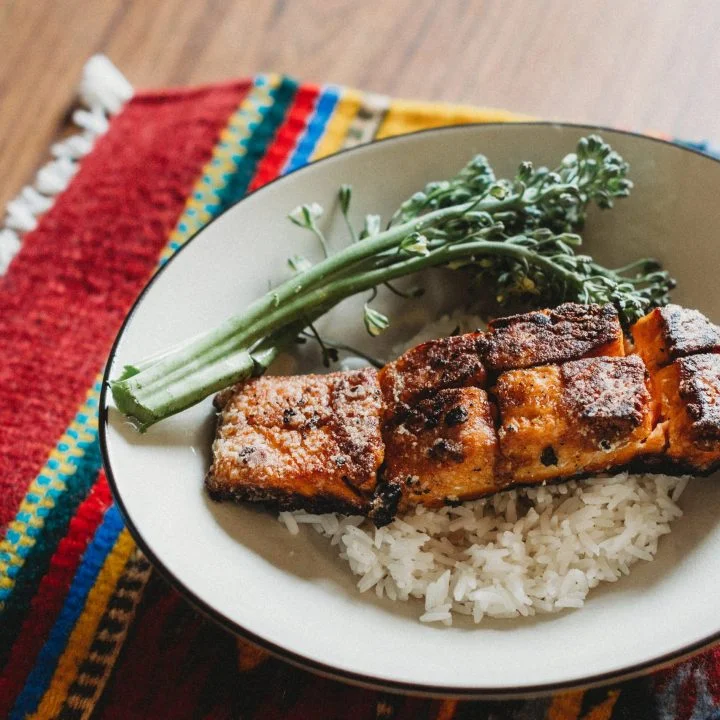
This pan-fried salmon pairs a crisp, starch-coated exterior with a sweet-savoury soy, honey and ginger marinade. It is a quick weeknight option that cooks in one pan and goes well with simple sides.
Ingredients
- 2 fillets (about 113 g each)salmon fillets
- 80 mlsoy sauce
- 30 mlhoney
- 15 mlrice wine
- 15 mlginger, julienned, sliced or grated
- 2 tbsp (about 16 g)potato starch or cornflour
- 30 mlcooking oil (olive, rapeseed, avocado or another type)
Instructions
- 1
Score the fillets
Cut a cross-hatch pattern into the flesh of each salmon fillet: make one long cut lengthways and about four cuts across it, going halfway into the flesh. Keep the skin intact.
- 2
Marinate the salmon
Mix the soy sauce, honey, rice wine and ginger. Put the salmon and marinade in a resealable bag and leave for 10 minutes on each side, 20 minutes in total.
- 3
Coat with starch
Spread the potato starch or cornflour on a plate. Lift the salmon out of the marinade and press both sides lightly into the starch for an even coating.
- 4
Pan-fry the fillets
Heat the oil in a frying pan over medium heat. Add the salmon skin-side down and cook uncovered for 5 minutes. Turn and cook for another 5 minutes, until golden and crisp.
- 5
Serve while hot
Plate the salmon and serve straight away with your preferred sides.
What is honey teriyaki salmon?
Teriyaki is a Japanese style of cooking associated with a glossy, savoury-sweet coating. This version uses soy sauce, honey, rice wine and ginger to flavour salmon, then pan-fries it for a crisp finish.
The honey gives the marinade sweetness, while the starch coating helps form a browned exterior. Keeping the skin intact also gives the fillets a sturdy side to start cooking on.
Nutrition and macros by portion
The nutrition label shows one serving as written: 391 calories, 29g protein, 34g carbs, 14g fat.
| Portion | Adjustment | kcal | Protein | Carbs | Fat |
|---|---|---|---|---|---|
| Lighter | Use less cooking oil | 274 kcal | 20g | 24g | 10g |
| This serving | As written | 391 kcal | 29g | 34g | 14g |
| Hungry | Add rice and vegetables | 587 kcal | 44g | 51g | 21g |
The salmon supplies most of the protein and some of the fat, while the honey contributes carbohydrate and the starch coating adds a little more. Soy sauce is the main source of sodium; balance the plate with plain rice and vegetables without extra salty seasoning.
The marinade and its flavours
Soy and honey: these provide the savoury and sweet base. Rice wine adds another layer of flavour, and ginger brings a fresh, aromatic note.
Short marinating: the recipe calls for 10 minutes per side, or 20 minutes altogether. Keep to that timing so the fish is ready for coating and frying without extending the stated method.
Why score the salmon
Cross-hatch cuts: score the flesh about halfway through, leaving the skin whole. This creates shallow openings for the marinade to reach the surface of the fish.
Gentle handling: salmon can break along the cuts, so turn and lift the fillets carefully when moving them from the marinade to the starch.
Getting a crisp coating
Even coverage: press both sides lightly into the starch rather than packing it on. A thin, even layer is the aim.
Hot pan: heat the oil over medium heat before adding the fish. Cook uncovered for 5 minutes on the skin side, then turn and cook for 5 minutes more, as directed.
Checking the finish
Colour: look for a golden, crisp exterior after the second side has cooked. The recipe gives 5 minutes per side, though the thickness of the fillets can affect how quickly they cook.
Careful turning: use a broad spatula to support the fillets and keep the coating intact. Serve them soon after cooking to enjoy the crisp surface.
Choosing sides
Rice: plain rice makes a simple base for the savoury-sweet flavours and can catch any marinade left on the fish.
Vegetables: serve with a green vegetable or a crisp salad for contrast. Keep the sides simply seasoned so they do not compete with the soy, honey and ginger.
Recipe notes & tips
- Pat the salmon surface dry before scoring if it is wet, so it is easier to handle.
- Keep the skin intact while making the cross-hatch cuts.
- Turn the fillets gently to preserve the starch coating.
- Use potato starch or cornflour as specified; either can coat the fish.
- Serve soon after frying for the best contrast between crisp coating and tender fish.
Variations
- Use cornflour: swap it for the potato starch in the coating.
- Grate the ginger: use the same stated amount for a finer texture in the marinade.
- Slice the ginger: cut it into thin strips for a more distinct ginger presence.
- Choose another oil: use olive, rapeseed or avocado oil as listed.
- Serve with rice: add plain rice alongside the salmon for a straightforward meal.
Common mistakes to avoid
- Cutting through the skin: score only the flesh so the skin stays intact.
- Uneven starch coating: press both sides lightly into the starch for consistent coverage.
- Turning too roughly: support the fish with a broad spatula to reduce breakage.
- Cooking at high heat: use medium heat as directed to give the fillets time to brown.
- Leaving the fish in the marinade longer: follow the stated 20-minute total marinating time.
How to store
Refrigerate leftovers in a covered container and use within 2 days. Reheat gently in a frying pan until hot; the coating may be less crisp than when freshly cooked.
Frequently asked questions
Can I use cornflour instead of potato starch?
Yes. The recipe allows either potato starch or cornflour for coating the salmon.
How long should the salmon marinate?
Marinate it for 10 minutes per side, 20 minutes in total.
Should I remove the salmon skin?
No. Keep the skin intact when scoring, and place the fillets skin-side down in the pan.
Can I use grated ginger?
Yes. The ginger can be julienned, sliced or grated; use the stated 15 ml amount.
What should I serve with the salmon?
Plain rice and a simply seasoned vegetable or salad make easy accompaniments.
Cook it from the original
This recipe comes from ohsnapletseat.com. Their page has the author’s own photos, notes and tips — the best place to cook it from.
Open the recipe on ohsnapletseat.com