
Cinnamon Biscuits with Cream Cheese Frosting
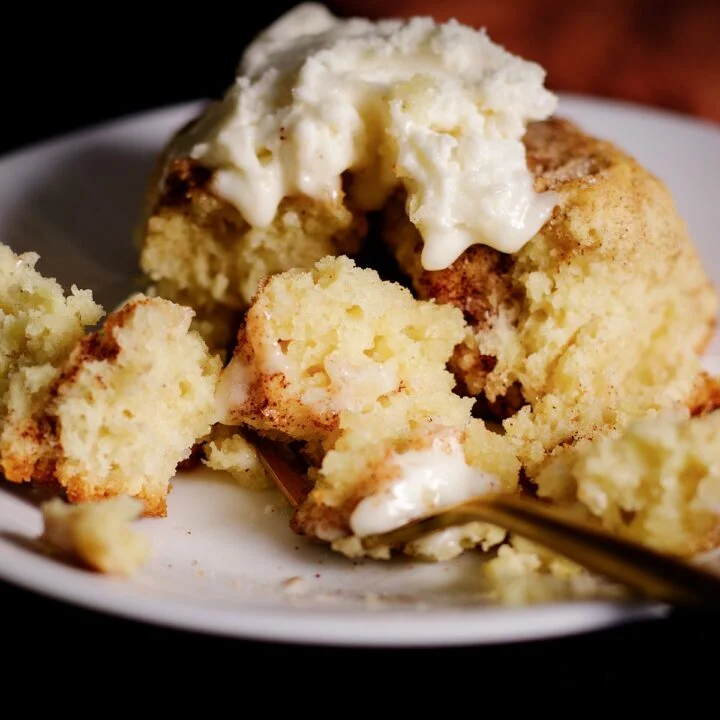
These tender, buttery biscuits have a cinnamon-sugar swirl inside and a crisp, sweet topping. Serve them warm with cream cheese frosting on top or on the side so everyone can choose how much to add.
Ingredients
- 12 tablespoons (170 g) cold, plus 4 tablespoons (56 g) meltedsalted butter
- 2 tablespoons (25 g) plus 1/4 cup (50 g), dividedgranulated sugar
- 1 1/2 teaspoonsground cinnamon
- 2 cups (240 g)plain flour
- 3/4 cup (90 g)cake flour
- 2 teaspoonsbaking powder
- 1/2 teaspoonbicarbonate of soda
- 1 1/2 teaspoons table salt or 1 teaspoonkosher salt
- 1 cupcold buttermilk
- 4 oz (113 g)cream cheese, at room temperature
- 4 oz (113 g)unsalted butter, at room temperature
- 1 teaspoonpure vanilla extract
- 1/4 teaspoontable salt
- 2–3 cups (226–339 g), to tasteicing sugar
Instructions
- 1
Prepare the pan
Coat the inside of a cast-iron pan with a thin layer of vegetable oil or shortening. A baking dish can be used instead.
- 2
Chill the butter
Cut 12 tablespoons (170 g) of very cold butter into 1.25 cm pieces. Put them on a plate or in a bowl and freeze for about 10 minutes, until very cold but not frozen.
- 3
Mix cinnamon sugar
Stir 2 tablespoons of granulated sugar with the cinnamon and set it near your work surface. Melt 2 tablespoons of butter, then set it out with a rolling pin, spatula and a little extra plain flour.
- 4
Combine dry ingredients
Put the plain flour, cake flour, baking powder, bicarbonate of soda, salt and remaining sugar in a food processor. Use a dough blade if available, or the chopping blade, and pulse a few times to combine.
- 5
Cut in butter
Add the cold butter and process on low until the mixture resembles coarse crumbs. Alternatively, combine the dry ingredients in a bowl and cut in the butter with a pastry cutter, or rub it in with your fingers.
- 6
Add the buttermilk
Pour in the buttermilk and process on low, or stir with a wooden spoon, just until a wet, sticky dough comes together.
- 7
Shape the dough
Lightly flour the work surface and turn the dough out onto it. Dust the top lightly, then pat or roll the dough into a rectangle about 25 cm long and 2.5 cm thick. Use only enough extra flour to prevent sticking, loosening the dough with a flat spatula if needed.
- 8
Add the filling
Drizzle the melted butter over the dough and scatter about three-quarters of the cinnamon sugar evenly over it. Keep the remaining cinnamon sugar and 2 tablespoons of butter for the baked biscuits.
- 9
Roll the dough
Gently roll the dough over the filling to make a log. If it sticks, loosen it with a spatula; if it breaks, press it back together with your fingers until the log holds.
- 10
Cut and chill
Cut the log into 8 pieces with a sharp knife and arrange them close together in the pan, with their sides touching. Cover loosely with cling film and refrigerate for at least 20 minutes or up to 24 hours.
- 11
Bake the biscuits
Heat the oven to 204°C. Bake the chilled biscuits for 20–30 minutes, until the tops and edges begin to brown and the biscuits look set.
- 12
Make the frosting
While the biscuits bake, beat the cream cheese, room-temperature butter, vanilla and salt with an electric mixer until very creamy. Beat in 2 cups of icing sugar, taste, then add more if you prefer.
- 13
Check the centres
Remove the pan from the oven and use a sharp knife to gently separate two biscuits in the centre. Check that the dough inside is no longer doughy.
- 14
Finish and serve
Brush the biscuits straight away with the remaining 2 tablespoons of melted butter and sprinkle over the reserved cinnamon sugar. Serve warm, with the cream cheese frosting spread on top or alongside.
What are cinnamon biscuits?
These are American-style biscuits: quick, tender baked rounds rather than the crisp, sweet biscuits often meant by the word in Britain. This version takes inspiration from cinnamon rolls, layering cinnamon sugar inside the dough and over the finished tops.
The method keeps the buttery dough soft and brings the biscuits together in the pan, while the optional cream cheese frosting gives them a rich, tangy finish.
Nutrition and macros by portion
The nutrition label shows one serving as written: 580 calories, 6g protein, 59g carbs, 36g fat.
| Portion | Adjustment | kcal | Protein | Carbs | Fat |
|---|---|---|---|---|---|
| Lighter | Use less frosting | 406 kcal | 4g | 41g | 25g |
| This serving | As written | 580 kcal | 6g | 59g | 36g |
| Hungry | Add another biscuit | 870 kcal | 9g | 89g | 54g |
The flour and sugar provide most of the carbohydrates, while the butter and cream cheese contribute much of the fat. The buttermilk, flour and cream cheese contribute some protein; serve a biscuit with fruit or another savoury dish to make a more balanced plate.
Why cold butter matters
Cold butter: cutting it into the flour leaves small pieces throughout the dough. As the biscuits bake, those pieces help create a tender, layered texture.
Light handling: mix only until the dough comes together. Too much processing or kneading can make the biscuits firm rather than soft.
Rolling and filling the dough
Sticky dough: use a light dusting of flour and a spatula to lift it from the work surface. Add flour sparingly so the dough stays tender.
Cinnamon layer: spread the melted butter and most of the cinnamon sugar over the rectangle before rolling. The dough may tear or look shaggy; press it back together gently into a cohesive log.
The chill and close fit
Chilling: give the cut biscuits at least 20 minutes in the fridge before baking, or leave them there for up to 24 hours. This makes them easier to handle before they go into the oven.
Pan spacing: set the biscuits close together with their sides touching. The recipe uses this arrangement to help them rise as they bake.
How to tell they are baked
Colour: look for tops and edges that are beginning to brown, with biscuits that appear set. The stated baking time is 20–30 minutes at 204°C.
Centre check: separate two biscuits in the middle of the pan with a sharp knife. If the dough inside still looks doughy, they need more baking.
Frosting and serving
Cream cheese frosting: beat the softened cream cheese and butter with vanilla and salt until creamy, then add icing sugar to taste. Starting with 2 cups gives you room to adjust the sweetness.
Warm biscuits: brush them with melted butter and sprinkle on the reserved cinnamon sugar as soon as they come out of the oven. Serve the frosting on top or alongside for people to add themselves.
Recipe notes & tips
- Keep the butter cold until it is ready to go into the flour.
- Measure the cinnamon sugar for the filling and topping separately so some is left for the finish.
- Use a flat spatula to loosen sticky dough instead of adding lots of extra flour.
- Arrange the cut biscuits with their sides touching in the pan.
- Check a biscuit from the centre of the pan, where the dough may take longer to bake through.
- Add the icing sugar to the frosting gradually and stop when it tastes right to you.
Variations
- More cinnamon: increase the cinnamon in the sugar mixture to taste.
- No frosting: serve the warm biscuits with only the butter and cinnamon-sugar topping.
- Sweeter frosting: add more icing sugar a little at a time.
- Baking dish: use a baking dish instead of a cast-iron pan.
- Make ahead: refrigerate the covered, cut biscuits for up to 24 hours before baking.
Common mistakes to avoid
- Warm butter: the dough can lose its tender texture; chill the cut butter for about 10 minutes before mixing.
- Too much flour: excess flour can make the dough less tender; dust the surface lightly and add only what is needed to stop sticking.
- Overworking the dough: mixing for too long can make the biscuits firm; stop once the dough comes together.
- Rolling too firmly: the dough can break or stick; roll gently and use a spatula to loosen it.
- Crowding incorrectly: biscuits spaced apart will not have their sides touching; arrange all 8 close together in the pan.
- Skipping the centre check: the outside can brown before the middle is done; separate two centre biscuits to inspect the dough.
How to store
Store leftover biscuits in an airtight container in the fridge for up to 3 days. Reheat until warm before serving; keep any leftover frosting covered and refrigerated.
Frequently asked questions
Can I prepare the biscuits ahead?
Yes. After cutting and arranging them in the pan, cover loosely and refrigerate for 20 minutes or up to 24 hours before baking.
Can I bake these without a cast-iron pan?
Yes. The recipe notes that a baking dish can be used instead.
How do I know when the biscuits are done?
Their tops and edges should be beginning to brown, and they should look set. Separate two biscuits from the centre with a sharp knife to check that the inside is not doughy.
Do I have to use all the icing sugar?
No. Start with 2 cups, taste the frosting and add more if you like it sweeter.
Should I put the frosting on before serving?
Either spread it over the warm biscuits or serve it alongside so each person can choose how much to add.
Can I use table salt or kosher salt?
Yes. The ingredient list gives a choice of 1 1/2 teaspoons of table salt or 1 teaspoon of kosher salt for the biscuit dough.
Cook it from the original
This recipe comes from ofbatteranddough.com. Their page has the author’s own photos, notes and tips — the best place to cook it from.
Open the recipe on ofbatteranddough.com