
Lemon Meringue Pie
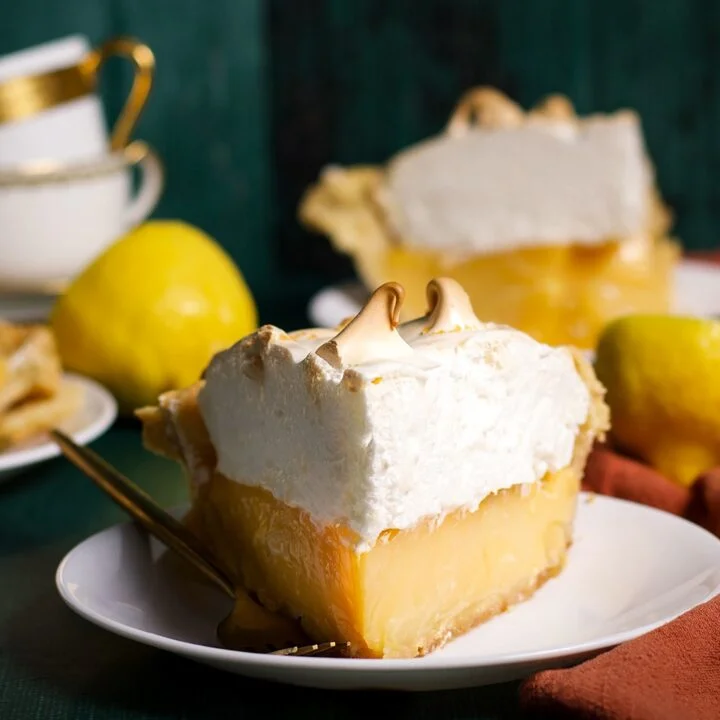
Lemon meringue pie pairs a sharp, bright lemon custard with a soft, toasted meringue topping in a pre-baked pastry shell. Make it when you want a striking make-ahead dessert with crisp peaks and a sweet-tart filling.
Ingredients
- 1pre-baked pie shell
- 300 ggranulated sugar
- 62 gcornflour
- ½ teaspoonsalt
- 8 largeegg yolks (save the whites for the meringue)
- 240 ml (1 cup; 8 oz)lemon juice
- 414 ml (1¾ cups; 14 oz)water
- 120 ml (½ cup)elderflower liqueur, or an additional 120 ml (½ cup) water
- 28 gbutter, cut into 1.3 cm (½-inch) pieces
- 1 teaspoonpure vanilla extract
- 1 teaspoonlemon extract, or ½ teaspoon lemon oil
- 8 largeegg whites, saved from making the lemon custard
- 350 ggranulated sugar
- ¾ teaspoonsalt
- ¼ teaspooncream of tartar, or ½ teaspoon lemon juice
- ½ teaspoonpure vanilla extract
Instructions
- 1
Mix the custard
Put the sugar, cornflour and salt in a medium, heavy-based saucepan and whisk to combine. Whisk in the egg yolks, lemon juice, water and elderflower liqueur, if using.
- 2
Cook the filling
Set the pan over a medium heat and cook, whisking constantly, until the custard thickens and starts to bubble. Reduce the heat slightly and keep whisking as it cooks for a further 2 minutes.
- 3
Fill the shell
Take the pan off the heat and whisk in the butter, followed by the extracts. Scrape the custard into the prepared pie shell and leave it at room temperature for about 30 minutes, until a skin forms. At this point, cover and refrigerate the pie for up to 24 hours if desired.
- 4
Heat the oven
Preheat the oven to 176°C (375°F).
- 5
Prepare the meringue
Put the egg whites, sugar, salt and cream of tartar or lemon juice in a bain-marie or double boiler, or in a metal mixing bowl set over a saucepan containing a couple of inches of water. Keep a kitchen thermometer close to hand.
- 6
Heat the whites
Bring the water in the bottom pan to the boil over a high heat, then reduce the heat to maintain a gentle simmer. Whisk the whites constantly as they heat, and cook until the mixture reaches 79°C (175°F).
- 7
Whip and top
Transfer the mixture to a mixing bowl and beat with an electric mixer until thick and glossy, about 5 minutes. Beat in the vanilla. Spread the meringue over the custard, making sure it meets the crust all the way round; use a fork to make swirls and peaks if you like.
- 8
Bake until golden
Bake the pie for about 20 minutes, until the meringue is light golden and the tops of the peaks and swirls are a deeper brown. Rotate the pie in the oven as needed for even colouring.
- 9
Cool the pie
Leave the pie at room temperature for about 1 hour, then refrigerate until completely cool; this may take 3–4 hours. Once cool to the touch, cover loosely with plastic wrap until serving. Covering it while warm can cause condensation on the meringue. The pie keeps refrigerated for up to 3 days.
What is lemon meringue pie?
Lemon meringue pie is a pastry dessert layered with a lemon custard and a whipped egg-white topping. It belongs to a long tradition of combining citrus fillings with meringue; its precise origins are not certain.
This version builds a sturdy, tangy filling with cornflour and uses the saved egg whites for a generous, soft meringue. Elderflower liqueur is optional, so the pie can be made with water instead.
Nutrition and macros by portion
The nutrition label shows one serving as written: 584 calories, 7g protein, 112g carbs, 10g fat.
| Portion | Adjustment | kcal | Protein | Carbs | Fat |
|---|---|---|---|---|---|
| Lighter | Serve a smaller slice | 409 kcal | 5g | 78g | 7g |
| This serving | As written | 584 kcal | 7g | 112g | 10g |
| Hungry | Serve a larger slice | 876 kcal | 11g | 168g | 15g |
The pastry shell, sugar and cornflour provide most of the carbohydrates, while the egg yolks, butter and meringue whites contribute protein and some fat. Pair a slice with fresh fruit, or serve a smaller slice after a meal with plenty of fruit or vegetables.
Building the lemon filling
Cornflour: whisk it thoroughly with the sugar and salt before adding the wet ingredients. This helps distribute it through the mixture before the custard heats and thickens.
Lemon and butter: lemon juice provides the sharp flavour, while butter and the extracts are stirred in off the heat. The recipe calls for both vanilla and lemon extract, or lemon oil, for a more pronounced aroma.
Cooking the custard
Keep whisking: constant movement as the custard heats helps prevent lumps and catches the mixture before it sticks to the pan. Once it bubbles and thickens, continue for the full extra 2 minutes.
Cool before topping: a skin forms on the custard as it rests for about 30 minutes. If making it ahead, this is the point at which the filled pie can be covered and chilled for up to 24 hours.
Getting stable meringue
Gentle heat: whisk the egg whites, sugar and flavouring over simmering water until they reach 79°C (175°F). Keep the bowl above the water rather than letting it touch the pan below.
Whip until glossy: beating the warmed mixture for about 5 minutes gives it the thick, shiny texture needed to spread in peaks. Seal the topping to the crust all around the edge to cover the custard.
Browning and cooling
Watch the peaks: the meringue is ready when its surface is light golden and the raised tips have darker colour, which takes about 20 minutes. Rotate the pie if one side is browning faster.
Allow plenty of time: cool the pie for about an hour at room temperature, then refrigerate it for 3–4 hours or until fully cool. Wrapping it while warm can leave water droplets on the topping.
Serving the pie
For clean slices, cut with a sharp knife and wipe the blade between cuts; this helps keep the meringue and custard layers distinct. Serve chilled or just cool from the fridge.
The pie is rich and sweet-tart, so it works well after a simple meal. Fresh berries on the side add a fresh contrast without changing the pie itself.
Recipe notes & tips
- Separate the eggs while they are cold, then let the whites come closer to room temperature before whipping.
- Whisk the cornflour into the dry ingredients before adding the liquids to reduce the chance of lumps.
- Use a thermometer to check the meringue mixture reaches 79°C (175°F).
- Spread the meringue right to the edge of the crust so the filling is covered all the way round.
- Rotate the pie during baking if the top is colouring unevenly.
- Wait until the pie is fully cool before covering it to avoid condensation on the meringue.
Variations
- Skip the liqueur: use the additional 120 ml (½ cup) water in its place.
- Use lemon juice: replace the cream of tartar with ½ teaspoon lemon juice as specified.
- Change the flavouring: use ½ teaspoon lemon oil instead of 1 teaspoon lemon extract.
- Add more citrus aroma: use finely grated lemon zest in the filling, keeping in mind this is an addition to the listed ingredients.
- Serve with berries: add fresh berries alongside each slice for a fruity contrast.
Common mistakes to avoid
- Lumpy filling: whisk the cornflour into the sugar and salt first, then whisk in the liquids.
- Scorched custard: keep whisking constantly and reduce the heat slightly once it bubbles.
- Overheated whites: use a thermometer and remove the mixture from the heat when it reaches 79°C (175°F).
- Loose topping edge: spread the meringue until it touches the crust all the way round.
- Uneven browning: rotate the pie in the oven as needed.
- Condensation on top: leave the pie uncovered until it is cool to the touch before covering loosely.
How to store
Refrigerate the cooled pie, covered loosely, for up to 3 days. Keep it chilled and avoid wrapping it tightly while the meringue is still warm, as trapped condensation can dampen the topping.
Frequently asked questions
Can I make the filling ahead?
Yes. After it has cooled at room temperature for about 30 minutes and a skin has formed, cover and refrigerate the filled pie for up to 24 hours before making and adding the meringue.
Can I make this without elderflower liqueur?
Yes. Replace the 120 ml (½ cup) liqueur with an additional 120 ml (½ cup) water.
How do I know when the custard is cooked?
It should be thick and bubbling. Once it reaches that point, lower the heat slightly and cook it for another 2 minutes, whisking constantly.
How do I know the meringue mixture is ready to whip?
Check that it has reached 79°C (175°F) while being whisked over simmering water. Then beat it until it is thick and glossy, about 5 minutes.
Why should the pie cool before I cover it?
Covering it while warm can trap steam and create droplets of condensation on the meringue. Wait until it feels cool to the touch, then cover it loosely.
How long does lemon meringue pie keep?
It keeps in the refrigerator for up to 3 days. Store it covered loosely once fully cool.
Cook it from the original
This recipe comes from ofbatteranddough.com. Their page has the author’s own photos, notes and tips — the best place to cook it from.
Open the recipe on ofbatteranddough.com