
Vietnamese Pho Recipe
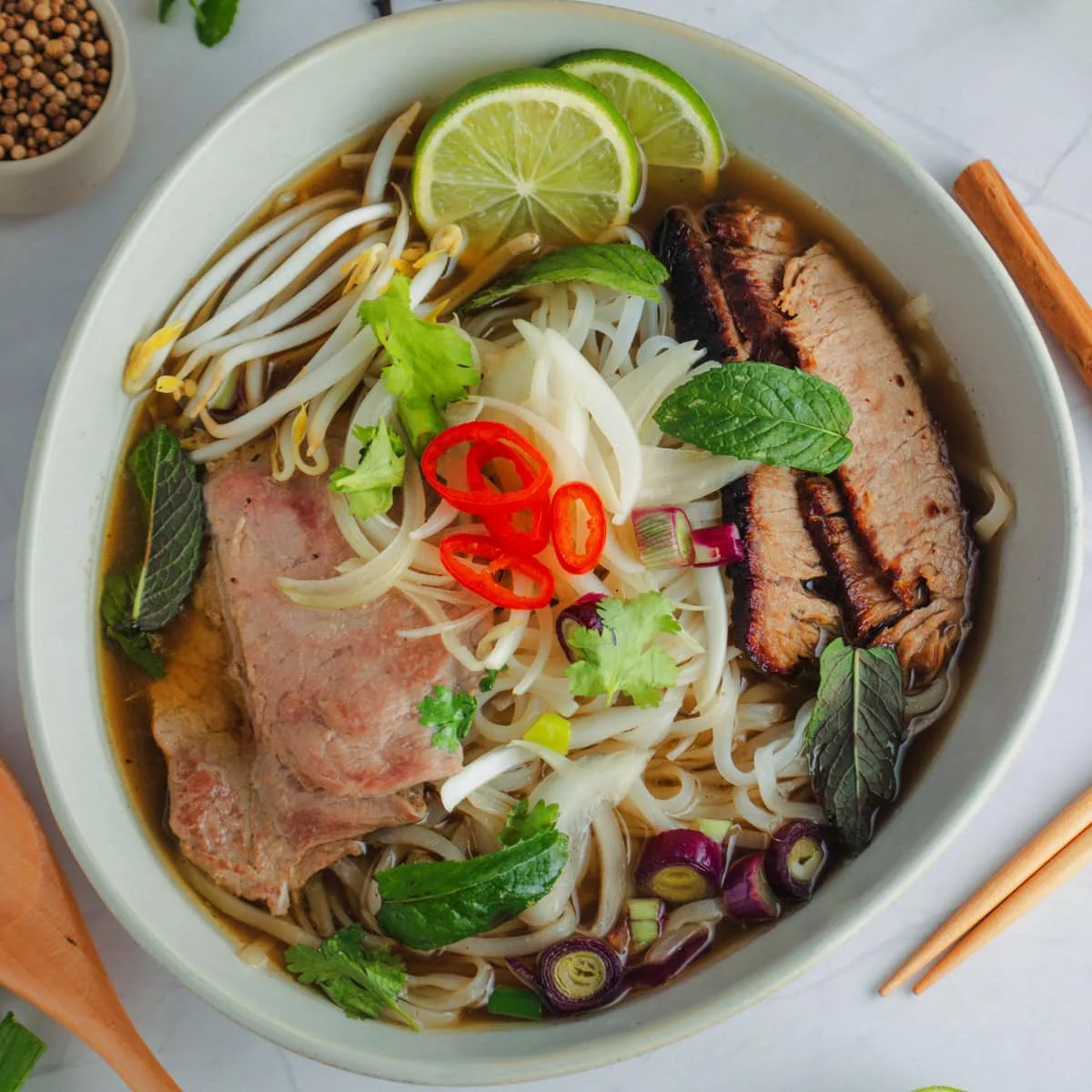
Vietnamese pho is a fragrant beef noodle soup built around a long-simmered, spice-scented broth. This version layers roasted bones and aromatics with rice noodles, thinly sliced beef and fresh garnishes for a warming meal any time of year.
Ingredients
- 1.13 kg (2.5 lb)beef bones
- 454 g (1 lb)chuck roast
- 1, halvedonion
- 1 large piece, halved lengthwaysginger
- 6star anise pods
- 4cloves
- 1cinnamon stick
- 1½ tbspcoriander seeds
- ½ tbsp, adjust to tastesalt
- 2 tbspfish sauce
- 1 tbspbrown sugar
- 2.84 litres (3 quarts)water
- 397 g (14 oz)flat rice pho noodles, 3 mm wide
- 227 g (0.5 lb)thinly sliced beef, sirloin
- 1, slicedshallot
- 3, slicedspring onions
- 1 handfulfresh coriander and mint
- 120 ml (½ cup)bean sprouts
- 1, cut into wedgeslime
- 1, thinly slicedred chilli
Instructions
- 1
Roast the beef
Heat the oven to 200°C (400°F). Put the beef bones, chuck roast, onion halves and ginger on a baking tray and roast for about 35–40 minutes, until nicely charred and toasted. Check the onion and ginger after 25 minutes, as they may be ready before the bones and meat.
- 2
Toast the spices
Warm a dry frying pan over a medium heat. Toast the star anise, cloves, cinnamon stick and coriander seeds for about 1–2 minutes, until fragrant.
- 3
Simmer the broth
Add the roasted bones and chuck roast, charred onion and ginger, toasted spices, water, salt and brown sugar to a large pot. Bring to the boil, then lower the heat and simmer for 3–4 hours, regularly skimming foam or impurities from the surface. After one hour, lift out the chuck roast, slice it thinly and set it aside while the broth continues to cook.
- 4
Strain and prepare
Pass the finished broth through a fine sieve to remove the solids, then stir in the fish sauce and adjust the salt to taste. Cook the flat rice noodles according to the packet instructions, drain them and set aside.
- 5
Fill the bowls
Slice the raw beef thinly. Divide the cooked noodles between serving bowls, then add the raw beef, slices of cooked chuck roast, spring onions and bean sprouts.
- 6
Pour and garnish
Pour steaming-hot broth into each bowl over the beef and toppings; it should be very hot to cook the raw beef and soften the onion slices. Finish with fresh herbs and serve with lime wedges on the side.
What is Vietnamese pho?
Pho is a Vietnamese noodle soup known for its aromatic broth, rice noodles and fresh toppings. Its history is associated with northern Vietnam, and the dish has since developed into many regional and household variations.
This version builds flavour by roasting the bones and aromatics, then simmering them with toasted spices. The noodles, beef and herbs are added at serving time, so the broth remains the focus.
Nutrition and macros by portion
The nutrition label shows one serving as written: 696 calories, 40g protein, 97g carbs, 16g fat.
| Portion | Adjustment | kcal | Protein | Carbs | Fat |
|---|---|---|---|---|---|
| Lighter | More sprouts, fewer noodles | 487 kcal | 28g | 68g | 11g |
| This serving | As written | 696 kcal | 40g | 97g | 16g |
| Hungry | Larger noodle portion | 1044 kcal | 60g | 146g | 24g |
The rice noodles provide most of the carbohydrates, while the bones, chuck and sirloin supply protein; the beef and broth also contribute fat. Add extra bean sprouts and herbs to balance the bowl with fresh toppings, or serve it with a side of vegetables.
Roasting the bones and aromatics
Beef bones: roasting gives them a browned surface before they go into the pot, helping create a deeper-tasting broth.
Onion and ginger: these can char more quickly than the bones and roast. Check them after 25 minutes and remove them if they are ready.
Building the broth
Whole spices: toasting the star anise, cloves, cinnamon and coriander briefly in a dry pan helps bring out their fragrance. Keep them moving and take them off the heat as soon as they smell aromatic.
Long simmer: let the broth bubble gently rather than boil hard, and skim the surface regularly. Taking out the chuck roast after an hour keeps it available for serving while the bones continue to flavour the broth.
Getting the beef texture right
Cooked chuck: slice it thinly after its first hour in the broth, then reserve it for the bowls. Thin pieces are easier to eat alongside the noodles.
Raw sirloin: arrange the slices over the noodles just before serving. The broth needs to be steaming hot when poured over them so they cook in the bowl.
Noodles and bowl assembly
Rice noodles: follow the packet directions and drain them well before portioning. This helps keep excess cooking water from diluting the broth.
Toppings: divide the noodles, beef, spring onions and bean sprouts between the bowls before adding broth. Add the herbs and lime at the end so their fresh flavours stand out.
Serving pho
Serve the bowls as soon as the hot broth has been poured in, with lime wedges and sliced chilli alongside. Each person can add lime and chilli to taste.
Pho is a filling meal on its own. If you would like something alongside it, offer extra bean sprouts or fresh herbs for topping.
Recipe notes & tips
- Check the onion and ginger well before the bones finish roasting, as they may char sooner.
- Toast the spices in a dry pan and watch them closely so they do not scorch.
- Keep the broth at a gentle simmer and skim its surface regularly.
- Slice both cuts of beef thinly so they sit easily among the noodles.
- Make sure the broth is steaming hot when you pour it into the bowls.
- Drain the noodles thoroughly before dividing them between bowls.
Variations
- Extra herbs: Add more coriander and mint at the table for a fresher finish.
- More heat: Serve with extra thinly sliced red chilli.
- Citrus lift: Offer additional lime wedges for a brighter, tangier bowl.
- Noodle adjustment: Use fewer noodles and add extra bean sprouts for a lighter-feeling serving.
- Alternative greens: Add extra bean sprouts and spring onions as additional toppings.
Common mistakes to avoid
- Over-roasting the aromatics: Check the onion and ginger after 25 minutes and take them out if they are already charred.
- Boiling the broth hard: Lower it to a gentle simmer after it comes to the boil.
- Skipping the skimming: Regularly remove foam and impurities from the broth surface as it cooks.
- Leaving the chuck in too long: Remove it after one hour, slice it and keep simmering the broth.
- Using lukewarm broth: Bring it to a steaming-hot temperature before pouring it over the raw beef.
- Crowding the bowl with wet noodles: Drain them well before adding them to the serving bowls.
How to store
Store leftover broth, noodles and toppings separately in covered containers in the fridge and use within 3 days. Reheat the broth until steaming hot, then pour it over freshly assembled noodles and toppings; cook noodles separately if reheating them.
Frequently asked questions
Can I make the broth ahead?
Yes. Strain the broth and refrigerate it separately from the noodles and toppings, then reheat it until steaming hot before serving.
How hot should the broth be for the raw beef?
It should be steaming hot when poured into the bowl so it cooks the thinly sliced beef. Slice the sirloin thinly to help it cook quickly.
Why remove the chuck roast after one hour?
The method reserves it for slicing and serving while the bones keep simmering to flavour the broth. Leaving it in the whole time may make it harder to slice neatly.
Can I use a different type of rice noodle?
The recipe calls for flat rice pho noodles about 3 mm wide. If using another size, cook it according to its packet instructions.
Can I adjust the chilli and lime?
Yes. Serve them on the side so each person can add as much as they like.
Cook it from the original
This recipe comes from noshingwiththenolands.com. Their page has the author’s own photos, notes and tips — the best place to cook it from.
Open the recipe on noshingwiththenolands.com