
Pesto Sauce Pasta
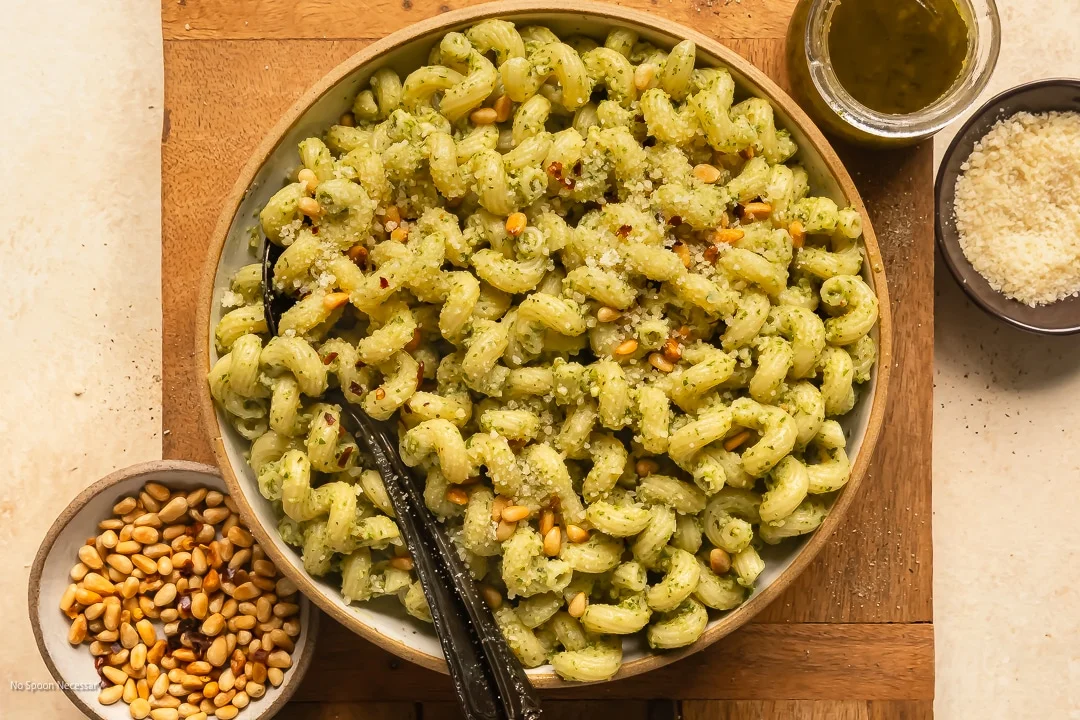
Pesto sauce pasta pairs noodles with a vibrant, herb-rich sauce for a quick Italian-inspired meal. It comes together in about 20 minutes, and you can use your favourite pesto, from classic basil to a different flavour.
Ingredients
- 454 g (1 pound)Dried pasta, any variety
- To tasteKosher salt and ground black pepper
- 240 ml (1 cup)Pesto sauce, any flavour; shop-bought or homemade
- To tasteGrated Parmesan cheese
- To tasteToasted pine nuts
- Optional, for servingExtra-virgin olive oil, fresh basil and lemon wedges
Instructions
- 1
Boil the pasta
Bring a large pan of water to a rolling boil, then salt it generously. Add the dried pasta and cook until almost al dente.
- 2
Reserve pasta water
Scoop out 240 ml (1 cup) of the pasta cooking water with a large measuring jug and set it aside.
- 3
Drain the pasta
When the pasta is al dente, drain it in a colander and transfer it while warm to a large mixing bowl.
- 4
Toss with pesto
Add the pesto and 60 ml (¼ cup) of reserved pasta water to the pasta. Toss well with two spoons to combine them into a creamy, silky sauce. If the pasta looks dry, add more pasta water a tablespoon at a time.
- 5
Garnish and serve
Transfer the pasta to a large serving bowl. Drizzle with a little extra-virgin olive oil, then scatter over grated Parmesan, toasted pine nuts and fresh basil. Serve straight away with lemon wedges on the side.
What is pesto pasta?
Pesto pasta is a simple Italian-style dish of cooked pasta coated in pesto, a sauce traditionally associated with Genoa in Liguria. Basil pesto is a familiar choice, but the method works with other pesto flavours too.
Here, reserved pasta water helps the pesto cling to the noodles and turn into a smoother sauce. Parmesan, pine nuts, basil and optional lemon give the finished bowl extra flavour and texture.
Nutrition and macros by portion
The nutrition label shows one serving as written: 661 calories, 18g protein, 90g carbs, 25g fat.
| Portion | Adjustment | kcal | Protein | Carbs | Fat |
|---|---|---|---|---|---|
| Lighter | Less pasta, more vegetables | 463 kcal | 13g | 63g | 18g |
| This serving | As written | 661 kcal | 18g | 90g | 25g |
| Hungry | Larger pasta portion | 992 kcal | 27g | 135g | 38g |
Most of the carbohydrates come from the pasta, while pesto and olive oil contribute much of the fat; the pesto and Parmesan provide some protein. Serve a portion with vegetables or a salad for a more balanced plate.
Choose your pasta and pesto
Pasta shape: The recipe works with anything from spaghetti to penne. Whichever you choose, cook it until al dente so it holds its shape when tossed.
Pesto: Use shop-bought or homemade pesto in any flavour. Its consistency can vary, so keep the reserved cooking water nearby to adjust the coating.
Why reserve pasta water?
Starchy water: A portion of the cooking water is mixed with the pesto to help it coat the pasta in a silky layer. Start with the stated 60 ml (¼ cup), then add more only if needed.
Salted water: The pasta water is seasoned generously, so taste the dish before adding extra salt. Pesto and Parmesan can also bring saltiness.
Get the texture right
Doneness: Begin checking the pasta towards the end of its cooking time and aim for al dente. The method says to cook it until almost al dente, then drain once it has reached al dente.
Sauce: Toss the warm pasta thoroughly so the pesto and water combine around the noodles. Add extra water a tablespoon at a time if the coating seems dry.
Finish and serve
Toppings: Grated Parmesan and toasted pine nuts add savoury flavour and crunch, while fresh basil gives the bowl an aromatic finish. Extra-virgin olive oil is an optional final drizzle.
At the table: Serve immediately, with lemon wedges on the side for anyone who wants a bright squeeze. A simple green salad or cooked vegetables can round out the meal.
Make it your own
The flexible part of this recipe is the pesto: choose a favourite flavour or use what you have to hand. Keep the pasta and water method the same, then adjust the seasoning after tossing.
The toppings are also easy to adapt. Use the listed Parmesan, pine nuts, basil and lemon as desired, or leave out the optional extras.
Recipe notes & tips
- Salt the boiling water generously before adding the pasta.
- Set aside the measured pasta water before draining the pan.
- Use warm pasta so the pesto mixes readily through it.
- Add reserved water gradually to avoid making the sauce too loose.
- Taste before adding more salt, as pesto and Parmesan may already be salty.
- Serve as soon as the pasta is tossed and garnished.
Variations
- Try another pesto: Use a sun-dried tomato or rocket pesto in place of basil pesto.
- Change the shape: Choose spaghetti, penne or another dried pasta you enjoy.
- Add lemon: Serve extra wedges so diners can brighten their own portions.
- Make it nut-free: Omit the pine nuts if needed.
- Use homemade pesto: Replace the shop-bought sauce with your preferred homemade version.
Common mistakes to avoid
- Overcooking the pasta: Check it towards the end and drain when it is al dente.
- Forgetting the cooking water: Reserve a cup before draining so you can loosen and bind the pesto.
- Adding all the water at once: Start with 60 ml (¼ cup), then add more a tablespoon at a time.
- Making the sauce too salty: Taste before adding extra salt, especially if using salty pesto or Parmesan.
- Letting the pasta sit: Toss and serve it while warm so the sauce coats the noodles well.
How to store
Store leftovers in an airtight container in the fridge and use within 3 days. Reheat gently in a pan or microwave, stirring in a small splash of water if the pasta seems dry.
Frequently asked questions
Can I use any pasta shape?
Yes. The recipe suggests anything from spaghetti to penne, so use a dried shape you like.
Can I use shop-bought pesto?
Yes, shop-bought pesto is suitable, as is homemade pesto. The recipe allows for any flavour.
How much pasta water should I add?
Start with 60 ml (¼ cup), then add more a tablespoon at a time if the pasta looks dry.
Why is my pesto sauce thick?
It may need more reserved cooking water. Toss in a tablespoon at a time until the sauce coats the pasta smoothly.
Can I make this without pine nuts?
Yes. The pine nuts are a topping, so you can simply leave them out.
Can I prepare it ahead?
It is best served straight after tossing. You can store leftovers in the fridge and reheat them gently with a splash of water.
Cook it from the original
This recipe comes from nospoonnecessary.com. Their page has the author’s own photos, notes and tips — the best place to cook it from.
Open the recipe on nospoonnecessary.com