
Prawn Rava Fry - Mangalorean Style
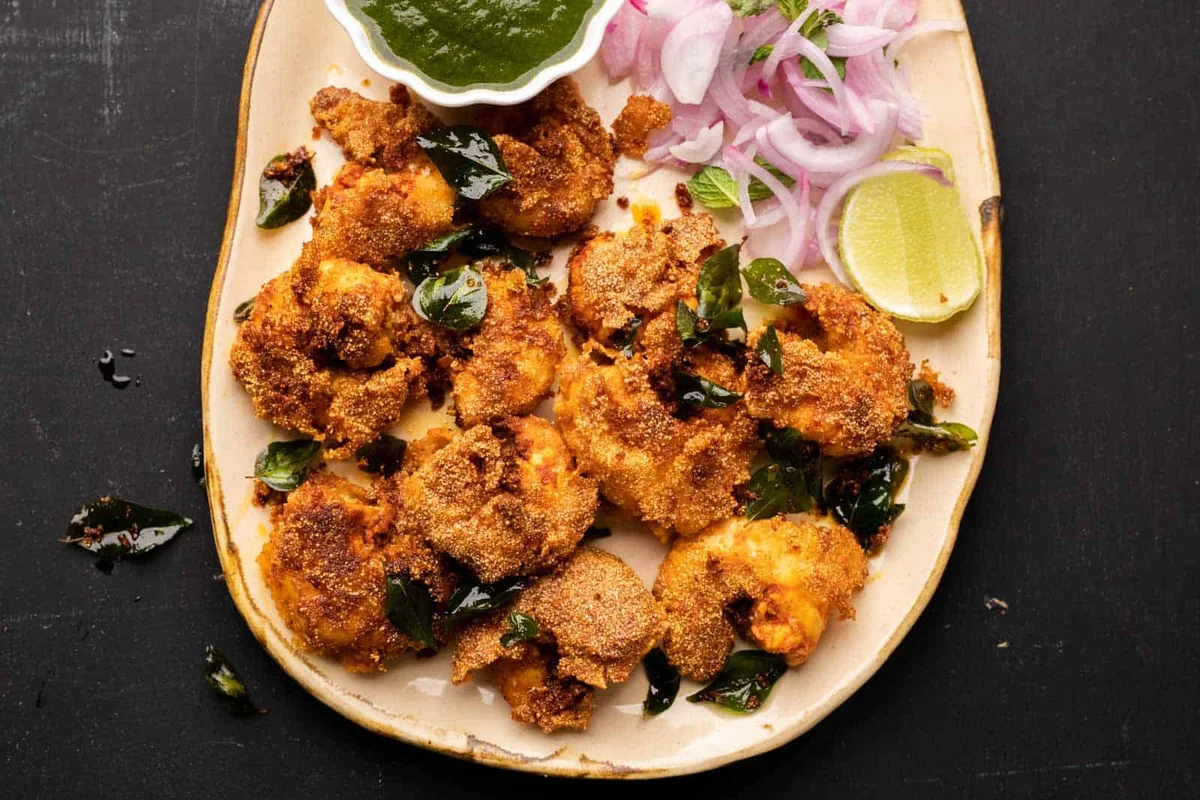
Prawn rava fry is a Mangalorean-style appetiser of spiced prawns coated in semolina and rice flour, then shallow-fried until crisp. It is quick to cook and works well as a starter or alongside dal and rice.
Ingredients
- 250 glarge prawns, deveined
- 1 1/2 tablespoonsKashmiri red chilli powder or paprika
- 1 teaspoonground cumin
- 1/4 teaspoonground turmeric
- 2 tablespoonsvinegar
- 1/2 teaspoonsalt
- 80 g (1/2 cup)semolina (rava)
- 40 g (1/4 cup)rice flour
- 1/4 teaspoonsalt
- 2–3 tablespoonscoconut oil, for frying
Instructions
- 1
Marinate prawns
Put the prawns, chilli powder, cumin, turmeric, vinegar and 1/2 teaspoon salt in a bowl. Mix to coat, cover and marinate for up to 20 minutes; the prawns do not need longer.
- 2
Mix coating
Combine the semolina, rice flour and 1/4 teaspoon salt. Spread the mixture on a flat plate.
- 3
Drain prawns
After marinating, drain away any excess liquid from the bowl.
- 4
Coat prawns
Roll each prawn in the semolina mixture, coating both sides. Leave the coated prawns to rest for 5 minutes so the coating adheres.
- 5
Shallow-fry prawns
Heat the coconut oil in a frying pan over medium heat. When hot, add the prawns one at a time, leaving space between them. Shallow-fry for 2–3 minutes per side, or until golden brown.
- 6
Serve hot
Transfer the cooked prawns to a plate lined with kitchen paper to absorb excess oil. Serve hot with dal and rice or pudina chutney.
What is prawn rava fry?
Rava fry is a coastal Indian preparation in which spiced seafood is coated in semolina and fried. It is associated with Mangalorean cooking, where bold seasoning and crisp-fried fish and prawns are popular.
Here, vinegar-seasoned prawns get a crunchy coating from semolina and rice flour. Shallow-frying keeps the method quick while giving the outside time to turn golden.
Nutrition and macros by portion
The nutrition label shows one serving as written: 247 calories, 17g protein, 25g carbs, 9g fat.
| Portion | Adjustment | kcal | Protein | Carbs | Fat |
|---|---|---|---|---|---|
| Lighter | Use less frying oil | 173 kcal | 12g | 18g | 6g |
| This serving | As written | 247 kcal | 17g | 25g | 9g |
| Hungry | Serve with dal and rice | 371 kcal | 26g | 38g | 14g |
The prawns provide most of the protein, while the semolina and rice flour contribute most of the carbohydrates. Coconut oil and the prawns account for much of the fat. Pair a serving with dal and rice for a more substantial plate, or add vegetables alongside.
The chilli and vinegar marinade
Chilli: Kashmiri chilli powder gives the prawns a vivid colour and a warm, manageable heat; paprika is the suggested alternative.
Vinegar: This brings a sharp note to the spice mixture. Keep the marinating time to no more than 20 minutes, as the recipe specifies.
Why use two flours?
Semolina: Rava gives the outside its characteristic coarse, crisp texture. Spread it across a plate to make coating each prawn easier.
Rice flour: Mixed with the semolina, it forms part of the dry coating. Salt it evenly so the coating is seasoned throughout.
Getting the coating to stick
Drain: Remove excess marinade before coating so the dry mixture can cling rather than becoming wet and patchy.
Rest: Leave the coated prawns for 5 minutes before frying. This gives the coating a little time to adhere as the pan heats.
Frying to a crisp finish
Pan space: Add the prawns one at a time and leave room between them. Crowding can make it harder for the coating to brown evenly.
Doneness: Fry each side for 2–3 minutes, looking for a golden-brown coating. Lift the cooked prawns onto kitchen paper to absorb excess oil.
What to serve with it
For a fuller meal, serve the prawns with dal and rice, as suggested in the recipe. Pudina chutney is another accompaniment, especially if you want a fresh, herby contrast.
Serve soon after frying so the coating stays crisp. If cooking in batches, keep the cooked prawns on kitchen paper while you finish the rest.
Recipe notes & tips
- Keep the marinade to 20 minutes or less, as the prawns do not need longer.
- Drain away excess marinade before rolling the prawns in the coating.
- Leave the coated prawns to rest for 5 minutes before frying.
- Fry in batches if needed so the prawns have space in the pan.
- Use the golden-brown colour and the stated 2–3 minutes per side as cues while frying.
Variations
- Use paprika: Swap it for the Kashmiri red chilli powder as the recipe allows.
- Adjust the heat: Use less chilli powder for a milder coating.
- Change the oil: Use another frying oil if coconut oil is unavailable.
- Serve with chutney: Pair the prawns with pudina chutney for a fresh accompaniment.
- Make it a meal: Serve alongside dal and rice.
Common mistakes to avoid
- Leaving excess marinade: The coating can turn wet and uneven; drain the prawns before dredging.
- Skipping the resting time: The coating may not adhere as well; rest the coated prawns for 5 minutes.
- Crowding the pan: The prawns may not brown evenly; leave space between them or fry in batches.
- Frying at the wrong heat: The coating may not turn golden as intended; heat the oil over medium heat before adding the prawns.
- Over-marinating: The recipe says the prawns need no longer than 20 minutes; keep within that limit.
How to store
For the crispest texture, serve the prawns straight after frying. Refrigerate leftovers in a covered container and reheat in a pan until hot; the coating may soften during storage.
Frequently asked questions
Can I use paprika instead of Kashmiri chilli powder?
Yes. Paprika is given as an alternative in the ingredient list.
How long should I marinate the prawns?
Marinate for up to 20 minutes. The recipe notes that the prawns do not need longer.
How do I stop the coating from falling off?
Drain excess liquid from the prawns, coat both sides, then leave them to rest for 5 minutes before frying.
How long do the prawns take to fry?
Shallow-fry for 2–3 minutes on each side, until the coating is golden brown.
What can I serve with prawn rava fry?
Serve it hot with dal and rice or pudina chutney.
Cook it from the original
This recipe comes from myfoodstory.com. Their page has the author’s own photos, notes and tips — the best place to cook it from.
Open the recipe on myfoodstory.com