
Homemade Jalebi - Thin and Crispy
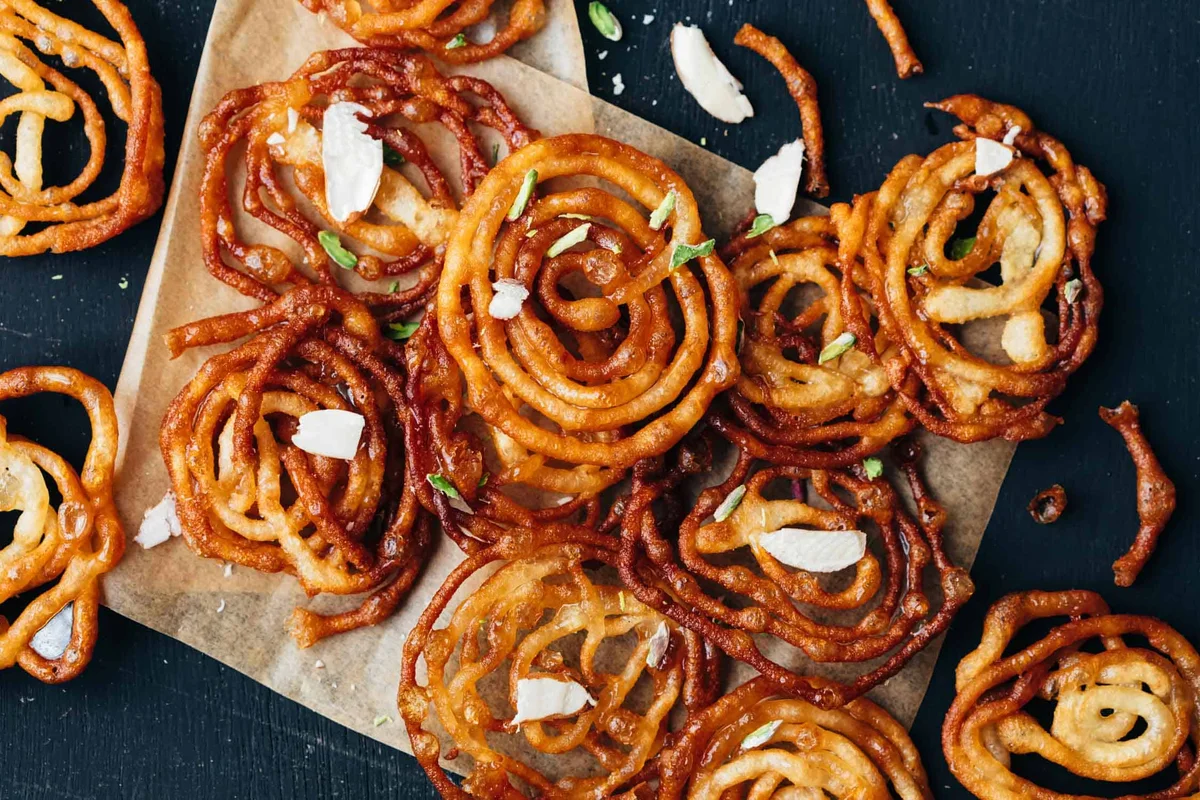
Jalebi is a crisp, coiled Indian sweet soaked in warm saffron syrup. This homemade version uses a lightly fermented batter for its distinctive texture and is a festive treat for occasions such as Diwali and Holi.
Ingredients
- 30 g (¼ cup)plain flour (maida)
- 30 ml (2 tablespoons)curd (yoghurt)
- 30 ml (2 tablespoons)water
- 30 g (¼ cup)plain flour (maida)
- 60 ml (¼ cup)water
- 400 g (2 cups)sugar
- 480 ml (2 cups)water
- 45 ml (3 tablespoons)milk, for cleaning the syrup
- 5 ml (1 teaspoon)lime juice, for cleaning the syrup
- 12–15 strandssaffron
- 30 ml (2 tablespoons)ghee, preferably, or oil, for frying
Instructions
- 1
Make the levain
Whisk 30 g flour with 30 ml each of curd and water. Transfer the paste to an airtight container with room for it to rise slightly, and leave it in a warm, dry place overnight or for up to 2 days, depending on the weather. When small bubbles appear on the surface, the levain is ready.
- 2
Prepare the syrup
Heat the sugar and 480 ml water, stirring occasionally until the sugar dissolves. Add the milk and lime juice, then boil for a couple of minutes; the curdled milk will collect impurities in a scum. Remove the scum with a slotted spoon and discard it. Add the saffron and simmer on low until the syrup reaches 100°C (212°F), without letting it reach one-thread consistency. Keep it warm on very low heat, adding a few teaspoons of water later if it needs thinning.
- 3
Mix the batter
When ready to fry, whisk 3 tablespoons of the levain with 30 g plain flour and 60 ml water until smooth. The batter should fall from a spoon without being runny or overly thick. Fill a squeezy bottle and leave it to rest for about 10 minutes.
- 4
Heat the ghee
Heat the ghee or oil in a shallow, flat-bottomed pan until it reaches 176°C (350°F). Without a thermometer, squeeze a drop of batter into the pan; if it rises at once, the fat is ready.
- 5
Pipe and fry
Hold the bottle a few inches above the hot ghee and pipe small concentric circles or spirals into the pan, leaving space between them. Once you have piped the jalebis, lower the heat to medium and fry, turning once or twice, until golden on both sides.
- 6
Soak and serve
Lift the jalebis from the ghee with a slotted spoon or tongs, drain off excess fat, and transfer them straight into the warm syrup. Press them gently into the syrup, then lift them out after half a minute and serve immediately.
What is jalebi?
Jalebi is a South Asian sweet made by frying coils of batter and soaking them in syrup. It is especially popular in India, where it is enjoyed at festivals and as a celebratory treat.
This version begins with a small fermented mixture, then combines it with fresh flour and water for the frying batter. The resulting spirals are crisp outside and sweet with syrup.
Nutrition and macros by portion
The nutrition label shows one serving as written: 522 calories, 3g protein, 113g carbs, 8g fat.
| Portion | Adjustment | kcal | Protein | Carbs | Fat |
|---|---|---|---|---|---|
| Lighter | Use less syrup | 365 kcal | 2g | 79g | 6g |
| This serving | As written | 522 kcal | 3g | 113g | 8g |
| Hungry | Serve a larger portion | 783 kcal | 5g | 170g | 12g |
Most of the carbohydrate comes from the flour and especially the sugar syrup; ghee or oil supplies most of the fat, while the flour and curd contribute a little protein. Balance a serving with a savoury meal and fresh fruit rather than adding another syrupy sweet.
Why the batter ferments
Levain: Flour, curd and water are left in a warm place until small bubbles form. This can take overnight or as long as 2 days, depending on the weather.
Fresh batter: Only 3 tablespoons of the levain are mixed with the remaining flour and water for frying. A dropping consistency helps the batter pipe into continuous spirals.
Cleaning the syrup
Milk and lime juice: Added to the boiling sugar syrup, these make impurities gather in a curdled scum. Lift it out with a slotted spoon before adding the saffron.
Temperature: The syrup is ready at 100°C, but should not become one-thread consistency. Keep it warm over very low heat so it is ready when the jalebis come out of the pan.
Getting crisp, even spirals
Pipe: Keep the bottle a few inches above the fat and make small circles or spirals. Leave space between the pieces so they can fry without touching.
Fry: Lower the heat to medium after piping, and turn the jalebis once or twice. Look for an even golden colour on both sides before lifting them out.
The right frying temperature
A thermometer gives the clearest check: heat the ghee or oil to 176°C. If you do not have one, test with a drop of batter; it should rise to the surface at once.
Keep an eye on the pan as you work. The recipe calls for medium heat once the jalebis are piped, helping them cook through while they colour.
Syrup timing and serving
Soak: Transfer each batch directly from the fat to the warm syrup, draining it briefly first. Press gently and remove the jalebis after half a minute.
Serve: Jalebi is best served immediately, while the fried coils are still crisp. It makes a sweet finish to a festive meal or a treat to share with tea.
Recipe notes & tips
- Leave headroom in the levain container so the mixture has space to rise.
- Use the appearance of small surface bubbles to check that the levain has fermented.
- Aim for batter that drops from the bottle smoothly without spreading like a liquid.
- Keep the syrup warm over very low heat while frying the jalebis.
- Pipe only as many spirals as fit in the pan without touching.
- Drain excess ghee briefly before placing each batch in the syrup.
Variations
- Use oil: Fry in oil instead of ghee for a different flavour.
- Adjust the saffron: Add fewer strands for a subtler saffron note.
- Make smaller spirals: Pipe tighter coils for smaller pieces.
- Thin the syrup: Stir in a few teaspoons of water if the syrup thickens while warm.
- Serve as a sweet course: Offer the jalebis after a savoury festive meal.
Common mistakes to avoid
- Skipping the fermentation: Wait for small bubbles on the levain before using it.
- Making the batter too runny: Add water only as specified so it can hold a piped spiral.
- Overheating the syrup: Stop at 100°C and do not cook it to one-thread consistency.
- Crowding the pan: Leave room between spirals so they can fry evenly.
- Guessing the fat temperature: Check for 176°C or test with a drop of batter.
- Soaking too long: Lift the jalebis from the syrup after half a minute.
How to store
Jalebis are best eaten immediately for the crispest texture. If needed, keep leftovers in an airtight container at room temperature and reheat briefly in a warm oven, though they may not regain their original crispness.
Frequently asked questions
How long does the levain need?
Leave it in a warm, dry place overnight, or for up to 2 days depending on the weather. Small bubbles on the surface are the sign that it is ready.
Can I make the batter ahead?
The recipe mixes the frying batter when you are ready to cook, then rests it for about 10 minutes. The levain itself can be prepared ahead and left to ferment.
How can I tell if the ghee is hot enough?
Heat it to 176°C if you have a thermometer. Otherwise, drop in a little batter; it should rise to the surface at once.
Why are my jalebis not holding their shape?
Check that the batter is not too runny and that it flows from the bottle in a controlled stream. Pipe the spirals steadily into hot fat.
How long should jalebis soak?
Press them gently into the warm syrup and lift them out after half a minute, as directed in the recipe.
Can I make jalebi without ghee?
Yes. The recipe allows oil as an alternative for frying.
Cook it from the original
This recipe comes from myfoodstory.com. Their page has the author’s own photos, notes and tips — the best place to cook it from.
Open the recipe on myfoodstory.com