
Greek stuffed Eggplant recipe (Melitzanes Papoutsakia)
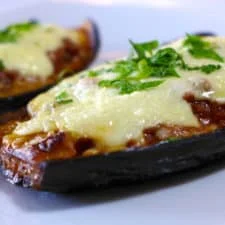
Melitzanes papoutsakia are Greek aubergines filled with savoury minced beef and topped with béchamel or mashed potato. They take a little time to assemble, but make a substantial, comforting main course with plenty to prepare ahead.
Ingredients
- 5aubergines
- 500 g (18 oz)minced beef
- 1 largered onion, finely chopped
- 2 clovesgarlic, finely chopped
- 1 glassred wine
- 1 tinchopped tomatoes or passata
- 1cinnamon stick
- 1 tsporegano
- 100 g (3.5 oz)grated kefalotyri or another hard yellow cheese
- to tasteolive oil
- to tastesalt and freshly ground pepper
- 2–3 tbspchopped parsley
- 100 g (3.5 oz)plain flour
- 100 g (3.5 oz)butter
- 900 ml (3¾ cups)milk
- 2egg yolks
- a pinchnutmeg
- to tastesalt
- 4 largepotatoes, boiled
- 50 g (1.7 oz)milk
- 1 tbspbutter
- 2egg yolks
Instructions
- 1
Prepare aubergines
Halve the aubergines lengthways and score the flesh in a crosshatch pattern. Season and leave in a colander for about 30 minutes, then rinse thoroughly and pat dry with kitchen paper.
- 2
Bake aubergines
Preheat the oven to 200°C. Season the aubergines with salt and pepper, drizzle with olive oil and arrange skin-side up on a parchment-lined baking tray. Bake for 40 minutes, until softened.
- 3
Cook meat sauce
While the aubergines bake, finely chop the onion and garlic. Warm olive oil in a large pan over medium heat and cook the onion until soft, then add the garlic and sauté. Increase the heat, add the minced beef and break it up as it browns. Pour in the red wine and let it evaporate for 1–2 minutes. Stir in the tomatoes, cinnamon stick and oregano, season, bring to the boil, then cover and simmer for about 30 minutes, until most of the liquid has evaporated. Stir in 1–2 handfuls of grated cheese and the chopped parsley.
- 4
Make béchamel
Melt the butter in a large pan over low-medium heat. Whisk in the flour to make a paste, then gradually pour in the warmed milk, whisking continuously to prevent lumps. If needed, cook gently while stirring until thickened. Take the pan off the heat, stir in the egg yolks and season with salt, pepper and a pinch of nutmeg, whisking quickly so the eggs do not set. Adjust the salt to taste.
- 5
Mash potatoes
If using mashed potato as the topping, boil the potatoes in hot water for 10–15 minutes, until soft. Blend them with the milk, butter, egg yolks and freshly ground pepper until smooth.
- 6
Fill and bake
Set the aubergines skin-side down in a baking dish and scoop out some flesh to make space for the filling. Sprinkle with grated cheese, spoon the meat sauce into each half, then top with béchamel or mashed potato and more grated cheese. Bake at 180°C for 20 minutes, until nicely coloured.
- 7
Serve warm
Serve as a starter or main course with Greek salad and crusty bread.
What are melitzanes papoutsakia?
Melitzanes papoutsakia means “little aubergine shoes” in Greek, a name inspired by the shape of the halved aubergines. The dish is part of Greek home cooking, pairing baked aubergine with a seasoned meat filling and a creamy or potato topping.
This version builds flavour in separate stages: the aubergines soften in the oven, the beef simmers with tomato and cinnamon, and the finished halves bake under a golden top.
Nutrition and macros by portion
The nutrition label shows one serving as written: 559 calories, 35g protein, 52g carbs, 24g fat.
| Portion | Adjustment | kcal | Protein | Carbs | Fat |
|---|---|---|---|---|---|
| Lighter | More salad, less topping | 391 kcal | 24g | 36g | 17g |
| This serving | As written | 559 kcal | 35g | 52g | 24g |
| Hungry | Larger aubergine portion | 839 kcal | 52g | 78g | 36g |
The aubergines and potatoes supply much of the carbohydrate, while the minced beef contributes protein and the butter, cheese and béchamel add fat. Pair a serving with Greek salad for a fresh accompaniment, or serve a smaller portion with extra salad if you want a lighter plate.
Choosing the topping
Béchamel: A flour-and-butter base thickened with milk gives the dish a smooth, creamy finish. Whisk as you add the milk to keep the sauce lump-free.
Mashed potato: The potato topping makes the meal more substantial and offers a softer, homely contrast to the beef. The recipe gives it as an alternative to béchamel.
Getting the aubergines ready
Scoring: Cut shallow crosshatches into the flesh after halving the aubergines. This helps them soften evenly as they bake.
Draining: The 30-minute rest in a colander is followed by a thorough rinse and drying. Patting them well helps avoid carrying excess water into the baking tray.
Building a rich meat filling
Browning: Break the minced beef into small pieces in the hot pan so it cooks evenly. Let the red wine bubble for 1–2 minutes before adding the tomatoes.
Simmering: Keep the sauce covered for about 30 minutes, until most of its liquid has evaporated. Stir in the cheese and parsley at the end so they are mixed through the filling.
Checking the sauce and finish
Béchamel: The sauce should thicken as it cooks, but keep stirring over low heat if it still seems loose. Take it off the heat before adding the yolks and whisk promptly.
Final bake: The aubergines have already had 40 minutes in the oven, so the last 20-minute bake is for heating everything through and colouring the topping. Look for a lightly browned surface.
Serving the dish
Serve the stuffed aubergines warm as a main course, alongside Greek salad and crusty bread. The fresh, crisp salad provides a refreshing contrast to the soft aubergine and rich topping.
As a starter, serve a smaller piece and let the salad and bread round out the table.
Recipe notes & tips
- Pat the aubergines dry after rinsing so they do not carry extra water into the oven.
- Give the minced beef room to brown and break it up with a spoon as it cooks.
- Let the meat sauce simmer until most of the liquid has gone before filling the aubergines.
- Warm the milk before whisking it into the flour and butter.
- Whisk the egg yolks into the béchamel off the heat to help prevent them from setting.
- Use the béchamel or mashed potato topping, rather than both, as the recipe’s alternatives.
Variations
- Use passata: Choose it instead of chopped tomatoes for a smoother meat sauce.
- Choose kefalotyri: Use this Greek hard cheese for the filling and topping, or substitute another hard yellow cheese.
- Top with potato: Blend the boiled potatoes with milk, butter, egg yolks and pepper for the alternative topping.
- Adjust the herbs: Use the listed oregano and parsley to give the beef sauce its savoury, herby flavour.
- Serve as a starter: Offer a smaller piece with Greek salad and crusty bread.
Common mistakes to avoid
- Skipping the aubergine rest: Leave the halves in a colander for about 30 minutes, then rinse and dry them.
- Leaving the meat sauce watery: Simmer it covered for about 30 minutes, until most of the liquid has evaporated.
- Adding milk too quickly: Pour it into the flour mixture in a steady stream while whisking.
- Cooking the yolks over direct heat: Remove the béchamel from the hob before stirring them in, and whisk quickly.
- Filling before making space: Scoop out some softened aubergine flesh so there is room for the meat sauce.
- Overbaking the topping: Bake the assembled dish for 20 minutes at 180°C, until coloured.
How to store
Cool leftovers and refrigerate them in a covered container for up to 3 days. Reheat in the oven until hot throughout; the topping may soften slightly after storage.
Frequently asked questions
Can I use passata instead of chopped tomatoes?
Yes. The recipe lists chopped tomatoes or passata as alternatives for the meat sauce.
Do I have to make the béchamel?
No. The recipe offers mashed potato as an alternative topping. Choose one topping for the assembled aubergines.
How do I know when the aubergines are ready for filling?
After 40 minutes at 200°C, they should be softened. You should be able to scoop out some flesh to make space for the filling.
How thick should the meat sauce be?
Simmer it for about 30 minutes, until most of its liquid has evaporated. A less watery sauce is easier to spoon into the aubergine halves.
Can I prepare the components ahead?
You can prepare the meat sauce and topping ahead, then assemble and bake the dish when you are ready to serve. Refrigerate prepared components in covered containers.
Cook it from the original
This recipe comes from mygreekdish.com. Their page has the author’s own photos, notes and tips — the best place to cook it from.
Open the recipe on mygreekdish.com