
Greek Feta Cheese Triangles Recipe (Tiropitakia)
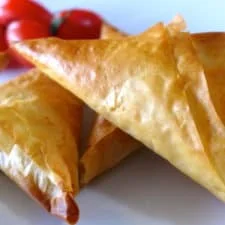
Tiropitakia are crisp Greek phyllo triangles filled with feta and other cheeses. They make a handy starter or savoury snack, especially when served warm alongside a Greek salad.
Ingredients
- 8 sheetsphyllo pastry
- 170 g (6 oz)feta cheese, crumbled
- 50 g (2 oz)Gouda cheese, grated
- 50 g (2 oz)Parmesan, or regato or Kefalograviera
- 1egg, beaten
- a splashmilk
- 30 ml (2 tbsp)full-fat strained yoghurt
- optional, to tastefresh mint or dill, chopped
- as neededolive oil or melted butter
- to tastefreshly ground pepper
Instructions
- 1
Check phyllo tips
If you are new to working with phyllo, read the handling tips before you begin.
- 2
Mix the filling
Crumble the feta into a large bowl. Add the grated cheese, beaten egg, a splash of milk and yoghurt, then season with freshly ground pepper. Mix with a spoon until combined. Stir in chopped fresh mint or dill if you wish.
- 3
Preheat the oven
Heat the oven to 180°C and get ready to assemble the tiropitakia.
- 4
Layer the pastry
Lay one sheet of phyllo on the work surface and brush or drizzle it with melted butter or olive oil. Place another sheet on top and brush with a little more.
- 5
Fold the triangles
Cut the layered sheets into three or four strips, depending on the size you want. Put one tablespoon of filling at the end of each strip. Fold a corner over the filling to make a triangle, then keep folding the triangle over itself along the strip. Repeat with the remaining phyllo and filling.
- 6
Bake until crisp
Oil the base of a large baking tray and arrange the triangles on it. Brush their tops with melted butter, then bake at 180°C for 25–30 minutes, until golden and crisp.
- 7
Serve warm
Serve the Greek feta triangles as a starter, with Greek salad on the side.
What are tiropitakia?
Tiropitakia are small Greek cheese pastries, often folded into triangles from thin phyllo sheets. Their name refers to little cheese pies, and they are commonly served as a snack or starter.
This version combines tangy feta with Gouda and Parmesan, regato or Kefalograviera. Layered pastry and a butter or olive-oil brush give the filling a crisp, golden casing.
Nutrition and macros by portion
The nutrition label shows one serving as written: 93 calories, 5g protein, 6g carbs, 6g fat.
| Portion | Adjustment | kcal | Protein | Carbs | Fat |
|---|---|---|---|---|---|
| Lighter | Use less brushing oil | 65 kcal | 3g | 4g | 4g |
| This serving | As written | 93 kcal | 5g | 6g | 6g |
| Hungry | Serve a larger portion | 140 kcal | 7g | 9g | 9g |
The phyllo supplies most of the carbohydrates, while the feta, Gouda, Parmesan and yoghurt contribute protein and fat; the butter or olive oil used for brushing adds further fat. Pair a serving with Greek salad or other vegetables for a more balanced plate.
Choosing the cheeses
Feta: crumble it well so it mixes evenly with the other filling ingredients. Its salty, tangy flavour is the centre of the mixture.
Other cheeses: grated Gouda and Parmesan, regato or Kefalograviera round out the filling. Use one of the listed options for the final cheese.
Keeping phyllo manageable
Phyllo: the sheets are thin, so handle them carefully and follow the recipe’s phyllo handling tips if you are a beginner. Brush the first sheet before laying the second on top.
Brushing: apply the butter or oil across the pastry so the layers can bake crisp. Keep the remaining sheets covered while you work, following the handling guidance you are using.
Folding neat triangles
Strip width: cut the layered pastry into three or four lanes; narrower lanes make smaller triangles, while wider ones make larger ones. Add one tablespoon of filling at the end of each lane.
Folding: turn one corner over the filling to start a triangle, then fold it along the strip until the pastry is used up. Keep the filling inside the folds as you go.
Checking for doneness
Oven: bake at 180°C for 25–30 minutes, as directed. The triangles are ready when their pastry looks golden and feels crisp.
Finish: brush the tops with melted butter before baking. Check towards the end of the cooking time, as the recipe gives a range rather than a single precise finish time.
Serving the triangles
As a starter: serve them warm with Greek salad on the side, as suggested in the recipe. Their crisp pastry and savoury cheese filling work well with a fresh accompaniment.
For a snack: they can also be served on their own as small savoury bites. The optional mint or dill adds a fresh note to the cheese.
Recipe notes & tips
- Have the filling mixed before you begin assembling the triangles.
- Choose three lanes for larger pastries or four for smaller ones.
- Measure one tablespoon of filling for each strip to keep the portions consistent.
- Brush the tops before baking so they can brown in the oven.
- Use the 25–30 minute range as a guide and look for golden, crisp pastry.
Variations
- Add herbs: Mix chopped fresh mint or dill into the filling for a fresher flavour.
- Choose regato: Use regato in place of Parmesan for the listed alternative.
- Choose Kefalograviera: Swap the Parmesan for Kefalograviera as another listed option.
- Use olive oil: Brush the phyllo with olive oil instead of melted butter.
- Make smaller triangles: Cut the pastry into four lanes rather than three.
Common mistakes to avoid
- Skipping the phyllo guidance: Read the handling tips before starting if you are new to working with the sheets.
- Overfilling the strips: Use one tablespoon of filling at the end of each lane so it can be folded inside.
- Folding in the wrong direction: Start by folding a corner over the filling, then continue folding the triangle along the strip.
- Leaving the tops unbrushed: Brush them with melted butter before baking as the method directs.
- Removing them too soon: Bake for 25–30 minutes at 180°C and look for golden, crisp pastry.
How to store
The recipe does not specify storage guidance. If you have leftovers, refrigerate them in a covered container and reheat in the oven until warmed through and crisp; the pastry may soften during storage.
Frequently asked questions
Can I use either butter or olive oil?
Yes. The recipe offers melted butter or olive oil for brushing the phyllo and specifies melted butter for brushing the tops before baking.
How many lanes should I cut?
Cut the layered pastry into three or four lanes. Choose three for larger triangles or four for smaller ones.
Can I leave out the fresh herbs?
Yes. Mint or dill is optional, so you can omit it or use whichever of the two you prefer.
How do I know when the triangles are done?
Bake them for 25–30 minutes at 180°C, until the pastry is golden and crisp.
What can I serve with tiropitakia?
The recipe suggests serving them as a starter with Greek salad on the side.
Cook it from the original
This recipe comes from mygreekdish.com. Their page has the author’s own photos, notes and tips — the best place to cook it from.
Open the recipe on mygreekdish.com