
Feta Saganaki (Pan fried Feta cheese)
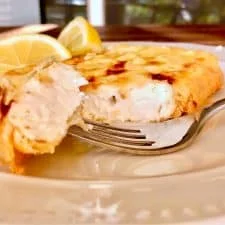
Feta saganaki is a Greek appetiser of feta coated in egg and seasoned flour, then fried until crisp and golden. It takes just minutes to make and is best served warm with a squeeze of lemon or, alternatively, honey and sesame seeds.
Ingredients
- 190 gblock of feta, ideally made from 100% sheep’s milk
- 1egg, beaten
- ½ tspfreshly ground black pepper
- 40 gplain flour, enough to coat the feta
- for fryingolive oil
- 1lemon
- 1 tbsp honey, plus sesame seedshoney and sesame seeds (optional alternative to lemon)
Instructions
- 1
Cut the feta
Cut the feta into one block about 2 cm thick.
- 2
Beat the egg
Crack the egg into a bowl and whisk it with a fork.
- 3
Season the flour
Put the flour and pepper in a separate bowl and mix them together.
- 4
Coat the feta
Dip the feta in the beaten egg, then roll it in the flour until fully coated.
- 5
Heat the oil
Pour olive oil into a frying pan to a depth of about 1 cm. Heat over medium-high heat to 180°C. If you do not have a thermometer, drop a little egg into the oil; it should sizzle straight away.
- 6
Fry until golden
Fry the feta until coloured, about 2 minutes per side. Carefully turn it with a slotted spoon so both sides brown.
- 7
Drain the feta
Lift the feta from the pan and set it on kitchen paper to absorb excess oil.
- 8
Finish and serve
Squeeze a few drops of lemon over the feta, or finish with honey and sesame seeds instead. Serve while warm.
What is feta saganaki?
Saganaki refers to Greek dishes cooked in a small frying pan, and feta saganaki is a quick, crisp-edged take on the idea. Here, a block of salty feta is egg-washed, floured and fried until its coating turns golden.
The contrast is the appeal: a crunchy outside gives way to warm, soft cheese. Lemon cuts through the richness, while honey and sesame seeds offer a sweet alternative.
Nutrition and macros by portion
The nutrition label shows one serving as written: 350 calories, 18g protein, 16g carbs, 27g fat.
| Portion | Adjustment | kcal | Protein | Carbs | Fat |
|---|---|---|---|---|---|
| Lighter | Serve with extra salad | 245 kcal | 13g | 11g | 19g |
| This serving | As written | 350 kcal | 18g | 16g | 27g |
| Hungry | Add warm flatbread | 525 kcal | 27g | 24g | 41g |
The feta provides most of the protein and fat, while the flour coating supplies most of the carbohydrates; the egg adds a little of both protein and fat. The oil used for frying also contributes fat, so serve the feta with a generous fresh salad or vegetables to balance the plate.
Choosing the feta
Sheep’s milk feta: The recipe favours feta made entirely from sheep’s milk, which gives the dish its characteristic tang and salty flavour. Choose a firm block that can be cut and turned without crumbling.
Thickness: Cut one block about 2 cm thick, as directed. A substantial piece is easier to coat and handle in the pan.
Getting an even coating
Egg first: Coat every surface of the feta in beaten egg so the flour has something to cling to. Let any excess drip back into the bowl before flouring.
Flour next: Roll the feta in the peppered flour and check that the sides and edges are covered. Patch any bare spots before frying for a more even crust.
Frying without breaking it
Oil temperature: Heat the oil to 180°C over medium-high heat. Without a thermometer, a little egg dropped into the pan should sizzle immediately.
Careful turning: Fry for about 2 minutes on each side, using a slotted spoon to turn the block gently. The coating should colour nicely while the cheese warms inside.
Serving it warm
Lemon finish: Add a few drops of lemon just before serving for a bright, tangy finish. Serve promptly so the coating stays crisp.
Sweet finish: For the alternative in the recipe, drizzle with honey and scatter over sesame seeds instead. Either topping works well with the salty feta.
What to serve alongside
Fresh sides: Serve with a simple tomato and cucumber salad or sliced vegetables to balance the rich, fried cheese. Warm flatbread is useful for scooping up any softened feta.
Small plates: Feta saganaki works as a starter or part of a Greek-style spread. If serving it alongside other dishes, keep the accompanying plates fresh and lightly dressed.
Recipe notes & tips
- Pat the feta dry if its surface is very wet before dipping it in the egg.
- Use a pan that allows the feta to sit flat without crowding.
- Check that the oil sizzles around a small drop of egg before adding the cheese.
- Turn the feta gently with a slotted spoon to help keep the coating intact.
- Drain the fried feta briefly on kitchen paper before adding the topping.
- Add lemon just before serving so the crust does not sit under the juice.
Variations
- Honey and sesame: Finish with a tablespoon of honey and sesame seeds instead of lemon.
- Extra pepper: Add a little more freshly ground pepper to the flour for a sharper seasoning.
- Herby coating: Mix dried oregano into the flour for a savoury Greek-inspired note.
- Chilli kick: Add a pinch of chilli flakes to the flour for gentle heat.
- Fresh herbs: Scatter chopped parsley over the finished feta alongside the lemon.
Common mistakes to avoid
- Feta too thin: A thin piece is more likely to break; cut a single block about 2 cm thick.
- Patchy coating: Bare spots can leave the feta exposed; cover all sides with egg and flour.
- Oil not hot enough: The coating may absorb excess oil; wait until a drop of egg sizzles straight away.
- Oil too hot: The outside can colour before the cheese warms; keep the heat at medium-high and watch it closely.
- Rough turning: The coating can split; use a slotted spoon and turn the feta carefully.
- Serving too late: The crust softens as it sits; drain briefly and bring it to the table while warm.
How to store
Feta saganaki is best eaten straight after frying. If needed, refrigerate leftovers in a covered container for up to 2 days and reheat in a hot oven or air fryer until warmed through; the coating may not be as crisp.
Frequently asked questions
Can I make feta saganaki without a thermometer?
Yes. Drop a little beaten egg into the oil; if it sizzles immediately, the oil is about the right temperature.
How long should I fry the feta?
Fry it for about 2 minutes per side, until the coating is nicely coloured. Keep an eye on it as it cooks.
Can I use a different type of feta?
Yes, though the recipe ideally uses feta made from 100% sheep’s milk. Choose a firm block that can be cut and turned without crumbling.
Can I prepare it ahead?
It is best coated and fried just before serving so the crust stays crisp. You can cut the feta and prepare the egg and flour bowls in advance.
What can I use instead of lemon?
Use the recipe’s alternative: a tablespoon of honey and sesame seeds. Add them after frying, just before serving.
How do I keep the feta from breaking?
Use a firm, roughly 2 cm-thick block and coat it fully. Turn it gently with a slotted spoon rather than moving it repeatedly.
Cook it from the original
This recipe comes from mygreekdish.com. Their page has the author’s own photos, notes and tips — the best place to cook it from.
Open the recipe on mygreekdish.com