
Palak Paratha Recipe (Soft, Non-Bitter Spinach Paratha)
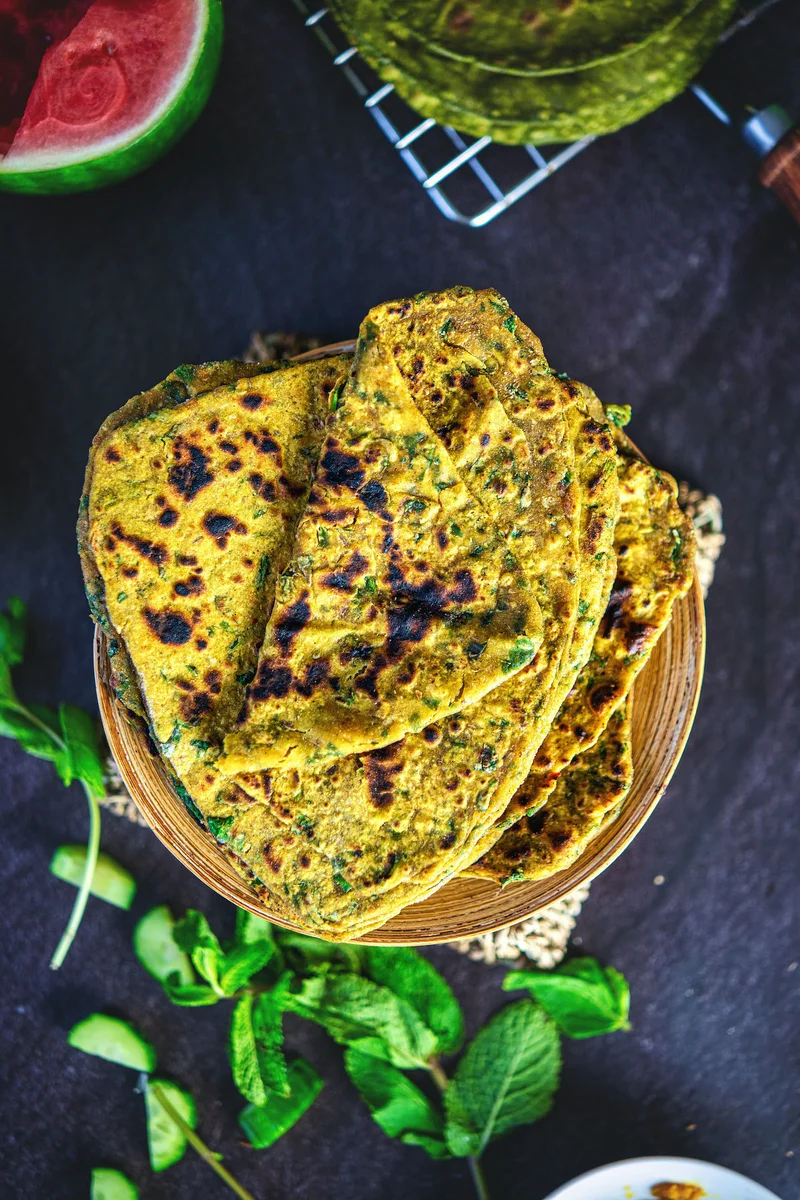
These soft Indian spinach parathas combine wholemeal and chickpea flours with fresh spinach and warming spices. They make a flavourful flatbread for a meal or snack, and the dough rests for just 20 minutes.
Ingredients
- 240 g (2 cups)wholemeal flour
- 60 g (½ cup)chickpea flour
- 400 gspinach, finely chopped
- 2.5 ml (½ teaspoon), optionalpink salt
- 5 ml (1 teaspoon)ground coriander
- 5 ml (1 teaspoon)red pepper flakes
- 5 ml (1 teaspoon)Kashmiri red chilli powder or paprika
- 5 ml (1 teaspoon)carom seeds
- 5 ml (1 teaspoon)cumin seeds
- 10 ml (2 teaspoons)green chillies, chopped
- 2.5 ml (½ teaspoon)garam masala
- 15 ml (1 tablespoon)ginger, minced or grated
- 15 ml (1 tablespoon)garlic, minced or grated
- to tastesalt
- 10 ml (2 teaspoons)oil or ghee
- as neededwater
- as neededoil or ghee, for frying
Instructions
- 1
Mix the dough
Put the wholemeal flour, chickpea flour and chopped spinach in a large bowl. Add the pink salt, ground coriander, red pepper flakes, chilli powder, carom seeds, cumin seeds, green chillies, garam masala, ginger, garlic and salt. Mix well, then stir in 10 ml (2 teaspoons) of oil or ghee.
- 2
Knead and rest
Add water gradually, kneading until you have a soft dough. Drizzle a few drops of oil over it and spread them across the surface. Cover with a damp kitchen towel or cloth and leave to rest for 20 minutes.
- 3
Divide the dough
After resting, knead the dough for a few seconds until slightly smooth. If the spinach has released water and the dough feels sticky, work in a little more dry flour. Divide it into 9–10 equal portions, shape each into a smooth ball and flatten between your palms. Use a little dry flour if needed, and keep the portions covered so they do not dry out.
- 4
Shape the parathas
Dip one portion in dry flour and roll it into a circle about 10 cm (4 inches) across. Spread oil or ghee generously over the surface and sprinkle with dry flour. Fold it in half, coat the semicircle with oil or ghee and sprinkle with more dry flour, then fold again to make a triangle. Dust and roll into a triangle about 10–13 cm (4–5 inches) across and approximately 3 mm (⅛ inch) thick.
- 5
Cook on the griddle
Heat a griddle or tawa over medium heat. Add a paratha and cook for 2–3 minutes, until brown spots appear underneath. When bubbles form and the colour changes, turn it over.
- 6
Brown both sides
Brush the cooked side with oil or ghee and cook the other side for 2–3 minutes. Turn it again and brush with oil or ghee. Continue cooking until golden brown and crisp, pressing with a spatula for even cooking. Repeat with the remaining portions and serve hot.
What is palak paratha?
Palak means spinach in Hindi, and paratha is a layered Indian flatbread cooked on a griddle. This version mixes finely chopped spinach and spices directly into the dough rather than using a separate filling.
Wholemeal flour gives the bread its structure, while chickpea flour adds another savoury note. Folding oil or ghee into the rolled dough helps create delicate layers.
Nutrition and macros by portion
The nutrition label shows one serving as written: 221 calories, 0g protein, 0g carbs, 0g fat.
| Portion | Adjustment | kcal | Protein | Carbs | Fat |
|---|---|---|---|---|---|
| Lighter | Use less frying oil | 155 kcal | 0g | 0g | 0g |
| This serving | As written | 221 kcal | 0g | 0g | 0g |
| Hungry | Serve an extra paratha | 332 kcal | 0g | 0g | 0g |
The wholemeal flour supplies most of the carbohydrates, while the oil or ghee used in the dough and for frying contributes much of the fat. Spinach and chickpea flour provide some protein, though the supplied per-serving nutrition lists protein, carbohydrates and fat as 0 g. For a more balanced plate, serve a paratha with raita and a portion of vegetables.
Why use two flours?
Wholemeal flour: it forms the main dough and gives the parathas their hearty character. Add water gradually, since the spinach also contributes moisture.
Chickpea flour: it brings a distinct, savoury flavour alongside the wholemeal flour. Mix it thoroughly with the other dry ingredients so it is evenly distributed.
Keep the spinach evenly mixed
Finely chopped spinach: smaller pieces are easier to work into the dough and make the parathas simpler to roll. Mix it well with the flours and spices before adding water.
Resting dough: the 20-minute rest gives the mixture time to settle, but spinach can release water during that time. If the dough turns sticky, knead in a little dry flour as directed.
Fold for layers
First fold: roll a portion into a 10 cm circle, then coat it with oil or ghee and a light sprinkle of dry flour before folding it in half. Repeat the coating on the semicircle before folding it into a triangle.
Final rolling: dust the triangle and roll it to around 10–13 cm across and 3 mm thick. Keep the dough portions covered while you work so their surfaces do not dry out.
Look for colour and bubbles
Start the paratha on a medium-hot griddle and give the first side 2–3 minutes, watching for brown spots underneath. Bubbles and a change in colour are the cues to turn it.
Brush with oil or ghee as you cook the second side, then turn once more and brush again. Pressing gently with a spatula helps the paratha cook evenly; take it off when both sides are golden brown and crisp.
Serve them hot
These parathas can be served with raita, chutney or pickle, as suggested in the recipe. They can also be eaten plain as an evening snack, including alongside masala chai.
Cook the parathas in batches, serving them as they come off the griddle if you want their crisp edges at their best.
Recipe notes & tips
- Add the water slowly because chopped spinach can make the dough wetter as it rests.
- Knead in a little dry flour after resting if the dough has become sticky.
- Keep unused dough portions covered while rolling each paratha.
- Dust the dough lightly with flour before rolling to reduce sticking.
- Use medium heat and look for brown spots before turning the first side.
- Brush oil or ghee over the folded layers to help separate them as they cook.
Variations
- Vegan version: use oil instead of ghee for the dough and frying.
- Milder spice: reduce the green chillies or red pepper flakes to suit your taste.
- Paprika option: use paprika in place of Kashmiri red chilli powder.
- Herby accompaniment: serve with raita or chutney, as suggested in the recipe.
- Snack serving: enjoy a hot paratha plain alongside masala chai.
Common mistakes to avoid
- Adding water too quickly: spinach contributes moisture, so add water gradually and stop when the dough is soft.
- Skipping the sticky-dough check: spinach may release water during the rest; knead in a little dry flour if needed.
- Leaving portions uncovered: they can dry out while you roll; keep the remaining dough balls under a cloth.
- Rolling too thin: aim for approximately 3 mm thickness so the paratha keeps its shape.
- Cooking over high heat: the outside can brown before the paratha cooks evenly; use medium heat.
- Turning too soon: wait for brown spots underneath and bubbles on top before flipping.
How to store
Cool leftover parathas, then store them covered in the fridge and use within 2 days. Reheat on a dry griddle over medium heat, turning until warmed through; add a little oil or ghee if desired.
Frequently asked questions
Why did my dough become sticky after resting?
The spinach can release water while the dough rests. Knead in a little dry flour until the dough is manageable.
How thick should I roll each paratha?
Roll it into a triangle about 10–13 cm across and approximately 3 mm thick, slightly thicker than a roti.
How do I know when to flip it?
Turn the paratha when brown spots appear underneath and bubbles form as the colour changes.
Can I use oil instead of ghee?
Yes. The recipe allows either oil or ghee in the dough and for frying.
What can I serve with palak paratha?
Serve it hot with raita, chutney or pickle, or enjoy it plain as a snack.
How many portions does this recipe make?
The recipe makes 9–10 parathas, which is close to its stated 10 servings.
Cook it from the original
This recipe comes from mygingergarlickitchen.com. Their page has the author’s own photos, notes and tips — the best place to cook it from.
Open the recipe on mygingergarlickitchen.com