
Amazing No knead Bread Recipe
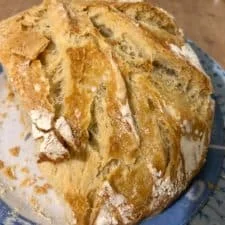
This Greek-style no-knead bread makes two rustic loaves with a crisp, golden crust and a soft centre. It needs only a bowl and wooden spoon, with a long rise doing most of the work.
Ingredients
- 1 kg (35 oz.)bread flour
- 2 tsp (8 g; 0.3 oz)active dry yeast
- 650 ml (22 oz.)lukewarm water
- 2 tspsugar
- 2 tbspolive oil
- 1 tbspsalt
Instructions
- 1
Activate the yeast
In a large bowl, combine the yeast, water and sugar, stirring until dissolved. Leave the mixture to stand for 10 minutes.
- 2
Add remaining ingredients
Add the flour, salt and olive oil to the same bowl.
- 3
Mix the dough
Stir with a wooden spoon for 4–5 minutes, until the ingredients are combined. The dough should be very sticky.
- 4
Leave to rise
Cover the bowl with a towel and leave the dough to rise for 12–15 hours.
- 5
Shape the loaves
Flour a large work surface and your hands, then turn out the dough. Gently deflate it and cut it in half. Knead each piece briefly by hand and shape into a round loaf. Put both loaves in a casserole dish and score their tops with a sharp knife.
- 6
Bake until golden
Bake the loaves in the casserole dish with the lid on in an oven preheated to 210°C (410°F) for 30 minutes. Remove the lid and bake for a further 15 minutes, or until golden brown.
What is no-knead bread?
No-knead bread is a simple loaf made with a wet dough and a long rise rather than extended hand-kneading. This version is presented as Greek-style bread and makes two round loaves.
Long fermentation gives the yeast time to work through the dough, while baking covered before finishing uncovered helps create a crusty exterior. The method keeps the hands-on work brief.
Nutrition and macros by portion
The nutrition label shows one serving as written: 197 calories, 5g protein, 39g carbs, 2g fat.
| Portion | Adjustment | kcal | Protein | Carbs | Fat |
|---|---|---|---|---|---|
| Lighter | Smaller bread portion | 138 kcal | 4g | 27g | 1g |
| This serving | As written | 197 kcal | 5g | 39g | 2g |
| Hungry | Larger bread portion | 296 kcal | 8g | 58g | 3g |
The flour supplies most of the carbohydrates and some of the protein, while olive oil contributes most of the fat. Serve a slice alongside vegetables and a protein-rich dish, such as beans or eggs, for a more balanced plate.
The ingredients that matter
Bread flour: its higher protein content helps the loaves hold their shape and gives the crumb structure. Measure the flour as listed, rather than adding extra to make the sticky dough feel dry.
Yeast and water: lukewarm water helps the yeast disperse, while the sugar is mixed in at the start. The water should not be hot.
Olive oil and salt: oil enriches the dough, and salt seasons it. Add both with the flour after the yeast mixture has stood for 10 minutes.
Why the long rise matters
The dough rests for 12–15 hours, so plan ahead before you start. Cover the bowl with a towel as directed and leave the dough undisturbed during the rise.
A very sticky mixture is expected after stirring for 4–5 minutes. Resist the urge to keep adding flour at this stage; flour the work surface and your hands later, when shaping.
Shaping sticky dough
Divide: once risen, gently deflate the dough and cut it into two pieces. Keep the handling light, then knead each piece only a little before rounding it.
Score: place the shaped loaves in the casserole dish and make a cut across the top with a sharp knife. Take care as you score, since the dough may be soft and tacky.
Covered baking and doneness
Covered stage: bake at 210°C (410°F) with the casserole lid on for 30 minutes. The covered bake helps the loaves cook before their crust is exposed to direct oven heat.
Golden finish: remove the lid and bake for another 15 minutes, or until the bread is golden brown. The colour is the doneness cue given in this recipe.
Serving the bread
Let the loaves cool before slicing so the crumb has time to settle. Serve slices with soup, salad or a meal that can be scooped up with bread.
For a simple snack, pair a slice with olive oil or a savoury topping. The recipe makes two loaves, so you can serve one and keep the other for later.
Recipe notes & tips
- Use lukewarm rather than hot water when mixing the yeast.
- Expect the mixed dough to be very sticky; save the extra flour for shaping.
- Set aside enough time for the full 12–15-hour rise.
- Flour your hands and work surface before turning out the dough.
- Score the tops just before baking with a sharp knife.
- Keep the casserole lid on for the first 30 minutes of baking.
Variations
- Herb loaf: mix dried herbs into the flour for a savoury note.
- Seeded crust: scatter seeds over the loaves before baking.
- Garlic bread: serve slices brushed with garlic-infused olive oil.
- Olive addition: fold chopped olives into the dough as you shape it.
- Smaller loaves: divide the dough into more pieces and check for a golden finish as they bake.
Common mistakes to avoid
- Water too hot: use lukewarm water so the yeast mixture is not exposed to excessive heat.
- Adding too much flour: keep the dough sticky during mixing and flour only the surface and hands for shaping.
- Rushing the rise: allow the full 12–15 hours specified in the method.
- Handling too roughly: gently deflate the dough and knead each piece only a little.
- Removing the lid early: keep the casserole covered for the first 30 minutes.
- Stopping too soon: after uncovering, bake for the additional 15 minutes or until the loaves are golden brown.
How to store
Once completely cool, store the bread in a bread bag or wrapped at room temperature for about 2–3 days. Reheat slices briefly in a toaster or warm oven; freeze extra bread well wrapped for longer storage.
Frequently asked questions
Can I make this dough without a mixer?
Yes. The method uses a wooden spoon to mix the dough, and no mixer is needed.
How long does the dough need to rise?
Cover it with a towel and leave it for 12–15 hours.
Is the dough meant to be sticky?
Yes. It should be very sticky after mixing, so avoid adding extra flour at that stage.
Why bake the bread with the lid on?
The recipe calls for a covered bake for the first 30 minutes, followed by 15 minutes uncovered to brown the crust.
How do I know when the loaves are done?
After the uncovered part of baking, they should be golden brown. The recipe gives 15 minutes uncovered as a guide.
Can I make one large loaf instead of two?
The method divides the dough in half to make two round loaves. It does not give a baking time for one larger loaf, so the stated timing may not apply.
Cook it from the original
This recipe comes from mygreekdish.com. Their page has the author’s own photos, notes and tips — the best place to cook it from.
Open the recipe on mygreekdish.com