
Easy Lemon Rice (Yellow Rice)
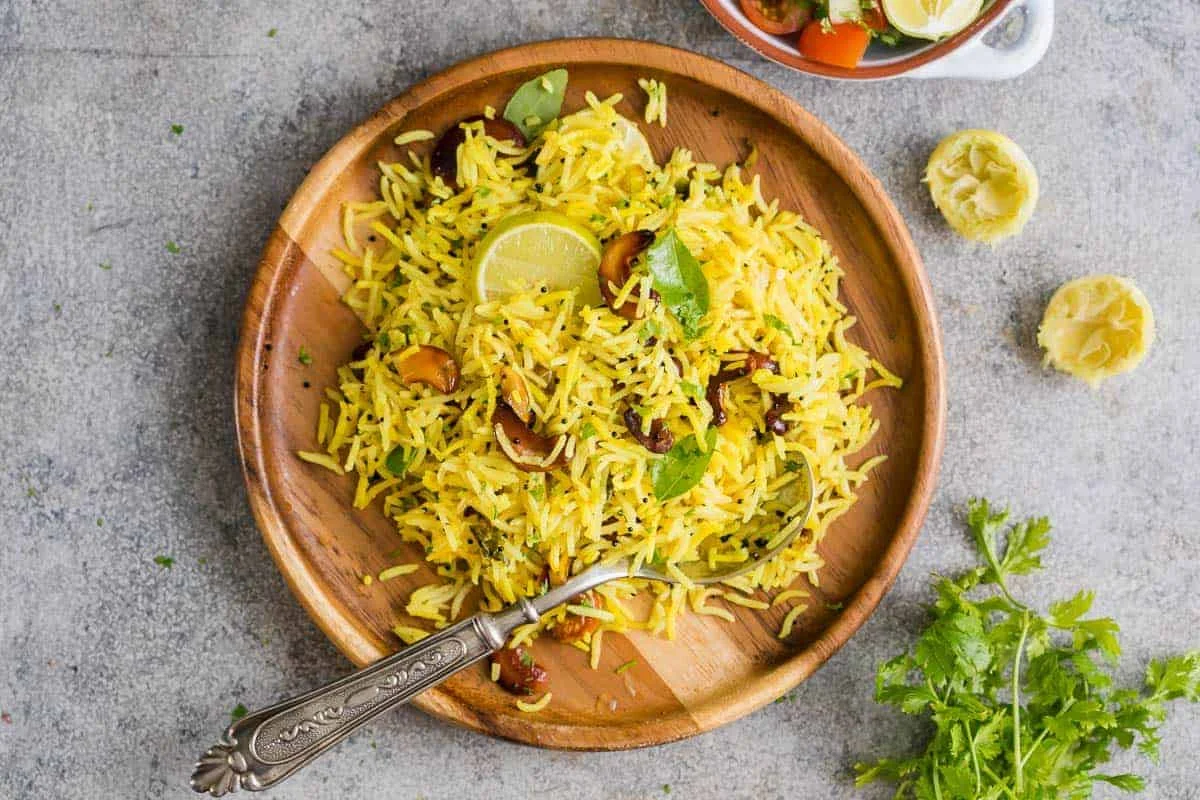
This one-pot Indian-style lemon rice is cooked with turmeric, lime, curry leaves, chilli and toasted nuts for a bright, savoury side. It comes together quickly and pairs well with raita or a simple curry.
Ingredients
- 185 g (1 cup)long-grain rice
- 1 tablespoonghee
- 1 teaspoonmustard seeds
- 1green chilli, finely chopped (or Serrano pepper)
- 8–10cashew nuts (or groundnuts)
- 6–8curry leaves
- ½ teaspoonturmeric powder
- 1lime, zested
- ¾ teaspoonsalt
- 1½ tablespoonslime juice
- To tastechopped coriander, for topping
Instructions
- 1
Rinse and soak
Rinse the rice a few times in water, then leave it to soak for 15–20 minutes.
- 2
Toast the aromatics
Heat the ghee in a pot and add the mustard seeds. When they begin to splutter, lower the heat and add the chilli, cashews and curry leaves. Roast gently until the cashews turn golden brown.
- 3
Cook the rice
Drain the rice and add it to the pot. Dry-roast it for 1–2 minutes, then add the turmeric, lime zest, salt and 480 ml (2 cups) water. Stir and bring to a boil. Once the water is boiling vigorously, turn the heat down to a simmer, cover and cook for 6–7 minutes, or until the water has been absorbed and the rice is cooked through.
- 4
Finish and serve
Stir in the lime juice and coriander, then serve hot.
What is lemon rice?
Lemon rice is a South Indian-style rice dish seasoned with citrus and a tempering of spices and aromatics. It is often served as a side or light meal, with ingredients such as curry leaves, mustard seeds and nuts adding fragrance and texture.
This version cooks the rice in the same pot as its turmeric-spiced additions, then adds lime juice at the end. That last-minute citrus keeps the flavour lively and distinct.
Nutrition and macros by portion
The nutrition label shows one serving as written: 233 calories, 4g protein, 41g carbs, 6g fat.
| Portion | Adjustment | kcal | Protein | Carbs | Fat |
|---|---|---|---|---|---|
| Lighter | Use less ghee and nuts | 163 kcal | 3g | 29g | 4g |
| This serving | As written | 233 kcal | 4g | 41g | 6g |
| Hungry | Serve a larger portion | 350 kcal | 6g | 62g | 9g |
The rice supplies most of the carbohydrates, while ghee and cashews contribute much of the fat; the rice and nuts provide a little protein. Pair a portion with raita and vegetables or dal to make the plate more varied and satisfying.
Build flavour in the pot
Mustard seeds: let them splutter in the hot ghee before adding the other aromatics; this helps release their savoury, nutty flavour.
Curry leaves and chilli: add them after lowering the heat so they flavour the ghee without scorching. The chilli brings a gentle heat that you can adjust by using less.
Choose the rice and nuts
Long-grain rice: rinsing removes loose surface starch, while soaking helps the grains cook in the short simmering time. Drain it well before adding it to the pot.
Cashews: a brief, gentle roast makes them golden and crisp. Groundnuts can be used instead if you prefer their more robust crunch.
Get the rice texture right
Dry-roasting: stir the drained rice in the spiced ghee for 1–2 minutes before adding water. This coats the grains and helps distribute the flavour.
Simmering: after the water reaches a vigorous boil, cover the pot and lower the heat. The rice is ready when the water has been absorbed and the grains are tender; avoid lifting the lid repeatedly.
Finish with lime
Lime zest: add it with the turmeric and salt before cooking so its aroma infuses the rice. Take care to zest only the coloured outer skin, not the bitter white pith.
Lime juice: stir it in after the rice is cooked, as directed, for a fresher citrus taste. Add the coriander at the same stage so it stays bright.
Serve it alongside
Raita: its cool, creamy texture is a natural match for the warm spices and lime. Serve it in a small bowl alongside the rice.
Other pairings: offer the rice with a vegetable curry, dal or roasted vegetables for a more substantial meal. It also works as a flavourful side for a simple weeknight spread.
Recipe notes & tips
- Measure the water carefully so the rice cooks without turning soggy.
- Drain the soaked rice thoroughly before adding it to the pot.
- Keep the heat low once the mustard seeds begin spluttering to help prevent the aromatics from burning.
- Use a tight-fitting lid while the rice simmers.
- Taste the finished rice and adjust the lime juice to suit your preference.
Variations
- Use groundnuts: swap them for the cashews for a different toasted crunch.
- Adjust the chilli: use less for a milder result or more for extra heat.
- Add more coriander: scatter extra over the rice just before serving.
- Serve with raita: add a cool yoghurt-based side to complement the spiced rice.
Common mistakes to avoid
- Skipping the rinse: excess surface starch can make the rice clump; rinse it a few times before soaking.
- Adding wet rice: too much water clinging to the grains can affect the cooking; drain them well.
- Burning the aromatics: high heat can scorch the chilli and curry leaves; lower the heat after the mustard seeds splutter.
- Lifting the lid repeatedly: this releases steam during cooking; keep the pot covered until the rice is nearly done.
- Adding lime juice too early: it can lose some of its fresh flavour; stir it in after cooking.
How to store
Cool leftovers promptly and refrigerate them in a covered container for up to 1 day. Reheat once until steaming hot throughout, adding a small splash of water if the rice seems dry.
Frequently asked questions
Can I use a different type of rice?
Long-grain rice is specified for this recipe. Other varieties may need different amounts of water or cooking times, so follow the directions for your chosen rice.
Can I make the rice less spicy?
Yes. Use less green chilli or leave it out. The lime, turmeric and curry leaves will still flavour the rice.
Can I use lemon instead of lime?
Yes, lemon zest and juice can stand in for lime. The citrus flavour will be slightly different.
Why soak the rice first?
Soaking is part of the method and helps the grains cook through in the brief simmer. Drain the rice well before adding it to the pot.
What can I serve with lemon rice?
Raita is suggested as a side. Dal, vegetable curry or roasted vegetables also make suitable accompaniments.
Cook it from the original
This recipe comes from myfoodstory.com. Their page has the author’s own photos, notes and tips — the best place to cook it from.
Open the recipe on myfoodstory.com