
Saganaki recipe (Pan-seared Greek cheese appetizer)
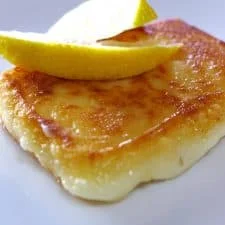
Saganaki is a Greek meze of cheese fried until crisp and golden outside, with a soft centre. This quick version uses a flour coating and a squeeze of lemon, making it a simple hot appetiser.
Ingredients
- 110 ggraviera cheese, or kefalograviera, kasseri, kefalotyri, Monterey Jack, provolone or young Pecorino
- 50 gplain flour, for dredging
- to tasteoil, for frying
- 1/2lemon
Instructions
- 1
Slice the cheese
Cut the cheese into one large piece, or several smaller pieces if you prefer, about 10 × 7 cm and 1.5 cm thick. Keep the slices this thick so the cheese does not melt into the pan.
- 2
Coat with flour
Run the cheese under water, then dredge it in the flour. Shake off any excess flour; the coating helps it form a golden crust and hold its shape as it fries.
- 3
Fry until golden
Pour some oil into a small, heavy-based pan and heat it. Add the cheese and fry for a few minutes on each side, turning it carefully with a spatula until nicely coloured.
- 4
Serve with lemon
Serve the saganaki straight away, while still smoking hot, with a last-minute squeeze of lemon.
What is saganaki?
Saganaki is a Greek meze made by frying cheese in a pan and serving it hot. The name is also used for dishes cooked in a small, two-handled pan; here, the focus is on a crisp-coated piece of cheese.
This version uses graviera, a Greek cheese, with several alternatives listed for when it is unavailable. A brief flour coating helps the outside brown while the cheese stays soft inside.
Nutrition and macros by portion
The nutrition label shows one serving as written: 379 calories, 23g protein, 21g carbs, 22g fat.
| Portion | Adjustment | kcal | Protein | Carbs | Fat |
|---|---|---|---|---|---|
| Lighter | Use less frying oil | 265 kcal | 16g | 15g | 16g |
| This serving | As written | 379 kcal | 23g | 21g | 22g |
| Hungry | Add bread and salad | 569 kcal | 35g | 32g | 33g |
The cheese provides most of the protein and fat, while the flour contributes carbohydrates; the frying oil adds further fat. To balance the plate, serve the cheese with a fresh salad or vegetables and share it as part of a meze spread.
Choosing the cheese
Graviera: This is the recipe’s first choice. Kefalograviera, kasseri and kefalotyri are other Greek options; Monterey Jack, provolone or young Pecorino can also be used.
Cutting and coating
Thickness: Aim for slices about 1.5 cm thick. The method warns that thinner pieces may melt into the pan before they develop a crust.
Flour: Wet the cheese before dredging, then shake away the excess. A light, even coating is easier to fry than a thick layer of flour.
Getting a golden crust
Hot oil: Heat the oil in a small, heavy-based pan before adding the cheese. Fry for a few minutes on each side, turning carefully with a spatula.
Turning: Handle the cheese gently so the coating stays intact. Look for colour on both sides rather than relying on a precise cooking time.
Serve it straight away
Saganaki is best served as soon as it leaves the pan, while it is still piping hot. Squeeze over the lemon just before eating for a bright contrast to the savoury cheese.
Offer it as a meze or appetiser. Bread, olives or a simple salad make useful accompaniments.
Timing and preparation
The stated total time is 15 minutes, and the frying itself takes only a few minutes per side. Slice and flour the cheese before heating the oil so it is ready to go into the pan.
Recipe notes & tips
- Cut the cheese about 1.5 cm thick to help it hold its shape in the pan.
- Shake off loose flour before frying so it does not collect in the oil.
- Use a small, heavy-based pan for steady frying.
- Turn the cheese carefully with a spatula to keep the coating intact.
- Squeeze the lemon over the cheese just before serving.
Variations
- Try kefalotyri: Use it in place of graviera for another Greek cheese option.
- Use provolone: Choose it when Greek cheeses are difficult to find.
- Choose young Pecorino: Swap it in for the graviera as suggested in the recipe.
- Make smaller pieces: Cut the cheese into several pieces instead of one large slice, keeping them about 1.5 cm thick.
- Serve with salad: Add a simple salad alongside the hot cheese for a more rounded plate.
Common mistakes to avoid
- Cutting the cheese too thin: It may melt into the pan, so aim for about 1.5 cm thickness.
- Leaving excess flour on: Shake the cheese after dredging for a lighter coating.
- Adding cheese to cool oil: Heat the oil first so the cheese can fry and colour.
- Turning too roughly: Use a spatula and flip carefully to keep the coating in place.
- Serving it later: Saganaki is best eaten straight from the pan while still hot.
How to store
This dish is best eaten straight away, as the crust softens as it cools. If you have leftovers, refrigerate them in a covered container and reheat briefly in a frying pan; the texture may not be as crisp.
Frequently asked questions
What cheese can I use for saganaki?
The recipe calls for graviera and also suggests kefalograviera, kasseri or kefalotyri. Monterey Jack, provolone and young Pecorino are listed as alternatives.
How thick should I cut the cheese?
Cut it about 1.5 cm thick. The method cautions that thinner slices may melt into the pan.
Why wet the cheese before flouring it?
The water helps the flour coat the cheese. Shake off excess flour before frying so the coating is not too thick.
How do I know when the saganaki is ready?
Fry it for a few minutes on each side, turning carefully, until both sides are nicely coloured.
When should I add the lemon?
Squeeze the lemon over the cheese just before serving, while the saganaki is still hot.
Cook it from the original
This recipe comes from mygreekdish.com. Their page has the author’s own photos, notes and tips — the best place to cook it from.
Open the recipe on mygreekdish.com