
Mussels Saganaki recipe (Greek Midia Saganaki)
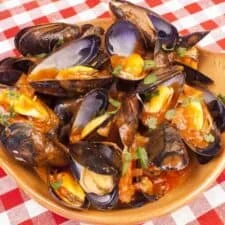
Mussels saganaki is a Greek seafood dish of mussels cooked with wine and chopped vegetables, with feta for a salty, creamy finish if you like. It comes together quickly and makes a lively starter or a light meal with bread.
Ingredients
- 1.5 kg (50 oz)mussels, washed
- 1 glassdry white wine
- 10cherry tomatoes
- 1pepper
- 1red onion
- 1 sprigcelery
- 1carrot
- 2 clovesgarlic
- 1 bunchfresh parsley
- 100 g (3.5 oz)feta cheese (optional)
- 120 ml (½ cup)olive oil
Instructions
- 1
Chop the vegetables
Blend the pepper, red onion, celery, carrot, garlic and parsley until finely chopped, leaving out the cherry tomatoes.
- 2
Sauté the mixture
Heat a large saucepan over high heat and add the olive oil. Tip in the chopped vegetables and sauté.
- 3
Add mussels
Halve the cherry tomatoes and add them to the pan with the mussels and crumbled feta, if using.
- 4
Cook with wine
Pour in the white wine, cover the pan and cook over high heat for 8–10 minutes.
What is mussels saganaki?
Mussels saganaki, or midia saganaki, is a Greek seafood dish associated with the country’s fish taverns. “Saganaki” refers to food cooked in a small frying pan, and the name is also used for a range of Greek dishes served hot.
This version pairs mussels with wine, chopped vegetables and tomatoes, with optional feta for a briny, creamy note. The short, covered cook keeps the method simple and lets the mussels release flavour into the sauce.
Nutrition and macros by portion
The nutrition label shows one serving as written: 430 calories, 22g protein, 18g carbs, 30g fat.
| Portion | Adjustment | kcal | Protein | Carbs | Fat |
|---|---|---|---|---|---|
| Lighter | Use less olive oil | 301 kcal | 15g | 13g | 21g |
| This serving | As written | 430 kcal | 22g | 18g | 30g |
| Hungry | Add crusty bread | 645 kcal | 33g | 27g | 45g |
The mussels provide most of the protein, while the olive oil and optional feta contribute much of the fat. The vegetables and tomatoes add a smaller amount of carbohydrate; serve a moderate portion with plenty of salad or vegetables, and use bread to suit your appetite.
Build the vegetable base
Chopped vegetables: blending the pepper, onion, celery, carrot, garlic and parsley makes a fine mixture that can be sautéed quickly. Leave the cherry tomatoes out at this stage so they retain more shape when added later.
Olive oil: the recipe uses a generous amount to sauté the vegetables and carry their flavour through the sauce. Let the mixture sizzle rather than brown heavily.
Choose and prepare the mussels
Fresh mussels: wash them before cooking and discard any that are damaged or do not close when tapped. Remove any visible beards if they are still attached.
Feta: crumble it into the pan with the mussels, or leave it out for a less salty finish. Since feta brings its own saltiness, taste the sauce before adding any extra salt.
Cook until just done
Covered pan: the lid traps steam, helping the mussels cook in the wine and their own liquid. Keep the heat high as directed and check the pan towards the end of the 8–10 minute cooking time.
Doneness: the shells should open as the mussels cook. Discard any that remain closed after cooking, and avoid extending the cooking time unnecessarily, as the meat can become tough.
Make the sauce work
Wine and mussel juices: the dry white wine loosens the sautéed vegetables, while the mussels add their own savoury liquid as they open. Serve the sauce alongside the mussels rather than draining it away.
Tomatoes: halving the cherry tomatoes helps them soften quickly and release some juice. They add a fresh, lightly sweet contrast to the wine and feta.
Serve it hot
Bread: serve the mussels straight from the pan with crusty bread for scooping up the sauce. A simple green salad makes a fresh counterpoint.
Timing: this dish is best served as soon as it is cooked, while the mussels are hot and tender. Have plates and any sides ready before you start.
Recipe notes & tips
- Wash the mussels thoroughly before cooking.
- Use a large saucepan so the mussels have room to cook under the lid.
- Chop the vegetables finely so they sauté quickly.
- Halve the cherry tomatoes before adding them to the pan.
- Check for mussels that have not opened after cooking and discard them.
- Taste before adding salt because both mussels and feta can be salty.
Variations
- Skip the feta: leave it out for a lighter, less salty sauce.
- Use chopped tomatoes: replace the cherry tomatoes with chopped ripe tomatoes.
- Add a little chilli: include a small amount with the vegetables for gentle heat.
- Finish with lemon: squeeze lemon over the dish just before serving for a sharper finish.
- Serve with bread: add crusty bread to mop up the cooking juices.
Common mistakes to avoid
- Crowding a small pan: the mussels may not heat evenly; choose a large saucepan with a lid.
- Leaving grit on the shells: rinse and scrub the mussels before they go into the pan.
- Cooking without a lid: the mussels need the trapped heat and steam to cook properly; cover the pan.
- Overcooking the mussels: the meat can turn tough; check them at 8 minutes.
- Adding salt too soon: feta and mussel juices can be salty; taste the sauce first.
- Discarding the cooking liquid: it carries flavour from the wine and mussels; serve it with the dish.
How to store
Refrigerate leftovers promptly in a covered container and eat within 1 day. Reheat gently in a covered pan until steaming hot, taking care not to cook the mussels for long again; discard any leftovers that have been left at room temperature for too long.
Frequently asked questions
Can I make mussels saganaki without feta?
Yes. The recipe lists feta as optional, and the mussels, wine and vegetables still make a flavourful dish without it.
How do I know when the mussels are cooked?
Cook them covered for 8–10 minutes over high heat, as directed. Their shells should open; discard any that remain closed.
Can I use frozen mussels?
Fresh mussels are specified in this recipe. If using frozen mussels, follow the packet’s preparation and cooking guidance, as the timing may differ.
What should I serve with mussels saganaki?
Crusty bread is useful for the sauce, and a simple salad or vegetables make an easy accompaniment.
Can I prepare the vegetables ahead?
You can blend the vegetables ahead and keep them covered in the refrigerator until you are ready to sauté them. Cook the mussels just before serving.
Cook it from the original
This recipe comes from mygreekdish.com. Their page has the author’s own photos, notes and tips — the best place to cook it from.
Open the recipe on mygreekdish.com