
Traditional Cretan Ntakos / Dakos recipe (Rusks with tomatoes and feta cheese)
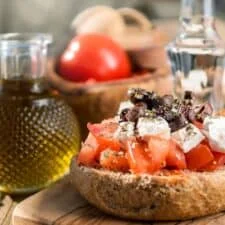
Cretan dakos is a no-cook Greek salad of crisp barley rusks topped with grated tomato, cheese, olives and capers. It makes a quick, flavour-packed lunch or starter, with the tomato softening the rusks as it drains into them.
Ingredients
- 4large round barley rusks
- 3 largeripe tomatoes, peeled and mashed
- 8 tbspextra-virgin olive oil
- 150 gfeta cheese
- 50 gmyzithra or ricotta cheese
- 10–15black olives
- 1–2 tbspcapers
- to tasteoregano
- to tastesalt and freshly ground black pepper
Instructions
- 1
Moisten the rusks
Pour 4 tablespoons of water over each rusk to soften it, then drizzle with olive oil.
- 2
Drain the tomatoes
Grate the tomatoes into a colander and leave them to drain for 5 minutes.
- 3
Crumble the cheese
Crumble the feta and myzithra with a fork, or grate the cheeses.
- 4
Assemble the dakos
Spread the grated tomato over the rusks and add the crumbled cheese. Top with olive oil and capers, sprinkle with oregano, and drizzle over a little more olive oil.
What is Cretan dakos?
Dakos, also called ntakos, is a traditional Cretan dish built around paximadia, the island’s twice-baked barley rusks. It is often described as a Greek salad served on a crisp, sturdy base.
This version layers grated, drained tomato with feta and soft myzithra or ricotta, then finishes with olives, capers, oregano and olive oil. The contrast between the rusks, juicy tomato and crumbly cheese is what makes it work.
Nutrition and macros by portion
The nutrition label shows one serving as written: 600 calories, 15g protein, 58g carbs, 38g fat.
| Portion | Adjustment | kcal | Protein | Carbs | Fat |
|---|---|---|---|---|---|
| Lighter | Use less olive oil | 420 kcal | 11g | 41g | 27g |
| This serving | As written | 600 kcal | 15g | 58g | 38g |
| Hungry | Add another rusk | 900 kcal | 23g | 87g | 57g |
The rusks and tomatoes provide most of the carbohydrates, while the olive oil contributes much of the fat. Feta and myzithra or ricotta supply protein, with additional fat from the cheeses and olives. To balance the plate, serve a portion with extra fresh vegetables or a green salad.
Choose the right rusks
Barley rusks: Their firm, dry texture holds the toppings and softens without immediately collapsing. If they are particularly thick, moisten them evenly rather than pouring all the water into one spot.
Water: The recipe uses 4 tablespoons per rusk to make the rusks easier to eat. Add it directly over each one, then follow with the oil.
Drain the tomato well
Grating: Grating the peeled tomatoes creates a juicy topping that spreads across the rusks. Work over a colander so the excess liquid can escape.
Five minutes: Let the tomato drain for the stated 5 minutes before assembling. This helps keep the rusks from turning soggy too quickly.
Balance the cheeses
Feta: Its salty, tangy flavour gives the topping much of its character. Crumble it into small pieces so there is some in every bite.
Myzithra or ricotta: This softer cheese brings a gentler, creamy contrast to the feta. Crumble both cheeses with a fork, or grate them as the method suggests.
Assemble just before serving
Layering: Spread the drained tomato over the moistened rusks, then scatter on the cheeses, capers and oregano. Add the olive oil as directed, including the final drizzle.
Texture: The rusks should soften enough to bite through while retaining some structure. Assemble shortly before eating if you want them to stay less soft.
Serve it as a meal or starter
For a light meal, serve dakos with a simple green salad or sliced seasonal vegetables. As a starter, one rusk can be shared or served alongside other small Greek-style dishes.
The olives and capers bring a briny edge, so taste before adding salt. Freshly ground pepper and oregano round out the topping.
Recipe notes & tips
- Drain the grated tomatoes for the full 5 minutes so their liquid does not overwhelm the rusks.
- Moisten each rusk with 4 tablespoons of water, as directed, and spread it over the surface.
- Crumble the feta finely to distribute its salty flavour across the topping.
- Taste the assembled topping before adding salt, since feta, olives and capers are already savoury.
- Add the tomato and cheese shortly before serving to preserve some firmness in the rusks.
Variations
- Use ricotta: Choose it instead of myzithra for the soft cheese element.
- Adjust the capers: Use 1 tablespoon for a gentler briny flavour or 2 for a sharper one.
- Add more oregano: Sprinkle extra over the top just before serving.
- Change the olives: Use fewer black olives for a milder, less briny topping.
- Make it more tomato-forward: Spread the drained tomato generously across each rusk.
Common mistakes to avoid
- Skipping the draining: Excess tomato liquid can make the rusks soggy; leave the grated tomato in a colander for 5 minutes.
- Uneven moistening: Dry patches can be tough to bite; distribute the 4 tablespoons of water over each rusk.
- Over-salting: Feta, olives and capers add plenty of savoury flavour; taste before seasoning.
- Assembling too early: The tomato continues to soften the rusks; add the toppings shortly before serving.
- Using large cheese chunks: They can make the topping uneven; crumble or grate the cheeses.
How to store
Dakos is best assembled and eaten straight away, as the tomato softens the rusks over time. If needed, refrigerate leftover tomato and cheese separately in covered containers and assemble fresh; the rusks are best kept dry at room temperature.
Frequently asked questions
What are barley rusks?
They are firm, dry, twice-baked bread, also known as paximadia. Their sturdy texture makes them suitable for soaking up the tomato and olive oil.
Can I use ricotta instead of myzithra?
Yes. The recipe gives ricotta as an alternative to myzithra, alongside the feta.
Why grate the tomatoes?
Grating makes a soft, spreadable topping. Draining it for 5 minutes removes some excess liquid before it goes on the rusks.
How do I stop the rusks becoming too soft?
Drain the grated tomato as directed and assemble the dish shortly before serving. The rusks are meant to soften, but they will lose more structure the longer they sit under the topping.
Can I prepare any part in advance?
You can grate and drain the tomatoes and crumble the cheeses ahead of time, keeping them covered separately in the refrigerator. Moisten and top the rusks close to serving.
Is dakos served hot or cold?
It is served without cooking, with the tomato and cheeses at room temperature or cool. There is no baking or reheating step in this recipe.
Cook it from the original
This recipe comes from mygreekdish.com. Their page has the author’s own photos, notes and tips — the best place to cook it from.
Open the recipe on mygreekdish.com