
Potato Pancakes (2 ingredients crispy hash browns)
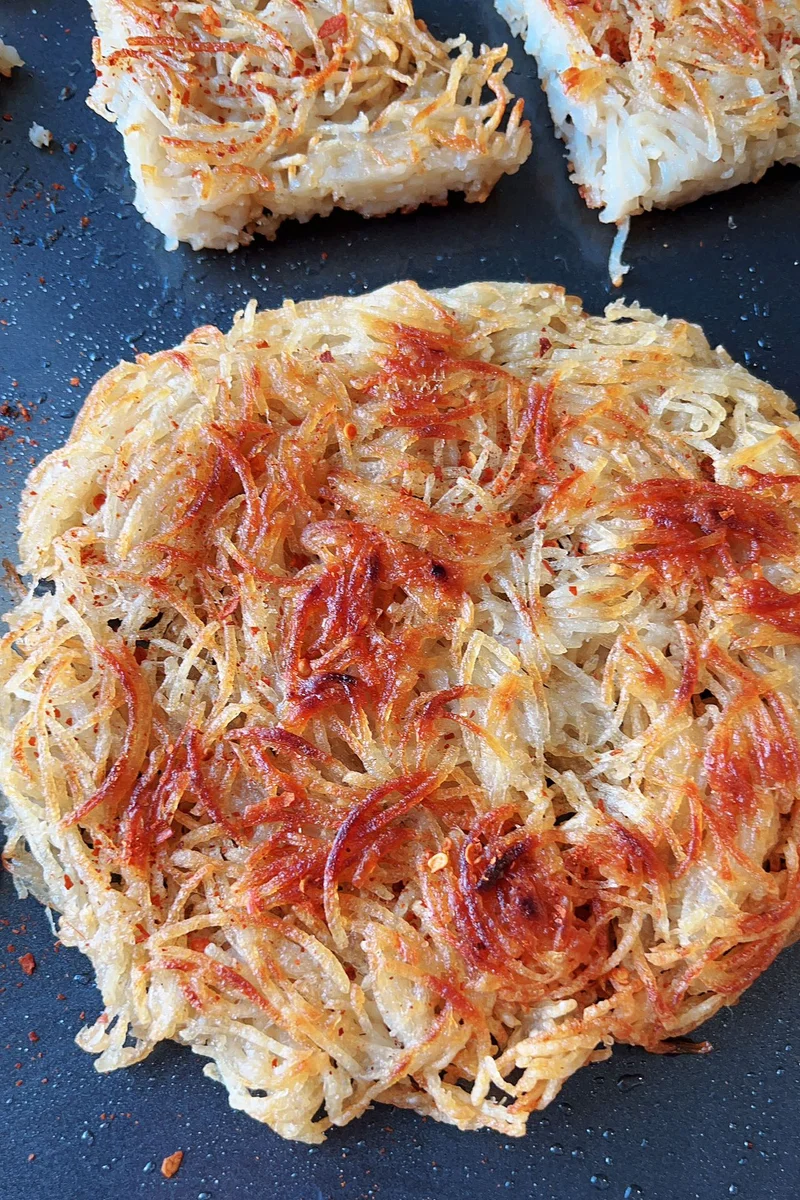
These American-style potato pancakes are made from finely grated potatoes and flour, then fried until crisp and golden. They make a straightforward, satisfying side or a crunchy centrepiece for a simple meal.
Ingredients
- 3 large (about 850 g peeled)potatoes
- 120 g (1 cup)plain flour
- As neededneutral cooking oil, such as vegetable, corn or rapeseed oil
- To tastesalt and pepper
Instructions
- 1
Grate the potatoes
Wash and peel the 3 potatoes. Grate them into fine shreds with a vegetable or box grater, or slice them finely with a knife.
- 2
Mix with flour
Put the grated potatoes in a large bowl and add 120 g (1 cup) plain flour. Mix gently by hand until the flour is evenly distributed; avoid overmixing, which can make the potatoes release water.
- 3
Line a pan
Place a round piece of baking parchment in a non-stick frying pan, making sure it is slightly smaller than the pan.
- 4
Shape the pancake
Add about one-third of the potato mixture to the lined pan and spread it evenly. Press it down firmly by hand to make a compact layer.
- 5
Heat the oil
Heat about 240 ml (1 cup) of cooking oil in a second non-stick frying pan over medium-high heat. When the oil reaches 175–190°C (350–375°F), carefully slide the potato mixture, still on the parchment, into the hot oil.
- 6
Cook the first side
Fry the pancake for about 5 minutes over medium-high heat. To move it, carefully slide a spatula under the parchment and transfer the pancake to a separate frying pan.
- 7
Flip the pancake
Cover the frying pan completely with a large plate and carefully invert the pan so the pancake lands on the plate. Remove the parchment, then gently slide the pancake back into the pan with the hot oil.
- 8
Cook the second side
Fry for a further 5 minutes over medium-high heat, or until both sides are golden brown and crisp.
- 9
Drain the pancake
When it is as crisp as you like, lift the pancake from the pan and place it on a cooling rack or a plate lined with kitchen paper to absorb excess oil.
- 10
Season and serve
Sprinkle the potato pancakes with salt and pepper to taste. Serve hot.
What are potato pancakes?
Potato pancakes are grated or shredded potatoes shaped into a flat cake and fried. They appear in many cuisines, while this version is presented as an American-style hash brown: a broad, crisp potato cake rather than small individual fritters.
Potato and flour are the two main ingredients here. The flour helps bind the shreds, and cooking the pancake in hot oil builds a browned, crunchy outside.
Nutrition and macros by portion
The nutrition label shows one serving as written: 370 calories, 0g protein, 0g carbs, 0g fat.
| Portion | Adjustment | kcal | Protein | Carbs | Fat |
|---|---|---|---|---|---|
| Lighter | Use less frying oil | 259 kcal | 0g | 0g | 0g |
| This serving | As written | 370 kcal | 0g | 0g | 0g |
| Hungry | Serve an extra pancake | 555 kcal | 0g | 0g | 0g |
The potatoes provide most of the carbohydrates, while the flour adds more; the frying oil is the main source of fat. There is no substantial protein ingredient in the listed recipe, so serve a pancake with eggs, beans or another protein-rich food and some vegetables for a more balanced plate.
Why the two ingredients matter
Potatoes: fine, even shreds make a pancake that holds together and cooks through more consistently. A box grater is convenient, though careful knife work also works.
Flour: toss it gently through the potato rather than kneading the mixture. The recipe relies on an even coating to bind the shreds without encouraging them to release excess moisture.
Getting the pancake into the oil
Parchment: lining the shaping pan makes it easier to move the compact potato layer into the hot oil. Keep the liner slightly smaller than the pan, as directed, and handle it carefully near the hot oil.
Transfer: a plate helps turn the pancake so its second side can cook. Use a plate large enough to cover the pan, and take care while inverting and sliding the pancake back into the oil.
Crispness and doneness
Oil temperature: aim for 175–190°C before adding the potato cake. If you have no thermometer, the recipe's stated temperature is the most reliable guide; avoid letting the oil become excessively hot.
Colour: cook for about 5 minutes on each side, looking for golden-brown, crisp surfaces. If the centre still seems undercooked when the outside is browned, reduce the heat slightly and allow it more time.
Work in three batches
Portioning: the method uses about one-third of the potato mixture at a time, which gives you three pancakes. Shape each portion into a compact, even layer before transferring it to the oil.
Timing: allow about 5 minutes per side for each pancake, plus time to heat the oil and handle each transfer. Keep finished pancakes on a rack or kitchen paper while you cook the rest.
How to serve them
Serve the pancakes hot, while their edges are at their crispest. They work as a side with eggs or alongside a simple salad and a source of protein.
Season with salt and pepper just before serving. A fresh, tangy accompaniment can balance the richness of the fried potato.
Recipe notes & tips
- Grate the potatoes finely and evenly so the pancake cooks at a similar rate throughout.
- Mix in the flour gently to avoid drawing out moisture from the potatoes.
- Keep the shaped potato layer compact so it is easier to transfer and turn.
- Use a thermometer to check that the oil is between 175°C and 190°C before frying.
- Drain each cooked pancake on a rack or kitchen paper before serving.
- Season the pancakes while hot so the salt and pepper cling to the surface.
Variations
- Add onion: mix finely grated onion through the potatoes for a savoury variation.
- Add herbs: stir chopped chives or parsley into the potato mixture before shaping.
- Serve with sour cream: add a spoonful alongside the hot pancakes.
- Add a fried egg: serve one on top for a more substantial meal.
- Make smaller pancakes: divide the mixture into smaller portions and keep an eye on the cooking time.
Common mistakes to avoid
- Overmixing: the potatoes can release water, so fold the flour through gently.
- Uneven shreds: large pieces may cook more slowly; grate the potatoes to a consistent fine size.
- Loose shaping: press the potato mixture firmly into a compact layer before transferring it.
- Oil at the wrong temperature: check for 175–190°C before frying to help the pancake crisp without scorching.
- Rushing the flip: cover the pan fully with a large plate and invert it carefully to avoid breaking the pancake.
- Skipping the draining step: use a rack or kitchen paper to remove excess oil before serving.
How to store
Cool leftovers promptly and refrigerate them in a covered container for up to 3 days. Reheat in a frying pan or oven until hot and crisp again; the microwave will soften the exterior.
Frequently asked questions
Can I prepare the potato mixture ahead?
It is best to grate and mix the potatoes shortly before cooking, as the recipe notes that overmixing can make them release water. If preparing ahead, keep the mixture covered and expect to adjust the texture before shaping.
Do I have to use parchment paper?
The method uses parchment to help move the shaped pancake into the oil and turn it. Use a piece slightly smaller than the pan, and handle it cautiously around hot oil.
How do I know when the oil is ready?
The recipe specifies 175–190°C (350–375°F). A cooking thermometer gives the clearest check before you add the potato pancake.
How many pancakes does this make?
The method divides the mixture into thirds, so it makes three pancakes.
Can I use a different potato?
The recipe does not specify a variety. Choose potatoes that grate neatly, and make sure the shreds are fine and evenly sized.
Can I make these without frying?
This method depends on frying in hot oil to make the pancakes crisp. A different cooking method would change the texture and would need its own timing.
Cook it from the original
This recipe comes from msshiandmrhe.com. Their page has the author’s own photos, notes and tips — the best place to cook it from.
Open the recipe on msshiandmrhe.com