
Teriyaki Glazed Salmon Recipe
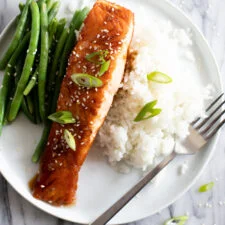
Salmon fillets are cooked in a sweet-savoury teriyaki-style glaze for a quick weeknight meal. Serve with rice and a vegetable to make it a satisfying dinner in around 25 minutes.
Ingredients
- 60 ml (¼ cup)soy sauce
- 15 ml (1 Tbsp.)brown sugar
- 30 ml (2 Tbsp.)mirin
- 30 ml (2 Tbsp.)honey
- 15 ml (1 Tbsp.)sesame oil
- 10 ml (2 tsp.)minced ginger
- 2 clovesgarlic, minced
- 454 g (16 oz.)salmon fillets
Instructions
- 1
Mix the marinade
Whisk the soy sauce, rice wine vinegar, honey, brown sugar, sesame oil, ginger and garlic together in a small bowl. Measure out 120 ml (½ cup) of the marinade and set it aside.
- 2
Cook the salmon
Heat oil in a large non-stick frying pan over medium-high heat. Add the salmon skin-side up and cook for 4 minutes, then turn it over and cook for another 2–3 minutes, until cooked through.
- 3
Reduce the sauce
While the salmon cooks, pour the reserved sauce into a small saucepan and bring it to a simmer. Turn the heat to low and simmer for 3–4 minutes, until it bubbles at the edges and has thickened and reduced.
- 4
Finish and serve
Drizzle the teriyaki sauce over the salmon. Finish with sesame seeds and green onion, and serve with rice and a vegetable.
What is teriyaki salmon?
Teriyaki is a Japanese style of cooking in which food is coated with a glossy, sweet-savoury sauce. This quick pan-cooked version draws on those flavours, pairing soy sauce with sweeteners and aromatics.
The salmon cooks separately from the sauce, which is simmered down before serving. That keeps the fish’s cooking straightforward while giving you a concentrated glaze to spoon over it.
Nutrition and macros by portion
The nutrition label shows one serving as written: 261 calories, 24g protein, 16g carbs, 11g fat.
| Portion | Adjustment | kcal | Protein | Carbs | Fat |
|---|---|---|---|---|---|
| Lighter | More vegetables, less rice | 183 kcal | 17g | 11g | 7g |
| This serving | As written | 261 kcal | 24g | 16g | 11g |
| Hungry | Larger salmon portion | 392 kcal | 35g | 24g | 16g |
The salmon provides most of the protein and some of the fat, while the honey and brown sugar contribute carbohydrates. Soy sauce also contributes sodium; serve with rice and a generous portion of vegetables to round out the plate.
The glaze ingredients
Soy and mirin: these bring savoury depth and sweetness to the sauce. Honey and brown sugar round out the flavour and help it thicken as it simmers.
Ginger and garlic: both add a fresh, fragrant edge. Mince them finely so they blend easily into the marinade.
Searing the salmon
Skin-side up: starting with the flesh side against the pan lets it develop colour before you turn the fillets. Use a non-stick pan and avoid moving the fish around while it cooks.
Doneness: the method gives a total cooking time of 6–7 minutes. Fillet thickness and pan heat can affect the timing, so check that the centre is cooked to your preference.
Reducing the sauce
Low heat: after bringing the reserved sauce to a simmer, keep it gently bubbling for 3–4 minutes. It is ready when it has thickened and reduced, with bubbles forming around the edges.
Keep an eye on it as it cooks; a sugary sauce can become overly thick if left to reduce too long. If needed, take it off the heat as soon as it reaches a spoonable consistency.
Serving the dish
Rice: serve the salmon with rice to soak up the glaze. A green vegetable or other simple vegetable side adds freshness alongside the rich sauce.
Finishing touches: sesame seeds and green onion add contrast to the glazed fish. Add them just before serving so they retain their texture and fresh flavour.
Timing and preparation
Quick prep: mince the ginger and garlic before you start cooking, then whisk the marinade together. This lets you focus on the salmon and sauce once the pan is hot.
Parallel cooking: the sauce simmers while the salmon cooks, keeping the method efficient. Have your rice and vegetable ready to serve alongside the fish.
Recipe notes & tips
- Pat the salmon dry before cooking to help the surface brown.
- Use a non-stick frying pan to make turning the fillets easier.
- Keep the reserved sauce separate from the marinade used with the fish.
- Simmer the sauce gently and watch for it to thicken at the edges.
- Prepare the rice and vegetable side while the salmon cooks.
Variations
- Add chilli: stir a little chilli into the marinade for a hotter glaze.
- Use tamari: swap it for the soy sauce if you prefer a gluten-free alternative, checking the label.
- Try orange: add a little orange zest to bring a citrus note to the sauce.
- Change the side: serve with noodles instead of rice.
- Add greens: serve with steamed broccoli or green beans.
Common mistakes to avoid
- Crowding the pan: the salmon may cook unevenly; use a pan large enough to fit the fillets with space between them.
- Turning too soon: the fish can break apart; let the first side cook for the stated 4 minutes before flipping.
- Over-reducing the sauce: it can become too thick; remove it from the heat once it has thickened and reduced.
- Cooking on high heat: the glaze can scorch; simmer it over low heat as directed.
- Using the same sauce carelessly: keep the reserved portion separate from sauce that has contacted raw fish.
How to store
Refrigerate leftover salmon in an airtight container and use within 2 days. Reheat gently in a covered pan or in the microwave until hot, taking care not to overcook the fish.
Frequently asked questions
How do I know when the salmon is cooked?
The recipe allows 4 minutes on the first side and another 2–3 minutes after turning. Check the thickest part for the doneness you prefer, since fillet thickness affects the timing.
Can I make the sauce ahead?
You can mix the marinade ahead and keep it covered in the refrigerator. Reserve the portion for simmering separately from any marinade that has been in contact with raw fish.
Can I use skinless salmon?
Yes. Cook it for the same initial time, then turn it carefully, as skinless fillets may be more delicate in the pan.
What should I serve with teriyaki salmon?
Rice and a vegetable make the simplest pairing, as suggested in the method. Steamed greens or a crisp salad also work well.
Why is my sauce not thickening?
Let it simmer gently for the full 3–4 minutes, until it bubbles at the edges and reduces. If it still seems thin, continue simmering briefly while watching it closely.
Cook it from the original
This recipe comes from myeverydaytable.com. Their page has the author’s own photos, notes and tips — the best place to cook it from.
Open the recipe on myeverydaytable.com