
Torta de Pan Mojicón Recipe (Mojicón Bread Pudding Cake)
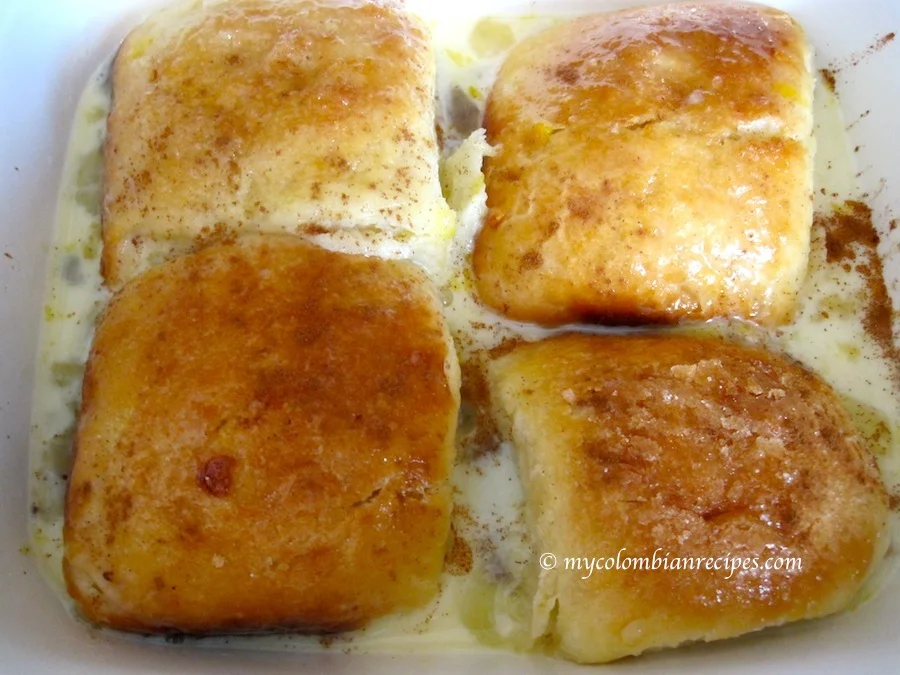
Torta de Mojicón is a Colombian bread pudding cake made by soaking sweet rolls in a cinnamon-vanilla custard and baking them with guava paste. It is a comforting way to turn soft, sweet bread into a warm dessert to share.
Ingredients
- 4mojicones (Colombian sweet rolls)
- 710 ml (3 cups)milk
- 240 ml (1 cup)heavy cream
- 5, beateneggs
- 150 g (3/4 cup)sugar
- 142 g (5 oz; 4 bocadillos), slicedguava paste
- 15 ml (1 tablespoon)vanilla extract
- 2.5 ml (1/2 teaspoon)ground cinnamon
Instructions
- 1
Prepare the dish
Lightly butter a medium baking dish. Heat the oven to 175°C (350°F).
- 2
Mix the custard
Whisk the beaten eggs with the milk, heavy cream, sugar, cinnamon and vanilla extract in a bowl. Set the mixture aside.
- 3
Layer the bread
Cut the mojicones in half horizontally. Arrange the bottom halves in the baking dish, add the guava paste, then place the tops over them with their browned sides facing up. Keep the guava between the bread layers so it does not burn during baking.
- 4
Soak the rolls
Pour the custard over the mojicones and leave them to soak for 10 minutes, pressing down gently.
- 5
Bake until set
Bake for 40 to 45 minutes, until the pudding has puffed up and the custard is set. Take it out of the oven and serve warm or at room temperature.
What is Torta de Mojicón?
Torta de Mojicón is a Colombian baked dessert that transforms mojicones, sweet rolls, into a custardy pudding cake. It is associated with Bogotá, where home cooks make use of familiar sweet breads and guava paste.
This version layers the bread with bocadillo, a firm guava confection, then pours a spiced egg-and-cream custard over the top. The contrast of soft bread and fruity guava gives each serving a mix of textures.
Nutrition and macros by portion
The nutrition label shows one serving as written: 431 calories, 12g protein, 45g carbs, 23g fat.
| Portion | Adjustment | kcal | Protein | Carbs | Fat |
|---|---|---|---|---|---|
| Lighter | Smaller slice, fresh fruit | 302 kcal | 8g | 31g | 16g |
| This serving | As written | 431 kcal | 12g | 45g | 23g |
| Hungry | Larger slice | 647 kcal | 18g | 68g | 35g |
The mojicones and sugar provide most of the carbohydrates, while the eggs contribute protein. The cream, milk, eggs and sweet bread supply much of the fat; serve a modest slice with fresh fruit to balance the plate.
Choosing the bread and guava
Mojicones: Use Colombian sweet rolls if available; their sweetness and tender crumb suit the custard. Keep the bread in pieces large enough to form distinct layers.
Guava paste: Slice the bocadillos and tuck them between the bread layers. Keeping the paste covered helps prevent exposed pieces from scorching in the oven.
Getting the custard right
Even mixing: Whisk the eggs, milk, cream, sugar, cinnamon and vanilla until combined, so the seasoning is distributed throughout the custard.
A short soak: Give the assembled rolls 10 minutes to absorb the liquid. Press gently rather than crushing the bread, which helps it soak while holding its shape.
Look for a set centre
The pudding should puff up as it bakes, and the custard should look set rather than loose. Start checking at 40 minutes; the recipe allows up to 45 minutes, depending on your dish and oven.
Serving it warm or cool
Serve the cake warm for a soft, freshly baked texture, or let it come to room temperature before serving. A sharp knife helps cut through the bread and guava layers neatly.
Because the pudding is rich and sweet, it pairs well with unsweetened coffee or tea. Fresh fruit can add a bright contrast alongside it.
Timing and preparation
The stated total time is 55 minutes, including the 10-minute soak and 40 to 45 minutes of baking. Have the bread sliced and the guava ready before pouring the custard so the layers can be assembled promptly.
Recipe notes & tips
- Butter the baking dish lightly so the pudding is easier to serve.
- Beat the eggs before adding them to the custard mixture.
- Arrange the guava paste between the bread layers rather than leaving it exposed.
- Press the bread down gently during the soak so it absorbs custard without being crushed.
- Begin checking the pudding at 40 minutes and bake longer if the custard is not yet set.
Variations
- More cinnamon: Add a little extra ground cinnamon to the custard for a warmer spice note.
- Citrus aroma: Add finely grated orange zest to the custard for a fresh fragrance.
- Raisin layer: Scatter raisins between the bread and guava for extra fruitiness.
- Different sweet bread: Use another soft, lightly sweet roll if mojicones are unavailable.
- Dairy swap: Use whole milk in place of the heavy cream for a less rich custard.
Common mistakes to avoid
- Exposed guava paste: Keep the slices between the bread layers so they are less likely to burn.
- Skipping the soak: Leave the assembled rolls in the custard for the full 10 minutes so they can absorb it.
- Pressing too hard: Use a gentle touch during soaking to avoid flattening the bread.
- Underbaking: Check that the custard is set and the pudding has puffed before taking it out.
- Cutting while piping hot: Let the pudding cool slightly if you want neater portions.
How to store
Cover and refrigerate leftovers for up to 3 days. Reheat individual portions gently in the oven or microwave, or serve them at room temperature.
Frequently asked questions
What can I use instead of mojicones?
Use another soft, lightly sweet bread roll. The texture and sweetness may vary, so check the pudding as it bakes.
What is bocadillo?
Bocadillo is a firm guava confection commonly used in Colombia. Here it is sliced and layered with the bread.
Can I prepare the pudding ahead?
You can assemble it and let the bread soak for 10 minutes before baking, as directed. For best results, bake it close to serving time.
How do I know when it is done?
It should have puffed up, and the custard should be set rather than visibly liquid. The suggested baking time is 40 to 45 minutes.
Should I serve it warm or cold?
The recipe can be served warm or at room temperature. Both let the bread and guava layers come through.
Can I freeze leftovers?
Freezing is not specified for this recipe; refrigeration and gentle reheating are the straightforward way to keep leftovers.
Cook it from the original
This recipe comes from mycolombianrecipes.com. Their page has the author’s own photos, notes and tips — the best place to cook it from.
Open the recipe on mycolombianrecipes.com