
Jollof Spaghetti
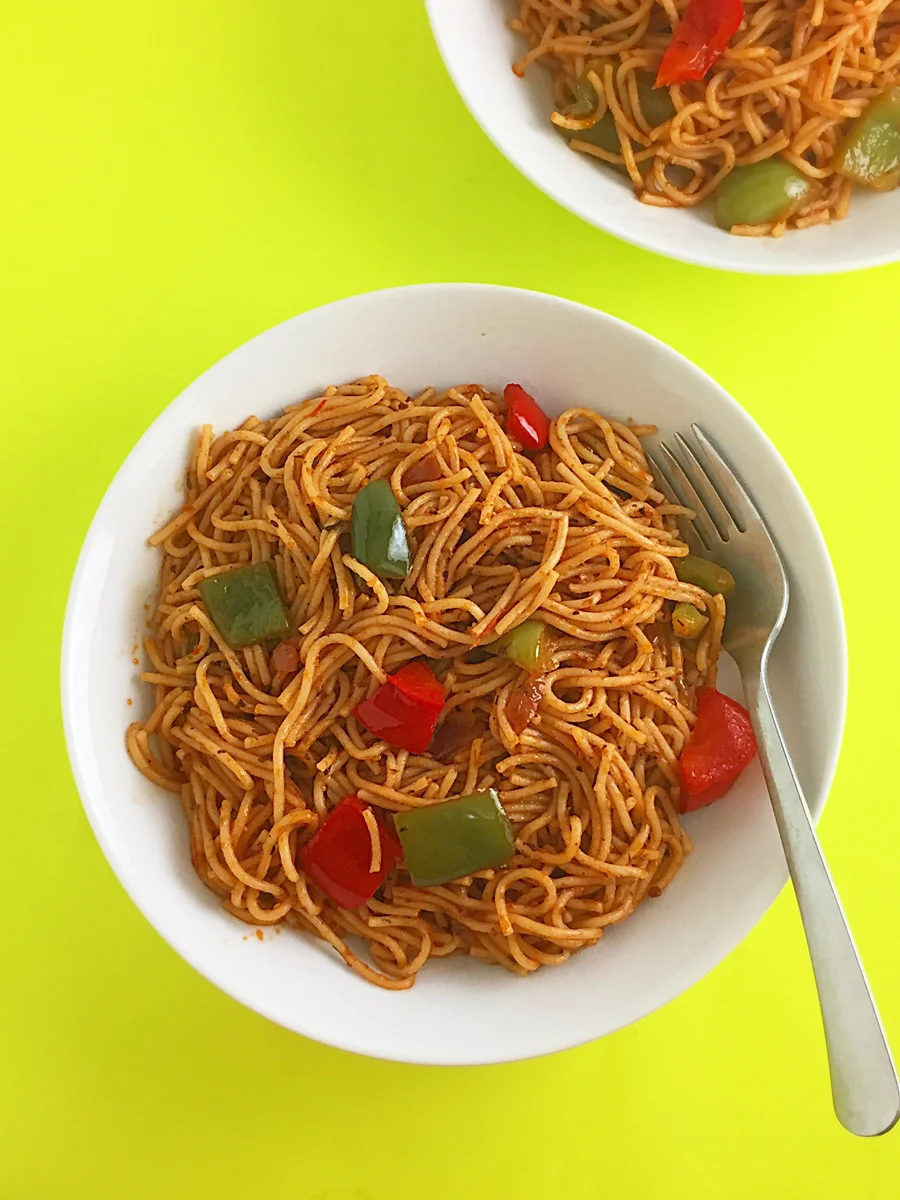
Jollof spaghetti brings pasta together with a savoury tomato and pepper sauce for a quick, colourful weeknight dinner. The sauce simmers briefly, then coats the spaghetti along with fresh pieces of red and green pepper.
Ingredients
- 454 g (1 lb)spaghetti
- 60 ml (1/4 cup)cooking oil
- 1 mediumonion, chopped
- 1 smallred bell pepper, roughly chopped
- 1 smallgreen bell pepper, roughly chopped
- 85 g (3 oz)tomato paste
- 60 ml (1/4 cup)meat stock (optional)
- 1 tbsp, or to tastebouillon powder
- 2 clovesgarlic, crushed
- 1 tspginger powder
Instructions
- 1
Simmer the sauce
Heat the cooking oil in a clean saucepan. Add the garlic, followed by the chopped onion, and sauté until the onion is translucent but not soft. Stir in the tomato paste or blended roasted pepper mix, the meat stock, bouillon powder, minced garlic and grated ginger. Simmer over medium-low heat for about 5 minutes, or until the sauce thickens. Taste and adjust the seasoning, then add the chopped red and green bell peppers and turn off the heat.
- 2
Cook the spaghetti
Bring about 4–6 quarts of water, salted with 2 tablespoons of salt, to the boil. Add the spaghetti and cook for 8 minutes. Drain off the excess water and mix the pasta with the sauce.
What is jollof spaghetti?
Jollof spaghetti is a pasta dish made with a tomato-and-pepper sauce inspired by the flavours of West African jollof cooking. It pairs spaghetti with a seasoned sauce rather than the more familiar Italian-style pasta sauces.
This version keeps the preparation quick: the sauce simmers for around 5 minutes, and chopped peppers are stirred in at the end for freshness and texture.
Nutrition and macros by portion
The nutrition label shows one serving as written: 275 calories, 0g protein, 0g carbs, 0g fat.
| Portion | Adjustment | kcal | Protein | Carbs | Fat |
|---|---|---|---|---|---|
| Lighter | Use less cooking oil | 193 kcal | 0g | 0g | 0g |
| This serving | As written | 275 kcal | 0g | 0g | 0g |
| Hungry | Serve a larger portion | 413 kcal | 0g | 0g | 0g |
Most of the carbohydrates in a serving come from the spaghetti, while the cooking oil supplies most of the fat. The recipe also includes bouillon and optional stock, which contribute seasoning; serve it with vegetables or salad for a more balanced plate.
Build the sauce
Tomato paste: it gives the sauce a concentrated tomato base. Meat stock is optional, so the sauce can be made without it.
Garlic and ginger: these add savoury warmth alongside the bouillon powder. Taste the sauce before adding extra seasoning, as bouillon can be salty.
Keep the peppers distinct
Sauce base: the method allows for tomato paste or a blended roasted pepper mix. The ingredient list supplies tomato paste and separate chopped peppers.
Fresh pieces: add the chopped red and green peppers after the sauce has thickened, then turn off the heat. This keeps them from cooking down during the simmer.
Watch the onion and sauce
Onions: sauté them until translucent, stopping before they become soft. This gives the sauce a flavourful base without losing the method’s intended texture.
Thickening: simmer the sauce over medium-low heat for about 5 minutes. It is ready when the mixture has thickened; check the seasoning before adding the peppers.
Cook the pasta
Water: bring about 4–6 quarts to the boil with 2 tablespoons of salt, as directed. Add the spaghetti once the water is boiling.
Doneness: cook for 8 minutes, then drain and combine with the sauce. If you prefer softer pasta, check it at the 8-minute mark and cook further as needed.
Serve it as a meal
The recipe makes six servings and works as a straightforward dinner on its own. For a more varied plate, serve it with a simple green salad or cooked vegetables.
Because the pasta is the main component, a vegetable side adds contrast in colour and texture. Serve soon after mixing so the spaghetti is evenly coated.
Recipe notes & tips
- Chop the onion and peppers before you start cooking so the short sauce stage is easy to manage.
- Use medium-low heat while simmering to help the sauce thicken without scorching.
- Taste the sauce before adding more bouillon powder.
- Keep the chopped peppers chunky, as directed, for a more noticeable bite.
- Drain the spaghetti before mixing it into the sauce.
Variations
- Skip the stock: leave out the optional meat stock and make the sauce without it.
- Use roasted pepper mix: use a blended roasted pepper mix in place of the tomato paste as described in the method.
- Adjust the bouillon: use less or more powder to suit your preferred seasoning level.
- Change the pasta: use another pasta shape if spaghetti is unavailable, adjusting the cooking time to its packet instructions.
Common mistakes to avoid
- Softening the onions too far: sauté only until translucent, not soft.
- Scorching the sauce: keep it at medium-low heat while it simmers.
- Overcooking the sauce: simmer for about 5 minutes and stop when it has thickened.
- Cooking pasta without checking: start with the stated 8 minutes and check for your preferred texture.
- Adding peppers too early: stir them in after the sauce thickens, then turn off the heat.
How to store
Refrigerate leftovers in a covered container and use within 3 days. Reheat until hot, adding a small splash of water if the pasta seems dry.
Frequently asked questions
Can I leave out the meat stock?
Yes. The stock is marked optional, so you can omit it.
Can I use blended roasted pepper mix instead of tomato paste?
The method gives blended roasted pepper mix as an alternative to tomato paste. The listed ingredients, however, specify tomato paste and separate chopped peppers.
How long should I cook the spaghetti?
The recipe says to cook it for 8 minutes. Check the texture at that point, since pasta thickness and brand can affect how quickly it cooks.
When do the chopped peppers go in?
Add the chopped red and green peppers after the sauce has thickened, then turn off the heat.
Can I make the sauce less salty?
Use less bouillon powder and taste the sauce before adding any more. The method also calls for salt in the pasta water.
Cook it from the original
This recipe comes from mydiasporakitchen.com. Their page has the author’s own photos, notes and tips — the best place to cook it from.
Open the recipe on mydiasporakitchen.com