
How to Make Natto (Recipes with and without a starter)
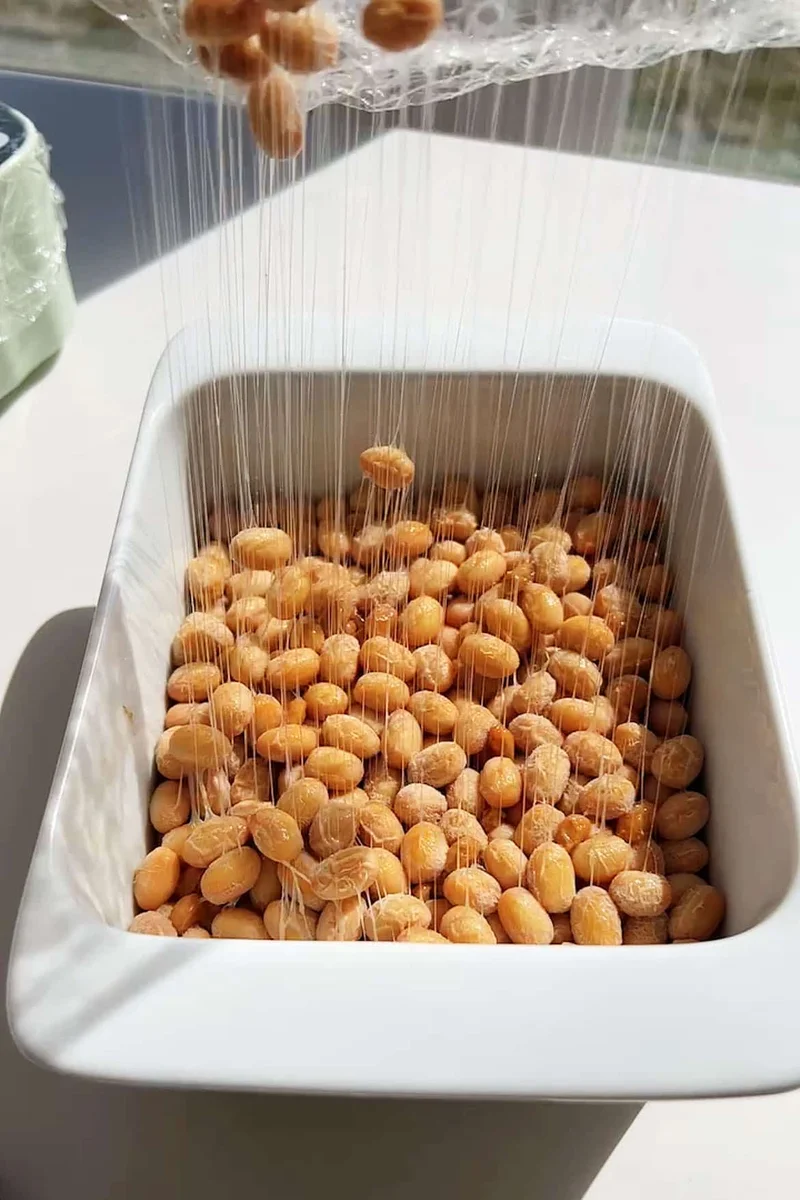
Make homemade Japanese natto in two ways: with natto starter or with a little shop-bought natto. Both methods use steamed soybeans and a 24-hour fermentation, followed by chilling to develop the flavour.
Ingredients
- 2 cups (about 400 g)soybeans
- ½ tsp (2.5 ml)natto starter
- 2 tbsp (30 ml)cold water (sterile, bottled or boiled and cooled)
- 2 cups (about 400 g)soybeans
- 2 tbsp (30 ml)shop-bought natto
Instructions
- 1
Wash the beans
Rinse the soybeans in cold water, gently rubbing them with your hands. Avoid rubbing hard enough to split the skins. Repeat a couple of times, until the water runs clear.
- 2
Soak overnight
Cover the washed beans with 6 cups (about 1.4 litres) of cold water and leave them to soak for around 10 hours, until doubled in size. Drain.
- 3
Steam the beans
Steam the soybeans for about 2½ hours, until soft enough to mash easily between your fingers.
- 4
Sanitise equipment
While the beans steam, wash all the containers and utensils you will use with soap and water. Place them on a clean baking sheet and bake at 121°C (250°F) for at least 30 minutes, so they reach at least 74°C (165°F), the stated minimum for killing most bacteria.
- 5
Cool the beans
Transfer the steamed soybeans to a sanitised container and leave them to cool to room temperature.
- 6
Mix in starter
For the starter method, stir ½ tsp (2.5 ml) of natto starter powder into 2 tbsp (30 ml) of cold sterile water, using bottled water or water that has been boiled and cooled. Pour it over about 900 g of steamed, cooled soybeans and mix thoroughly with a clean spatula.
- 7
Mix in natto
For the shop-bought natto method, add 2 tbsp (30 ml) of shop-bought natto to about 900 g of steamed, cooled soybeans. Mix thoroughly with a clean spatula.
- 8
Cover the beans
Loosely cover the container with plastic food wrap and prick the wrap every 1.3 cm (½ inch) with a toothpick. Gently press it down so it sits close against the surface of the beans.
- 9
Add a second cover
Cover the container tightly with a second piece of plastic food wrap and prick it every 1.3 cm (½ inch) with a toothpick.
- 10
Ferment for 24 hours
To use an Instant Pot, yoghurt maker or rice cooker, put a steam rack in the appliance and add 5 cm (2 inches) of water. Set the soybean container on the rack, ensuring it is not submerged, close the lid and use the yoghurt or keep-warm mode for 24 hours. Alternatively, put the container in an oven on its proof setting for 24 hours, without a water bath.
- 11
Chill the natto
After 24 hours, set the containers on the worktop and let them cool to room temperature. Refrigerate for at least 12 hours before eating; this secondary fermentation can develop the flavour and reduce the ammonia odour.
- 12
Serve the natto
Enjoy 1–2 tbsp of homemade natto as a side dish.
- 13
Store the rest
Keep the natto in an airtight container in the fridge for up to one week, or divide it into small containers and freeze for up to one month. Thaw frozen natto overnight in the fridge before eating.
What is natto?
Natto is a traditional Japanese food made by fermenting cooked soybeans. Its characteristic sticky strands and bold, savoury aroma make it a distinctive side dish.
This recipe offers two ways to start fermentation: natto starter powder or a spoonful of shop-bought natto. Both rely on very soft beans, clean equipment and a warm, steady 24-hour ferment.
Nutrition and macros by portion
The nutrition label shows one serving as written: 190 calories, 0g protein, 0g carbs, 0g fat.
| Portion | Adjustment | kcal | Protein | Carbs | Fat |
|---|---|---|---|---|---|
| Lighter | Smaller natto serving | 133 kcal | 0g | 0g | 0g |
| This serving | As written | 190 kcal | 0g | 0g | 0g |
| Hungry | Larger soybean portion | 285 kcal | 0g | 0g | 0g |
The nutrition figures supplied list 190 kcal per serving, but give 0 g for protein, carbohydrate and fat, so they do not describe the soybean-based ingredients in a useful macro breakdown. Soybeans provide the main protein and carbohydrate, while the recipe contains no added oil. Pair a small serving with rice and vegetables for a more rounded plate.
Choosing a starter
Starter powder: dissolve it in sterile cold water before mixing it through the beans, so it can be distributed evenly.
Shop-bought natto: use the specified 2 tbsp and mix it thoroughly into the cooked beans. The recipe presents this as an alternative to the powdered starter, not an extra ingredient.
Getting the beans ready
Gentle washing: handle the beans carefully to avoid breaking their skins, and rinse until the water looks clear.
Long soaking: allow around 10 hours in cold water, by which time the beans should have doubled in size. Drain them before steaming.
The right texture
Soft beans: steam for about 2½ hours, then check that a bean can be mashed easily between your fingers. If it is still firm, it has not reached the texture specified in the method.
Cool before inoculating: let the beans reach room temperature before adding either starter option. Mix with a clean spatula so the starter is spread through the batch.
Covers and fermentation
Vented first layer: prick the wrap at roughly 1.3 cm intervals, then press it gently against the beans as directed. Add a second layer of wrap and prick that as well.
Warm setting: use the appliance's yoghurt or keep-warm mode for 24 hours, with the container above the water rather than submerged. The alternative is an oven's proof setting for the same period.
Cooling and serving
After the 24-hour ferment, cool the containers to room temperature and chill the natto for at least 12 hours. This second stage is intended to deepen the flavour and soften the ammonia-like aroma.
Serve a small spoonful as a side dish. The recipe suggests 1–2 tbsp at a time, rather than treating the whole batch as one serving.
What to serve it with
Natto can be served as a Japanese-style side alongside rice or other savoury dishes. Its strong aroma and sticky texture make it easy to portion separately.
Keep the serving modest if you are new to its flavour, and add it to the plate just before eating.
Recipe notes & tips
- Rub the beans lightly while washing so their skins stay intact.
- Allow the full overnight soak, checking that the beans have doubled in size before draining.
- Use the finger-mash test to check that the steamed beans are soft enough.
- Clean the containers and utensils thoroughly before use, then follow the stated oven sanitising step.
- Keep the fermenting container above the water in an appliance water bath.
- Chill the finished natto for at least 12 hours before serving.
Variations
- Starter powder: use the dissolved natto starter and sterile water for the first method.
- Shop-bought starter: mix in 2 tbsp of shop-bought natto instead of the powder-and-water mixture.
- Small portions: divide the finished natto into individual containers before freezing.
- Side dish: serve a spoonful alongside rice as part of a Japanese-style meal.
Common mistakes to avoid
- Broken skins: rubbing too hard can split the beans; wash them gently.
- Under-soaked beans: start with the full overnight soak and check that they have doubled before draining.
- Firm beans: continue steaming until they can be mashed easily between your fingers.
- Hot beans: wait for them to cool to room temperature before adding either starter.
- Submerged container: place it on the steam rack above the water during appliance fermentation.
- Skipping the chill: refrigerate for at least 12 hours after cooling to room temperature.
How to store
Keep homemade natto in an airtight container in the fridge for up to one week. For longer storage, freeze it in small individual containers for up to one month and thaw overnight in the fridge before eating.
Frequently asked questions
Can I make natto without starter powder?
Yes. The recipe's second method uses 2 tbsp of shop-bought natto mixed into about 900 g of steamed, cooled soybeans.
How soft should the soybeans be?
They should be soft enough to mash easily between your fingers after steaming.
How long does natto take to ferment?
The main ferment takes 24 hours. After that, cool the containers to room temperature and refrigerate for at least 12 hours.
Can I use an oven instead of a yoghurt maker?
Yes. The method gives an oven's proof setting as an alternative, with the container left to ferment for 24 hours without a water bath.
How long does homemade natto keep?
It keeps for up to one week in an airtight container in the fridge, or up to one month in the freezer.
How do I thaw frozen natto?
Leave it in the fridge overnight before eating.
Cook it from the original
This recipe comes from msshiandmrhe.com. Their page has the author’s own photos, notes and tips — the best place to cook it from.
Open the recipe on msshiandmrhe.com