
Nigerian okro vegetable soup
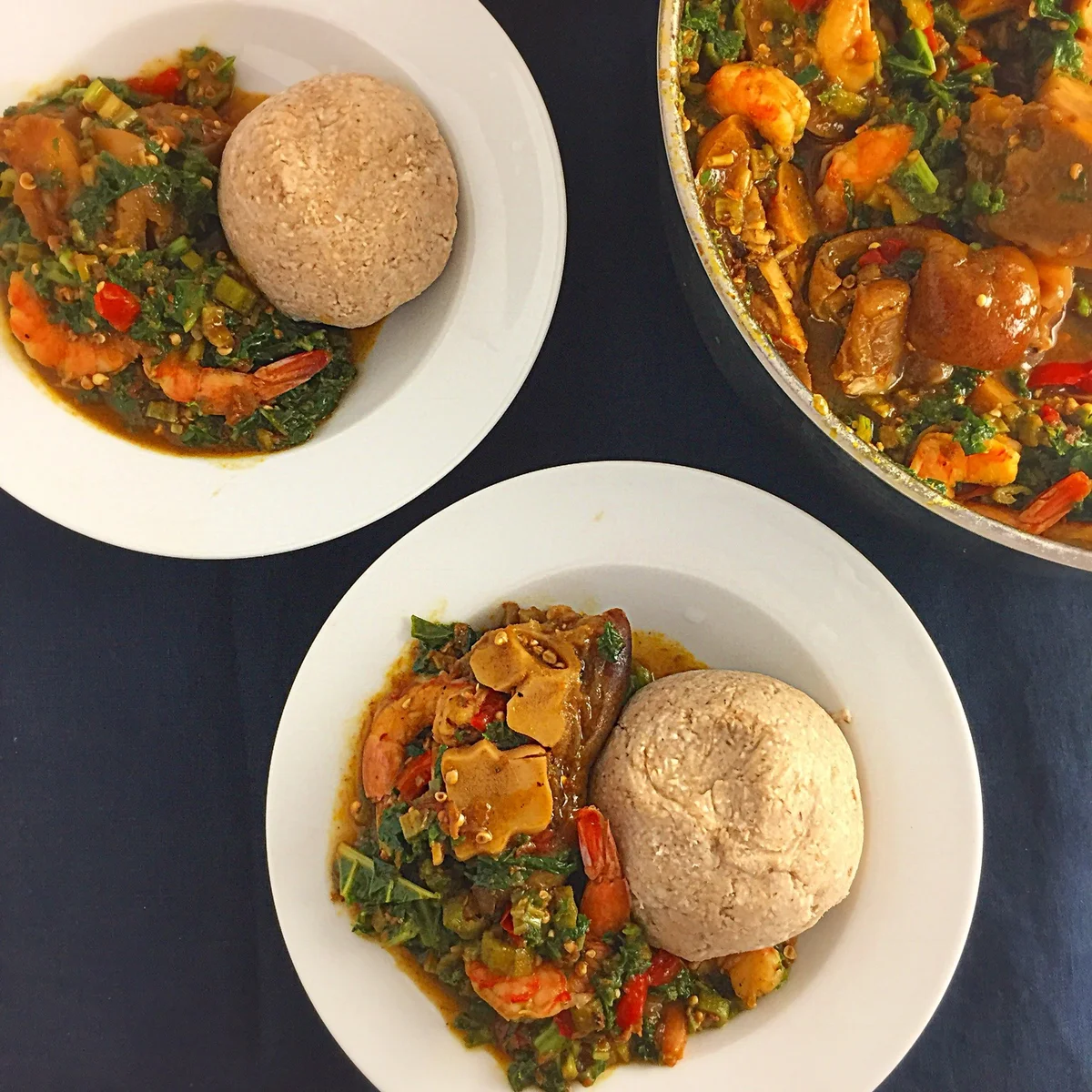
Nigerian okro vegetable soup combines chopped okro, leafy kale, assorted meats and prawns in a rich palm-oil broth. It is a practical one-pot meal, finished with the residual heat so the vegetables keep their colour and texture.
Ingredients
- 1200 gassorted meats
- 500 gokra, chopped
- 1 largered pepper, chopped
- 1 largeonion, chopped
- 5 tablespoonscrayfish
- 240–360 ml (1–1½ cups)palm oil
- 250 gkale, chopped
- 2habanero peppers, chopped
- 250 gprecooked prawns
- to tastesalt
Instructions
- 1
Boil the meat
Put the assorted meats in a pot and add enough water to cover them. Bring to the boil.
- 2
Cook until tender
Add salt, the crayfish and half the chopped onion. Cook until the meat is tender.
- 3
Add palm oil
Pour in the palm oil and cook for a further 5 minutes. Taste and adjust the seasoning.
- 4
Add prawns
Add the cooked prawns, chopped red pepper and the remaining onion. Lower the heat and simmer for another 2 minutes.
- 5
Stir in vegetables
Stir the soup well, then add the chopped okra and stir again. Add the kale, turn off the heat immediately and stir it in. Move the pot away from the hot burner and let the residual heat finish cooking the vegetables.
- 6
Serve the soup
Serve with a swallow food of your choice.
What is Nigerian okro vegetable soup?
Okro, also called okra, is a familiar ingredient in soups across West Africa, including Nigeria. This version brings it together with assorted meats, crayfish, palm oil, prawns and leafy kale.
The method keeps the cooking straightforward: simmer the meat first to build a savoury base, then add the quicker-cooking seafood and vegetables near the end.
Nutrition and macros by portion
The nutrition label shows one serving as written: 1100 calories, 75g protein, 21g carbs, 80g fat.
| Portion | Adjustment | kcal | Protein | Carbs | Fat |
|---|---|---|---|---|---|
| Lighter | Use less palm oil | 770 kcal | 53g | 15g | 56g |
| This serving | As written | 1100 kcal | 75g | 21g | 80g |
| Hungry | Serve a larger portion | 1650 kcal | 113g | 32g | 120g |
The meat and prawns provide most of the protein, while the palm oil is the main source of fat. The recipe does not include a starchy side in its ingredient list, so any carbohydrate will depend largely on the swallow served alongside it; balance the bowl with a generous share of the kale and okra.
Build the meat broth
Assorted meats: the recipe does not specify particular cuts, so use a selection that suits your taste and cook them until tender before adding the vegetables.
Crayfish: it joins the meat and onion early, giving the broth a savoury seafood note as it cooks.
Choose your palm-oil amount
Palm oil: the listed range is 240–360 ml, so choose an amount within that range to suit how rich you want the soup. Add it after the meat is tender and cook it for the stated 5 minutes.
Seasoning: taste after the palm oil has cooked in, then adjust the salt as needed.
Add the quick-cooking ingredients late
Prawns and pepper: add these with the remaining onion and simmer for just 2 minutes, as directed. The prawns are already cooked, so this brief heating is enough to warm them through.
Okra and kale: stir in the okra first, then add the kale and take the pot off the heat straight away.
Use the residual heat
Off the burner: moving the pot away from the hot ring helps stop the vegetables cooking too vigorously. Stir the kale through and let the soup’s residual heat finish the cooking.
Texture: the method gives the okra and kale only a short time in the hot soup, rather than simmering them throughout the meat-cooking stage.
Serve with a swallow
The recipe suggests serving the soup with a swallow food of your choice. Choose one you enjoy alongside a rich, savoury soup, and serve it freshly made.
Recipe notes & tips
- Cut the meat into similar-sized pieces so it cooks more evenly.
- Keep enough water in the pot to cover the meat as it comes to the boil.
- Split the chopped onion into two portions before you start cooking.
- Taste the broth after adding palm oil and before adding the prawns and vegetables.
- Move the pot off the hot burner as soon as the kale is stirred in.
Variations
- Adjust the heat: use fewer habaneros for a milder soup.
- Vary the greens: replace the kale with another leafy vegetable that suits the dish.
- Choose the meat mix: use your preferred assortment of meats while keeping the total amount at 1200 g.
- Change the oil amount: use the lower end of the listed range for a less oily finish.
- Pick a side: serve with the swallow food you prefer, as the recipe suggests.
Common mistakes to avoid
- Adding vegetables too early: wait until the meat is tender so they do not simmer through the whole cooking time.
- Leaving the kale on the burner: turn off the heat and move the pot away immediately after adding it.
- Skipping the seasoning check: taste after the palm oil has cooked for 5 minutes and adjust the salt.
- Adding all the onion at once: reserve half for the later addition with the prawns and pepper.
- Overcooking the prawns: add the precooked prawns late and simmer for the stated 2 minutes.
How to store
Cool leftovers promptly and store them in a covered container in the fridge for up to 3 days. Reheat gently in a saucepan until piping hot, stirring carefully; add a small splash of water if the soup has thickened.
Frequently asked questions
Can I use frozen okra?
Yes. Thaw and drain it before adding if you want to avoid extra water in the soup; follow the same order in the method.
Can I use a different leafy vegetable instead of kale?
Yes, another leafy vegetable can be used. Add it at the same late stage and take the pot off the heat promptly.
How much palm oil should I use?
The recipe gives a range of 240–360 ml. Choose an amount within that range according to how rich you want the soup.
Why are the prawns added near the end?
They are already cooked, and the recipe only simmers them for 2 minutes to warm them through.
What can I serve with this soup?
Serve it with a swallow food of your choice, as suggested in the recipe.
How can I make it less spicy?
Use fewer habanero peppers, or omit them if you prefer no chilli heat.
Cook it from the original
This recipe comes from mydiasporakitchen.com. Their page has the author’s own photos, notes and tips — the best place to cook it from.
Open the recipe on mydiasporakitchen.com