
Triple P Porridge
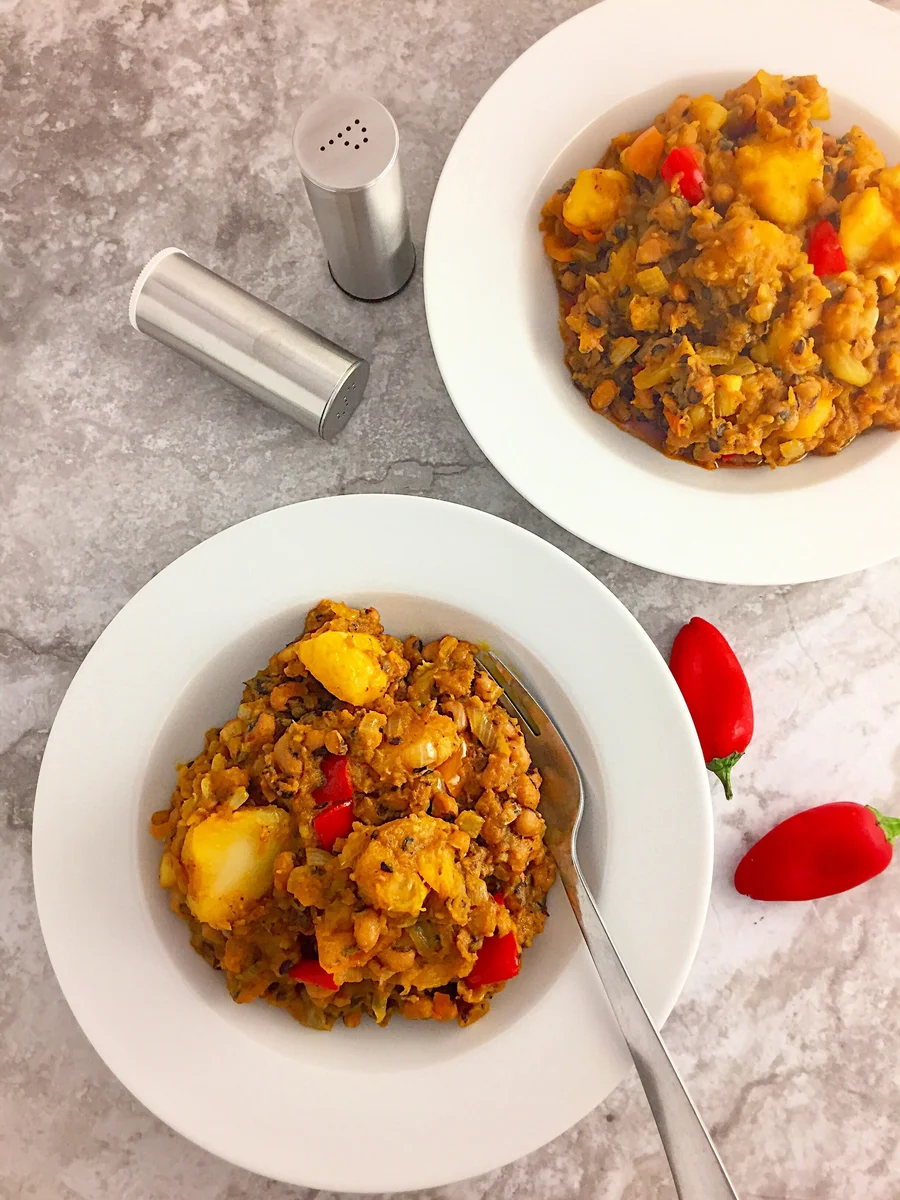
Triple P Porridge is a hearty Nigerian one-pot dish of black-eyed peas, potatoes and plantain, finished with palm oil, onions and pepper. It makes a filling meal from pantry staples, with the vegetables added near the end so they keep some shape.
Ingredients
- 454 g (1 lb; 2¼ cups)black-eyed peas, picked over and preferably soaked overnight
- 1 mediumred pepper, chopped
- 2 mediumonions, chopped and divided in half
- 180 ml (¾ cup)palm oil
- 1habanero pepper, chopped
- 4 mediumIrish or Idaho potatoes, quartered
- 2 mediumplantains
- 1 tspcurry powder (optional)
- To tastesalt or bouillon powder
- 15 ml (1 tbsp)sugar or sweetener of choice (optional)
Instructions
- 1
Start the beans
If the beans were soaked overnight, rinse them, transfer to a pot and start cooking. If they were not soaked, measure them, wash them, put them in a pot, cover with water and start cooking.
- 2
Rinse after boiling
When the beans begin to boil, turn off the heat and pour away the water. Add fresh water, rinse without touching the beans, pour that water away, then add more water and continue cooking. This step is optional.
- 3
Season the beans
Add half of the chopped onions, bouillon powder or a bouillon cube, and the sugar or sweetener, if using. Dried onions can be used instead; the recipe suggests about 1–2 tablespoons.
- 4
Make the sauce
While the beans cook, heat the palm oil and sauté the remaining onions with the chopped habanero for about 2 minutes. Set the mixture aside.
- 5
Add vegetables
Cook the beans until softened, with about 2.5 cm (1 inch) of water remaining above them. Add the quartered potatoes and plantain chunks. If the beans are not nearly tender, add a little water at a time and continue cooking.
- 6
Finish the porridge
Stir in the prepared sauce and chopped red pepper. Cover the pot and simmer for 2 more minutes, then stir and turn off the heat.
- 7
Serve
Serve the porridge and enjoy it with loved ones.
What is Triple P Porridge?
This Nigerian-style porridge brings together peas, potatoes and plantain in one pot; the name’s three Ps refer to those central ingredients. It is a substantial dish built around beans, with a palm-oil sauce and pepper for savoury depth.
The beans cook first, then the potatoes and plantain join them near the end. That order gives the beans time to soften while helping the later additions hold their shape.
Nutrition and macros by portion
The nutrition label shows one serving as written: 690 calories, 16g protein, 92g carbs, 28g fat.
| Portion | Adjustment | kcal | Protein | Carbs | Fat |
|---|---|---|---|---|---|
| Lighter | Use less palm oil | 483 kcal | 11g | 64g | 20g |
| This serving | As written | 690 kcal | 16g | 92g | 28g |
| Hungry | Serve a larger bowl | 1035 kcal | 24g | 138g | 42g |
Black-eyed peas provide much of the carbohydrates and protein, while the potatoes and plantain add more carbohydrates. Palm oil is the main source of fat; serve a moderate bowl alongside green vegetables or salad for a more balanced plate.
The beans set the pace
Soaking: The recipe recommends soaking the black-eyed peas overnight, which gets them ready for the pot. If they have not been soaked, the method starts with washed, dry beans and water.
Water level: Keep enough water in the pot for the beans to cook, then add the potatoes and plantain when the beans are nearly tender. The method aims to leave about 2.5 cm (1 inch) of water above the beans at that point.
Build flavour with the sauce
Palm oil: Heating it with the remaining onions and habanero creates the dish’s finishing sauce. Sauté the mixture for about 2 minutes, as directed, then set it aside until the beans and vegetables are ready.
Seasoning: Half the onions go into the beans, alongside bouillon and optional sugar or sweetener. Salt or bouillon is added to taste, so season gradually if your bouillon is already salty.
Time the vegetables carefully
Potatoes: Quarter them as listed and add them only once the beans have softened substantially. If the beans are still firm, give them more cooking time with a little extra water before adding the vegetables.
Plantain: Add chunks with the potatoes so they cook in the same simmer. The recipe does not specify a plantain ripeness, so choose one suited to the texture you prefer.
Check the texture as it cooks
Beans: They should be soft before the dish is finished, but the method keeps some liquid in the pot rather than draining the cooked beans completely. Add water in small amounts if the pot is getting too dry while they cook.
Finish: Once the sauce and chopped red pepper are stirred in, cover and simmer for just 2 more minutes. Stir before serving so the sauce and vegetables are distributed through the porridge.
Make the heat your own
Habanero: This pepper brings considerable heat to the sauce. Use less if you want a milder result, or keep the full chopped pepper for a hotter pot.
Curry powder: It is marked optional in the ingredients, so the porridge can be made with or without it. The same applies to the sugar or sweetener, which the recipe notes is optional.
Serve it as a meal
The beans, potatoes and plantain make this porridge filling enough to serve on its own. A crisp salad or simply cooked green vegetables can add a fresh contrast to the soft, savoury pot.
Serve it hot, stirring from the bottom of the pot to bring up the palm-oil sauce and any beans that have settled.
Recipe notes & tips
- Pick through the beans before cooking to remove any debris.
- Soak the beans overnight if you can, as the recipe recommends.
- Add water in small amounts if the beans are not yet soft.
- Keep the onion portions separate so half goes into the beans and half into the sauce.
- Add the red pepper with the sauce and keep the final covered simmer to 2 minutes.
Variations
- Skip the sweetener: Leave it out if you prefer the porridge without added sweetness.
- Omit the curry: Make the dish without curry powder, as it is optional.
- Adjust the heat: Use less habanero for a milder pot.
- Use dried onions: The recipe allows dried onions in place of the onions added to the beans.
- Choose your plantain: Use plantain at the ripeness you prefer for the finished texture.
Common mistakes to avoid
- Adding potatoes too early: Wait until the beans are almost soft so the vegetables do not spend too long cooking.
- Letting the pot dry out: Add water a little at a time while the beans finish cooking.
- Cooking the sauce too long: Sauté the onion and habanero for about 2 minutes, then set the sauce aside.
- Over-simmering at the end: Cover for the specified 2 minutes after adding the sauce and red pepper.
- Adding too much seasoning at once: Salt or bouillon is to taste, so adjust it gradually.
How to store
Refrigerate cooled leftovers in a covered container and use within 3 days. Reheat gently in a saucepan, adding a splash of water if the porridge has thickened; stir until piping hot.
Frequently asked questions
Do I have to soak the black-eyed peas overnight?
No. The recipe includes a method for unsoaked beans as well as soaked ones. They may need longer to cook, so follow the texture and water-level cues rather than rushing to add the vegetables.
Is rinsing the beans after they boil essential?
No, the recipe marks this step as optional. If you use it, pour away the first cooking water and continue with fresh water.
When should I add the potatoes and plantain?
Add them when the beans are softened but still have about 2.5 cm (1 inch) of water above them. If the beans are still firm, cook them longer first.
How can I make the porridge less spicy?
Use less habanero, or leave it out if you prefer. The sauce will still include the sautéed onion and palm oil.
Can I leave out the sugar?
Yes. It is optional in the recipe, so you can omit it without changing the cooking method.
How do I know when the porridge is ready?
The beans should be soft, and the potatoes and plantain should be cooked through. After adding the sauce and red pepper, cover and simmer for 2 minutes, then stir and turn off the heat.
Cook it from the original
This recipe comes from mydiasporakitchen.com. Their page has the author’s own photos, notes and tips — the best place to cook it from.
Open the recipe on mydiasporakitchen.com