
Stir Fry Spaghetti - Chinese stir fry noodles recipe
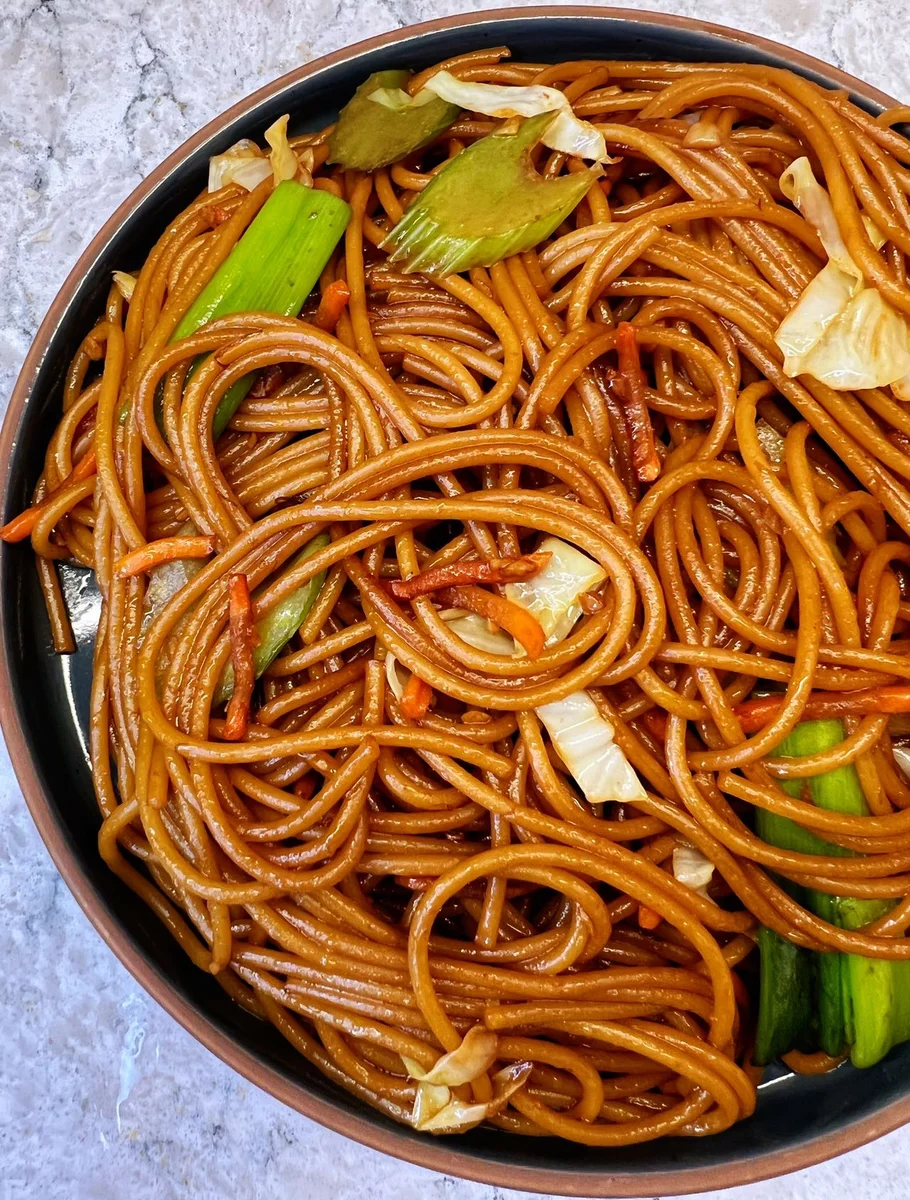
This Chinese-style stir-fry uses spaghetti in place of chow mein noodles, tossed with crisp vegetables and a savoury, tangy sauce. It is a handy option when Chinese noodles are not available and comes together in about 30 minutes.
Ingredients
- 225 gspaghetti
- ½ tbspsalt, for boiling the spaghetti
- 2 tbspcooking oil, such as vegetable or olive oil
- 1 tbspgarlic, minced
- 1green onion, cut into 5 cm pieces
- 60 g (½ cup)carrot, shredded
- 50 g (½ cup)celery, sliced diagonally
- 70 g (1 cup)cabbage, cut into strips
- ¾ tbspsugar
- 1 tbspsesame oil
- 1 tbspoyster sauce
- 2 tbsplight soy sauce
- 1 tbspdark soy sauce
- 1 tbspChinkiang vinegar or other black rice vinegar
Instructions
- 1
Prepare vegetables
Wash and cut all the vegetables listed in the ingredients.
- 2
Boil salted water
Bring 3 litres of water to the boil in a large pot over medium-high heat. Add ½ tbsp salt.
- 3
Cook spaghetti
Lower the heat to medium-low, add the spaghetti and cook according to the packet directions until al dente; the stated cooking time is 10 minutes.
- 4
Cool and drain
If desired, cool the spaghetti in iced water for a firmer al dente texture. Drain away the excess water.
- 5
Season noodles
Put the drained spaghetti in a large bowl. Add all the seasonings and toss with tongs until evenly mixed.
- 6
Stir-fry vegetables
Heat 2 tbsp cooking oil in a large frying pan over medium-high heat for 1 minute. Add the minced garlic, shredded carrot and green onion, then stir-fry for about 2 minutes, until the carrot softens.
- 7
Add remaining vegetables
Add the celery and cabbage, or other vegetables of your choice such as mushrooms, bean sprouts or snow peas. Stir-fry for about 2 minutes, until softened.
- 8
Fry the noodles
Tip the spaghetti and sauce into the pan. Stir-fry over medium-high heat for 5 minutes, until the sauce has been absorbed; tilting the pan should reveal no sauce left on its bottom.
- 9
Serve hot
Divide the stir-fried spaghetti between two plates and serve hot.
What is spaghetti stir-fry?
This dish borrows the Chinese chow mein approach of tossing noodles with vegetables and a seasoned sauce, but uses everyday dried spaghetti instead. The result is a practical noodle stir-fry for cooks who cannot find chow mein noodles locally.
The combination of light and dark soy sauces, oyster sauce, sesame oil and black rice vinegar gives the noodles a savoury, aromatic and gently tangy flavour.
Nutrition and macros by portion
The nutrition label shows one serving as written: 673 calories, 0g protein, 0g carbs, 0g fat.
| Portion | Adjustment | kcal | Protein | Carbs | Fat |
|---|---|---|---|---|---|
| Lighter | Use less cooking oil | 471 kcal | 0g | 0g | 0g |
| This serving | As written | 673 kcal | 0g | 0g | 0g |
| Hungry | Serve a larger portion | 1010 kcal | 0g | 0g | 0g |
The spaghetti provides most of the carbohydrates, while the cooking and sesame oils contribute most of the fat. The listed ingredients include oyster sauce, but no substantial protein source; serve with tofu or egg if you want to add protein to the plate.
Choosing the noodles
Spaghetti: Cook it just until al dente so it can withstand the final few minutes in the frying pan without turning too soft.
Cooling: The recipe suggests an optional iced-water rinse for a firmer texture. Drain the noodles well before adding the sauce.
Get the sauce onto the noodles
Tossing the drained spaghetti with the seasonings in a bowl first helps coat the strands before they reach the pan. Use tongs to lift and turn the noodles so the sauces are distributed evenly.
The final stir-fry is done when the noodles have absorbed the sauce and no liquid remains on the bottom of the tilted pan.
Keep the vegetables moving
Carrot and green onion go into the pan first with the garlic, giving the firmer carrot a little more time to soften. Add celery and cabbage afterwards and stir-fry until softened.
Cutting the vegetables into similarly sized pieces helps them cook at a similar pace. Keep them moving around the pan rather than leaving them in one spot.
Work with the pan's heat
Heat the cooking oil over medium-high heat for 1 minute before adding the garlic and vegetables. Once the noodles and sauce go in, continue stir-frying over medium-high heat for 5 minutes.
A large frying pan gives the noodles and vegetables room to move. If the pan is crowded, toss in batches so the ingredients cook evenly.
Serving ideas
Serve the noodles hot as a main meal or alongside a simple vegetable dish. The recipe also names mushrooms, bean sprouts and snow peas as options to stir-fry with the celery and cabbage.
For a more rounded plate, pair a portion with a source of protein such as tofu or egg; these are serving suggestions rather than ingredients in the recipe.
Recipe notes & tips
- Check the spaghetti a little before its packet time is up so it stays al dente.
- Drain the noodles thoroughly before tossing them with the seasonings.
- Prepare and cut all the vegetables before heating the pan.
- Use tongs to coat the spaghetti evenly with the sauce.
- Tilt the pan near the end to check that the noodles have absorbed the sauce.
Variations
- Add mushrooms: Stir-fry them with the celery and cabbage.
- Add bean sprouts: Toss them in with the later vegetables.
- Use snow peas: Add them alongside the celery and cabbage.
- Swap the vinegar: Use another black rice vinegar if Chinkiang vinegar is unavailable.
- Choose the cooking oil: Use vegetable oil or olive oil as listed.
Common mistakes to avoid
- Overcooking the spaghetti: Stop at al dente so it can finish in the pan without becoming too soft.
- Leaving excess water on the noodles: Drain them well so the sauce is not diluted.
- Adding the noodles before the vegetables soften: Stir-fry the vegetables for their stated times first.
- Crowding the pan: Use a large frying pan and stir-fry in batches if needed.
- Stopping while sauce remains: Continue stir-frying until the noodles have absorbed it and the pan bottom is clear.
How to store
Refrigerate leftovers in a covered container and eat within 3 days. Reheat in a frying pan until piping hot, stirring the noodles as they warm.
Frequently asked questions
Can I use spaghetti instead of chow mein noodles?
Yes. This recipe uses spaghetti as a readily available substitute for chow mein noodles.
Should I rinse the spaghetti in iced water?
It is optional. The recipe recommends it if you want a firmer, more al dente texture.
How do I know when the stir-fry is ready?
The sauce should be absorbed into the noodles, with no sauce left on the bottom when you tilt the pan.
Can I add other vegetables?
Yes. Mushrooms, bean sprouts and snow peas are suggested options to stir-fry with the celery and cabbage.
What can I use instead of Chinkiang vinegar?
The recipe suggests another black rice vinegar as a substitute.
Cook it from the original
This recipe comes from msshiandmrhe.com. Their page has the author’s own photos, notes and tips — the best place to cook it from.
Open the recipe on msshiandmrhe.com