
Homemade Self rising flour
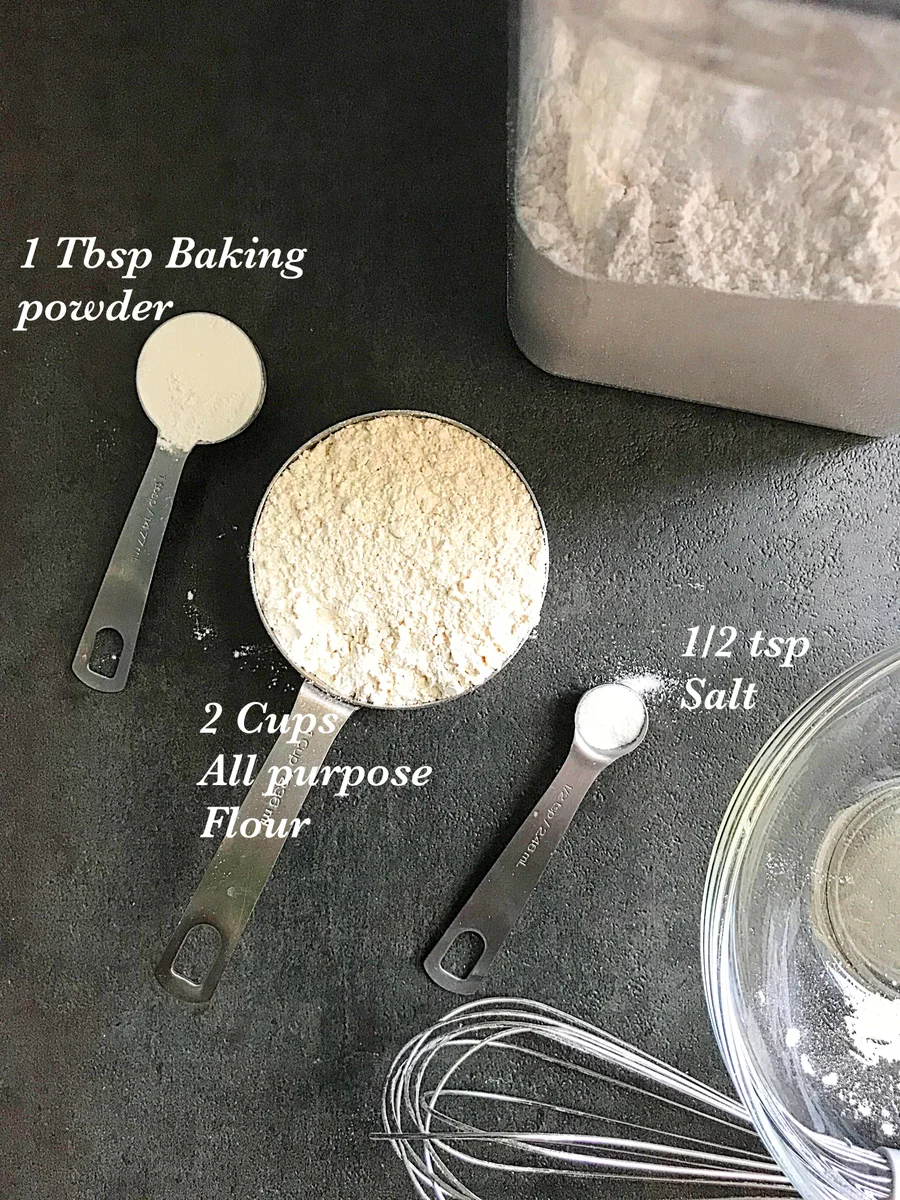
A quick American pantry blend of plain flour, baking powder and salt, ready in five minutes. Make it when a recipe calls for self-raising flour and you have the ingredients on hand.
Ingredients
- 240 g (2 cups)plain flour
- 12 g (1 tbsp)baking powder
- 2.5 g (½ tsp)salt
Instructions
- 1
Measure ingredients
Measure out the flour, baking powder and salt.
- 2
Mix thoroughly
Combine everything with a fork or whisk until evenly mixed.
- 3
Use or store
Use the flour straight away, or keep it in an airtight container for later.
What is self-raising flour?
Self-raising flour is flour with a raising agent and salt already mixed in. It is a handy American-style baking staple for recipes that call for this prepared blend.
This version uses familiar cupboard ingredients, mixed just before use so you can make only what you need.
Nutrition and macros by portion
The nutrition label shows one serving as written: 220 calories, 6g protein, 46g carbs, 1g fat.
| Portion | Adjustment | kcal | Protein | Carbs | Fat |
|---|---|---|---|---|---|
| Lighter | Use a smaller amount | 154 kcal | 4g | 32g | 0g |
| This serving | As written | 220 kcal | 6g | 46g | 1g |
| Hungry | Make a larger batch | 330 kcal | 9g | 69g | 1g |
Most of the energy and carbohydrates come from the flour, which also supplies most of the protein. Baking powder and salt contribute much of the sodium, so use the blend as directed and balance a bake made with it with fruit or another fresh side.
Choosing the ingredients
Flour: use plain, all-purpose flour, and measure it consistently for a dependable blend.
Raising agent: baking powder provides the lift. Check that it is fresh, as old baking powder may not raise baked goods as effectively.
Salt: the small amount seasons the mixture; it is included in the blend rather than added separately.
Mixing evenly
Dry ingredients: whisk or fork them together thoroughly, scraping around the sides and bottom of the bowl. This helps distribute the baking powder and salt through the flour.
Lumps: break up any clumps as you mix so they do not leave pockets of raising agent in the finished blend.
Using the mixture
Measure: use this blend in place of self-raising flour when a recipe calls for it. Follow that recipe’s quantities and instructions.
Timing: the method takes about five minutes, and the mixture can be used as soon as it is combined.
Storing it
Container: transfer any extra flour to a clean, airtight container and keep it in a cool, dry cupboard. Label it so it is easy to identify.
Freshness: for the best lift, use it while the baking powder is still effective; the mixture’s keeping quality depends on the freshness of its ingredients.
What to serve it with
This is a baking ingredient rather than a finished dish, so use it in recipes that specifically call for self-raising flour. It can be used for bakes such as biscuits, scones or simple cakes, following the recipe’s directions.
Recipe notes & tips
- Use a dry bowl and utensils so the flour stays free-flowing.
- Whisk right down to the bottom of the bowl to distribute the raising agent.
- Break up baking powder lumps before mixing them into the flour.
- For consistent results, measure the flour without packing it tightly.
- Label the storage container with the blend’s name and date.
Variations
- Wholemeal blend: replace some of the plain flour with wholemeal flour, bearing in mind that the result will have a different texture.
- No added salt: omit the salt if the recipe or your preference calls for an unsalted blend.
- Small batch: scale all three ingredients down by the same proportion for a smaller quantity.
- Freshly sifted: sift the finished blend once if you want an especially light, lump-free mixture.
Common mistakes to avoid
- Uneven mixing: whisk thoroughly so baking powder and salt are spread throughout.
- Packed flour: avoid compressing it when measuring, which can change the amount used.
- Damp storage: keep the blend in a dry, airtight container to prevent clumping.
- Old baking powder: use fresh baking powder for the best raising action.
- Using it as plain flour: remember that this blend already contains baking powder and salt.
How to store
Keep the mixture in a clean, airtight container in a cool, dry cupboard. Use it while the baking powder is fresh for the best results; the recipe gives no specific storage duration.
Frequently asked questions
Can I use this instead of self-raising flour?
Yes, use it in a recipe that calls for self-raising flour and follow that recipe’s quantities. The blend already contains baking powder and salt.
How do I know it is mixed well enough?
The flour should look uniform, with no visible clumps of baking powder or salt. Whisk thoroughly, including around the bottom and sides of the bowl.
Can I make it ahead?
Yes. Store it in a clean, airtight container in a cool, dry place, and use it while the baking powder is still fresh.
Can I leave out the salt?
Yes, if you need an unsalted blend. Keep in mind that this changes the recipe’s intended seasoning.
Can I double the recipe?
Yes. Multiply each ingredient by the same amount and mix thoroughly in a suitably large bowl.
Cook it from the original
This recipe comes from mydiasporakitchen.com. Their page has the author’s own photos, notes and tips — the best place to cook it from.
Open the recipe on mydiasporakitchen.com